

This transcript was machine-generated and may contain spelling errors or other inaccuracies.
Leer en Español
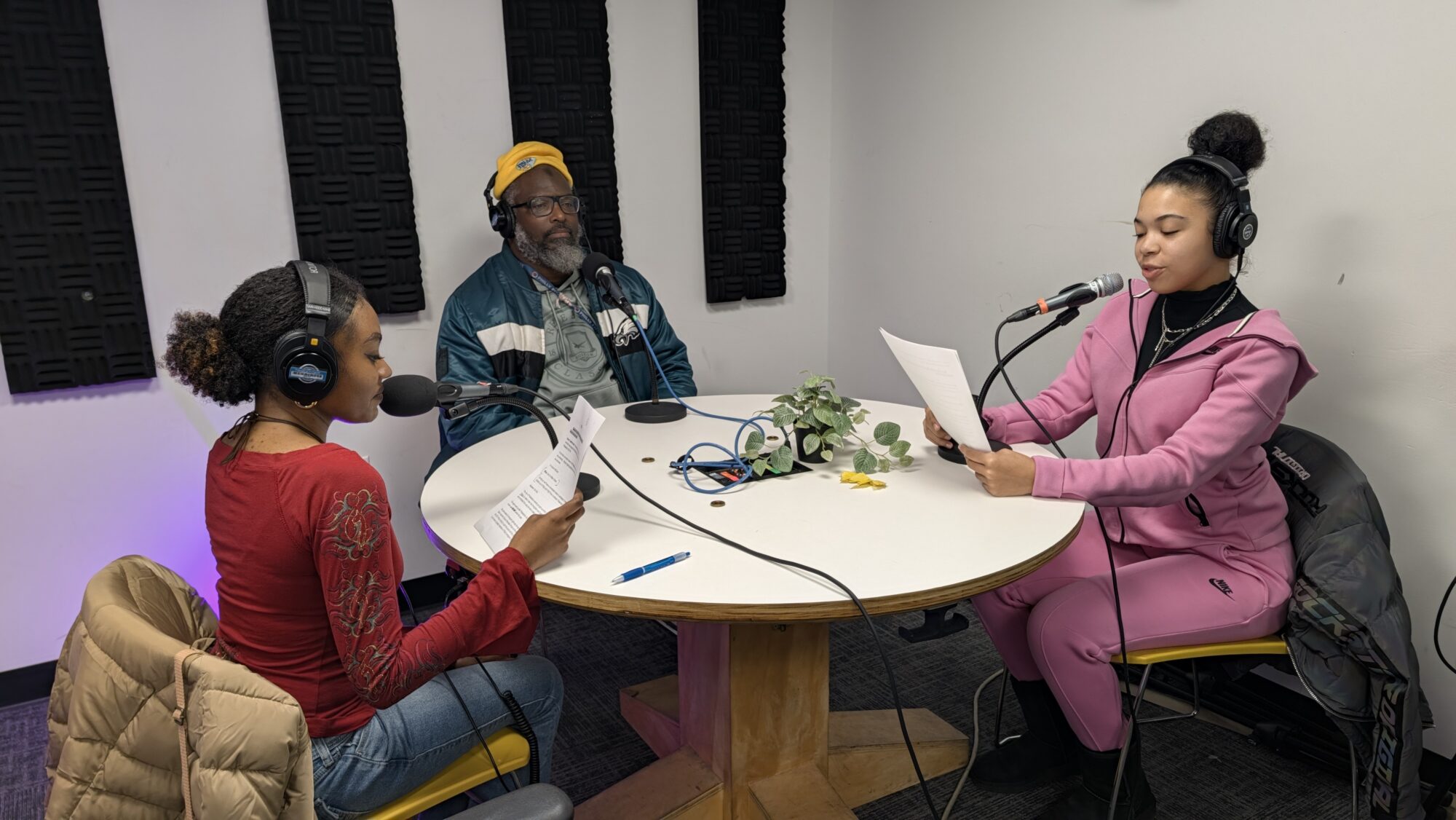
Milan Parker: Una nueva campaña pide al Ayuntamiento de Filadelfia que apruebe una moratoria, o pausa en la nueva construcción de centros de datos en la ciudad. Junto a nosotros hoy es Shawmar Pitts, gerente de la codirectora tentativa y un organizador con los Centros de Datos del Nodo y Campaña de Filadelfia.
, gracias por acompañarnos hoy en Around the Block.
Shawmar Pitts: Gracias por tu calificación
Autumn McCann: Muchas gracias por tu comentario.
Shawmar Pitts: Sí. Me alegra estar aquí.
Milan Parker: Sí, creo que la gente quiere saber qué es IA y ¿Qué es un centro de datos AI?
Shawmar Pitts: Bueno, esa IA es esta tecnología que nos ha surgido. Y es ampliamente utilizado en las corporaciones para vigilarnos con cámaras y cosas así. Y es, en mi estimación, una de esas cosas que hay grandes planes para eso no somos parte de.
O debería decir que somos parte, pero ser utilizado y abusado por esta nueva tecnología, AI, si usted pregunta Yo.
Milan Parker: ¿Podrías ir más como un poco en esos planes?
Shawmar Pitts: Así que la forma en que lo veo es eso. Tienes grandes corporaciones que necesitan aferrarse a mucho información sobre nosotros ciudadanos cotidianos, ¿verdad? Y para mantener estos datos, debe Tener algún lugar donde quieras guardarlo.
Así que ahora, lo que tienen son centros de datos y los centros de información no nuevo, ¿verdad? Tienes centros de datos de tamaño regular que pueden ser del tamaño un edificio, y albergan computadoras que contienen datos.
Es un centro de datos. Sólo tienen datos. Pero ahora, entrando en la parte de IA, necesitas datos en todo lo que hacemos a diario que serás capaz. Controla cada aspecto de la vida de todos.
Así que quieres saber dónde duermen, donde comen Compran, lo que gastan. Quieres saber todo sobre la gente. Y quieres ser capaz de rastrear eso. Y quieres poder leer sus matrículas. Y usted quiere tener reconocimiento facial.
Y quieres hacer vigilancia. Estas cámaras y estos datos, ¿verdad? Y tuvimos una audiencia. Cuestión de hecho, justo en este edificio, teníamos un ayuntamiento escuchar aquí en este edificio. Y tuvimos varios expertos de la Universidad de Penn y Por todas partes, la gente que lo sabe.
Y tenías que la oficina del alcalde nos daba. Todas las grandes cosas que la IA va a hacer nosotros y por qué lo necesitamos tan mal en Filadelfia, ¿verdad? La oficina del alcalde. Y cuando los expertos comienzan a hablar sobre esta IA y todos estas cosas para las que quieren usarlo, siempre hablan acerca de las veces que la IA se equivoca.
Cuando el chat GBT se vuelve malicioso y cuando está mal, ¿verdad? Y quién afecta eso. Y el 98% del tiempo, cuando la IA quiere uso en el departamento de policía, 98% del tiempo, cuando mal, las personas afectadas son la gente como yo, pobre gente.
De mi comunidad somos los que se ven afectados negativamente. Oops, fue un error. Pensamos que era usted y tú ir a la cárcel y las cosas así. Por lo tanto, estos son algunos de los ejemplos de IA y qué es utilizado para.
Autumn McCann: Entonces, ¿cuándo te hiciste, qué fue el momento en que pensabas tú mismo, como, tengo que hacer algo al respecto.
Shawmar Pitts: Um. Cuando me enteré del centro de datos que se está construyendo, y los datos centro, ya sabes, es una de esas cosas que cuando construyes un centro de datos, es enorme. Imagen del tamaño de Lincoln Financial Field o algo así, como un estadio enorme.
Y Lo construyes, y son las computadoras allí, ¿verdad? Así que ahora, estas computadoras, tienes que mantenerlos geniales, ¿verdad? Así que necesitas grandes cantidades de agua, millones y millones de galones de agua para mantener las computadoras frescas, ¿verdad?
No solo eso, es necesario ejecutar este centro de datos. 24-7, 365 y la electricidad que vas a usar, no – Lo tienes. No tenemos la electricidad para ejecutar un centro de datos 365, 24 horas al día.
Nosotros no lo producimos. Así que ahora lo que sucede es que quieres usar otra energía para Potenciar estas computadoras, ¿verdad? Y así otra cosa específica es que quieren construir esto Centro de datos en mi comunidad, ¿verdad?
La antigua refinería de petróleo, que es el Distrito Bellwether, ¿verdad? ¿Cuál es el llamado Distrito Bellwet, verdad? Aquí es donde quieren poner un centro de datos de IA. Ahora, si haces eso, Ya estás entrando en una comunidad de justicia ambiental, que es nuestra comunidad.
porque hemos sufrido la refinería de petróleo por encima de 100 años. Eso está cerrado, ¿verdad? Empezamos a tomar un poco de aire fresco. Ahora quieres poner un centro de datos con estos diferentes. Generadores diesel y todo tipo de material a gas natural, ¿verdad?
Tienes que hacerlo, tú y tienes que gener porque debes generar electricidad. Y no solo eso, nuestras facturas eléctricas subirán si El centro de datos se pone en nuestra comunidad. Y cuando digo que subya, no quiero decir que vas a pagar.
10 más en su factura eléctrica. – No. Sea cual sea su factura eléctrica ahora, solo tenga en cuenta un 50% a 75% aumento en su factura de un centro de datos que se está construyendo porque No pagues el eléctrico y no pagan los impuestos en eso específicos Coloque el Distrito Bellwether porque es lo que llamas Keystone Zona de oportunidad.
Está dividido como la Zona de Oportunidad Keystone, y obtendrán enormes exenciones fiscales, ¿verdad? Y todas estas cosas apiladas en una de otras hace Todo Imposible para nosotros beneficiarnos de cualquier manera de un centro de datos construido en nuestra comunidad.
Así que tan pronto como escuché a mi comunidad fue destinado a centro de datos, fue entonces cuando dije que no.
Autumn McCann: Así que de la refinería cerrando, dijiste que Ustedes son capaces de estar frescos para conseguir aire fresco. ¿Estás nervioso por los impactos ambientales que esto causó?
Shawmar Pitts: Sin lugar a dudas. Ese es uno de los principales factores por qué no deberíamos construirlo, porque sabemos de los impactos ambientales. Sabemos lo que va a hacer, y sabemos qué hemos ha pasado, ¿verdad?
Tenemos las mayores cantidades de asma. Tanto en nuestra comunidad, el asma es como uno de esos cosas en las que, ya sabes, pensamos que era hereditario que tenías que creciste con asma porque tanta gente lo tiene, – ¿verdad?
Pero es desde el aire que respiramos de estar viviendo bajo una refinería. Ahora, si acabas de poner. Solo tome, por ejemplo, los comportamientos que hacen las corporaciones cuando construyen cosas en una comunidad que saben es dañina, ¿verdad?
Ahora, podemos repasar Jersey y el centro de datos que construido sobre allí. Esa gente no lo sabía. Generador de gas o generadores diesel alimentaban el centro de datos. Sólo oyeron un zumbido. ¿Y qué es ese ruido?
Oh, son generadores que ni siquiera lo hicieron, no fueron aprobados para – ahí, ¿verdad? Y así, en nuestra ciudad, donde sabemos que este es el cultura de nuestra ciudad, por decir: el diablo con la gente No te preocupes por la gente.
– Correcto. Y este es un comportamiento que no te sorprenderías si Nos lo hizo. ¿Sabes lo que quiero decir? Porque así es como nos hacen.
Milan Parker: Me gustaría volver un poco también. Entonces, tiene un centro de datos como ya se ha propuesto, o es al igual que imprimible o preventivo, sí?
Shawmar Pitts: Así que. Oficialmente, no se ha propuesto ningún centro de datos. No hay, ¿cómo lo llamas? Cuando ellos, ya sabes, el permiso, no ha habido ningún permiso puesto para un centro de datos. Pero si yo fuera un hombre de apuestas, ¿verdad?
que quieren construir un centro de datos en mi comunidad, Y lo sé. Y lo sé, ¿verdad? Pero no es oficial. Pero créeme cuando te digo, eso es lo que quieren – Haga.
Milan Parker: ¿Y qué más prefieres ver?
Shawmar Pitts: Esa es una buena pregunta. Esa es una gran pregunta. Es una pregunta muy importante. Y esta es una pregunta que se remonta a la refinería de petróleo. Así que cuando estábamos tratando de cerrar la refinería petrolera, ¿verdad?
No pudimos conseguir el apoyo de nuestros legisladores, ¿verdad? El alcalde, ya sabes, el ayuntamiento, no querías ninguno de ellos para apoyarnos al cerrar la vieja refinería, no importa cuánto Nos estaba matando, ¿verdad? Sólo una selección de algunos.
Eran sólo unos pocos, ¿verdad? Teníamos algunos partidarios. Teníamos Helen Gim quien nos apoyó. Teníamos a Jamie Gautier quien nos apoyó, ¿verdad? Y tuvimos a Kendra Brooks quien nos apoyó. Pero aparte de eso, no pudimos obtener ningún apoyo, ¿verdad?
Así que cuando se cerró y Hilco entró, éramos Philly Thrive era como. Una de las organizaciones comunitarias registradas que quería un acuerdo comunitario. Y parte de ese acuerdo fue que nuestra comunidad debería tener algo decir- así y lo que se vuelve a enrollar en esta tierra, ¿verdad?
Y así, lo que queríamos hacer es reunir a la comunidad y juntar a la comunidad y tener algunos pensamientos de la comunidad sobre lo que deberíamos. ¿Qué queremos ahí? Así que, ya sabes, ha habido mucha charla.
Queremos un espacio verde. Queremos algunos parques. Queremos algo de esto. Queremos algo de eso. Pero no se ha despegado porque cuando el desarrollador he aprendido, cuando los desarrolladores entran, no les importa lo que la comunidad Tiene que decirlo.
No quieren que la comunidad tenga voz en lo que está siendo construido. Quieren correr sobre la comunidad, construir lo que quieren construir, porque todo lo que ven es dólares y centavos, ¿verdad? Así que la idea de lo que queremos allí, no capaz de tomar vuelo, ¿sabes lo que quiero decir?
Porque excluyen a la comunidad, ¿verdad? Ni siquiera querían tener una reunión pública con la comunidad, – ¿verdad? Todavía no tienen reuniones públicas con la comunidad, ¿verdad? Bueno, sí lo hacen, como, digamos, ya sabes, tú Tengo un mínimo de algo que tienes que hacer.
Y, ya sabes, simplemente actúas como si estuvieras haciendo. Realmente no hacerlo, pero cumple con los requisitos. Bien, y el bar es tan bajo que puedes tener gente Regístrate para subirte a Zoom, hablas con ellos, no Obtén para hablar contigo, y puedes llamar a esa reunión.
Esa es una reunión comunitaria, y eso es lo que Hillco hace. Tenían reuniones de la comunidad trimestrales o como sea que tuvieran dónde. Dicen que inscribirse para entrar en la reunión, ¿verdad? Reunión de la comunidad.
Todos firman. No sé quién más está en la reunión. Cómo estoy en la reunión y no sé si estás allí. No sé si estás ahí, ¿verdad? ¿Cómo es una reunión? Y luego, cuando pongo mi pregunta en adelante, tengo que escribir En él y no tienen que responderlo o pueden manipular mi pregunta.
Y no puedo decir nada. Todo lo que hacemos es escuchar. – ¿verdad? Es una reunión. Y ese es el criterio que pasan. ¿Sabes por qué? Porque nuestros legisladores los dejan hacerlo. No pueden hacer nada sin ellos, pueblo y ayuntamiento Alcalde que lo dejen hacer.
Así que eso es lo que quiero que todos entiendan: un centro de datos o lo que sea. Nada de esto puede suceder a menos que digan, bueno, sí. – Correcto. Y así, ahora mismo quiero que todos entiendan el tiempo que – Estamos en.
Porque ahora mismo, nadie quiere elegir partido y decir, ya sabes, No vamos a apoyar un centro de datos en este momento porque La gente de Filadelfia no lo quiere. Ninguno de nuestros legisladores quiere elegir bandos ahora mismo porque el Las elecciones se acercan.
Así que tienes gente de este lado diciendo: Queremos construir el centro de datos. Tienes que dejarnos hacerlo. Y luego tuviste a la gente en la ciudad diciendo que no quiere un centro de datos.
Así que ahora, ¿a qué camino van a ir? Quieren decirnos, estamos de tu lado. Y lo vamos a construir. No te preocupes por eso. Espera hasta después de mayo. Así que eso es lo que tenemos.
Es el momento en que vivimos ahora mismo.
Autumn McCann: Así que, ¿cómo lo hará? ¿Ser una ciudad sin centros de datos sea algo bueno para Filadelfia?
Shawmar Pitts: Así que esa es una buena pregunta, también. No puede ser solo Filadelfia, ¿verdad? Tiene que ser algo más que Filadelfia debido a las ramificaciones de tener un centro de datos y tener un estado policial y Toda esta vigilancia, ¿verdad?
Así que si no lo pones en Filadelfia y lo poneste En otro lugar, todavía vas a convertir Filadelfia en un estado policial porque todavía vas a tener todas las cámaras por todas partes el lugar y todavía vas a hacer cumplir todo cosas con la IA.
Así que no puede ser sólo Filadelfia. Es por eso que esto aquí, este es nacional, ya sabes, y definitivamente lo soy. Ir a estar absolutamente en contacto con nuestros legisladores federales, también. No tengo ningún problema para ir a Washington, D.C.
hablando con nuestra Senado y nuestra Cámara de Representantes, y planeo hacerlo.
Milan Parker: Sí, creo que otro punto me gusta. Hacer o hablar es que la campaña está pidiendo La moratoria de tres años hasta que existan protecciones y citas significativas, por supuesto. ¿Qué tipo de protecciones te gustaría ver?
Shawmar Pitts: En primer lugar, cuando se trata de protecciones, correcto y llega a una moratoria. La moratoria será para que, en mi estimación, una prueba más allá de ¿Tienes dudas razonables por qué no deberíamos tener un centro de datos, correcto?
Y en esas protecciones tendrás protecciones ambientales. Y en esas protecciones tendrás esas proteccions de derechos civiles. Y tendrás todas esas protecciones que necesitamos. De las cosas para las que quieren usar esta IA, ¿verdad?
Necesitas protecciones contra esas cosas, ¿verdad? Porque pisotearán todos nuestros derechos civiles si tuvieran La oportunidad. Como, por ejemplo, ahora mismo, mi teléfono suena al menos. 100 veces al día, ¿verdad? 100 de las llamadas de spam, ¿verdad?
Y soy el co-andrigo director de Philly Thrive. Sin embargo, aunque tengo que responder a mi teléfono sin importar quién llamó Yo. No tengo el lujo. Oh, eso no es un número en mi, ¿qué llamas?
¿Y eso? Lo tuyo, los números en tu. Registro de llamadas. Ya sabes, como encerrar a la persona. ¿Qué lo llamas? Rollo en. ¿Cómo se llama a las personas que están encerradas en tus contactos?
¿Contactos? Oh, tus contactos. No puedo decir, oh, no es uno de mis contactos. No respondo. Tengo que responder a números desconocidos. Tengo que responder a los números de Idaho. Tengo que hacerlo, si es de fuera del país, para responderlo.
Por el trabajo que hago. Mi teléfono está llamando 150 veces al día, los robocalls. No puedes hacer eso sin IA. ¿Sabes lo que quiero decir? Pero no está regulado. Pueden hacer lo que quieran.
Así que eso es como algunas de las protecciones que necesitamos en este momento, – ¿verdad? Y así, y aparte de eso, ¿verdad? Así que son muchas protecciones, ya sabes a qué quiero decir, que necesitamos de esto.
Tiene que ser regulado. ¿Cómo pueden vigilarnos, verdad? Podrías tomar mi matrícula y seguirme donde quiera Yo voy. Y cualquiera que tenga acceso a la empresa que esté tomando esa foto de mi matrícula, tenían esa información también.
Ese es nosotros, hombre, tenemos que ser protegidos de eso. Y ya sabes, en este momento, nadie está mirando eso desde el punto de vista porque todo lo que quieren hacer es dinero. Y no importa si nos afecta de manera negativa.
Autumn McCann: Así que estás pidiendo información sobre cualquier regla que se haga. ¿Y cómo sería eso, posiblemente?
Shawmar Pitts: Así que. Yo mismo, me gusta establecer reuniones del ayuntamiento, ¿verdad? Reuniones del ayuntamiento, no reuniones donde viene un legislador o alguien a la reunión y todo lo que hacen es hablar con el pueblo y luego se van, la reunión ha terminado.
No, queremos que la comunidad participe en el encuentro, hombre. Ninguna de esas tonterías. Se pone sobre la mesa. Y eso traerá una moratoria de tres años. Así que podríamos tener reuniones de la ciudad, obtener información sobre la comunidad y nosotros podrían hacer que los expertos lleguen, ponerlo todo sobre la mesa.
No ocultar nada. Tomemos una decisión informada. ¿Qué vamos a hacer? Lo vamos a decir aquí o no. Y nosotros, ya sabes, la gente que sabe eso. No lo queremos. Y que la gente está a solo dos lados de la moneda.
Tienes el mundo corporativo, tienes nuestro mundo. personas que se beneficiarán de ello. Tienes las cosas que podrían ser buenas. Pero la gente que va a sufrir son mis amigos. Y yo, nosotros, Nosotros, ¿cuántos, cuánto más tenemos que sufrir?
Hemos estado sufriendo para siempre. Es hora de que el sufrimiento se detenga.
Autumn McCann: ¿Cómo sugerirías que las personas se involucran?
Shawmar Pitts: La primera forma en la que puede involucrarse es comunicándose con sus legisladores, quienquiera que sea su estado. Senador, quienquiera que sea su representante estatal, cualquiera de ellos es su persona del ayuntamiento. Póngase en contacto con ellos y hágales saber que no quieres una IA centro de datos hyperscale construido en nuestra ciudad, y necesitamos una moratoria para que podamos ver la cuestión, ¿verdad?
Además, puedes involucrarte simplemente involucrado con Philly Thrive. Y como dije, puedes ir en nuestras redes sociales y linke con nosotros. Y ya sabes, escucha cuando tenemos nuestro ayuntamiento reuniones y animamos a todos a venir a nuestras reuniones del ayuntamiento y ponte a participar y deja que tu voz sea escuchada.
Y, ya sabes, Definitivamente soy una voz para todos, pero quiero ser un voz para las personas que no pueden hacerlo. Pero para las personas que no pueden hacerlo y quién no puede ser Allí, quiero ser su voz.
Pero para la gente que puede estar aquí, ven conmigo. Ven a nuestras reuniones del ayuntamiento. Ven cuando vamos al consejo de la ciudad y testificamos las audiencias si puedes hacerlo. Porque, ya sabes, curiosamente, el.
Las reuniones son jueves temprano en las horas de la mañana y de la tarde, ¿verdad? Así que la gente tiene que ir a trabajar. Por eso, ya sabes, tenemos que ser una voz para personas que no pueden estar allí.
Pero hay muchas maneras de involucrarse. Pregúntale a tu legislador, ¿cuál es su posición sobre esto? Pregúntales y mira lo que dicen. Y. Mira cómo votan también.
Autumn McCann: Shawmar, bueno, muchas gracias por tener que hacerlo En este momento. Terminamos esto a tiempo, pero antes de irnos, puedes decir cómo mantenernos en contacto con usted y ¿Tu movimiento?
Shawmar Pitts: Seguro. Así que philrive.org, y tenemos Instagram y Facebook. Y tenemos todas esas diferentes plataformas de redes sociales que puede seguirnos. Y siempre estamos cerca. Así que, y siempre puedes ponerte en contacto conmigo. Ya sabes, simplemente ve en nuestras plataformas de redes sociales y sin duda Puedes llegar a mí.
Autumn McCann: Gracias por tu calificación Muchas gracias por tu comentario.
Milan Parker: Gracias por tu calificación
Autumn McCann: Está bien.
Milan Parker: A new campaign is calling on Philadelphia City Council to pass a moratorium, or pause, on new data center construction in the city. Joining us today is Shawmar Pitts, Managing Co-Director Philly Thrive, and an organizer with the Node Data Centers and Philly Campaign.
, thank you for joining us today on Around the Block.
Shawmar Pitts: Thank you.
Autumn McCann: Thank you so much.
Shawmar Pitts: Yes. Glad to be here.
Milan Parker: Yeah, I think the people want to know what is AI and what is an AI data center.
Shawmar Pitts: Okay, so AI is this technology that's been sprung on us. And it's widely used in corporations to surveil us with cameras and things like that. And it's, in my estimation, one of those things that there are big plans for that we are not a part of.
Or should I say we are a part of, but we will be used and abused by this new technology, AI, if you ask me.
Milan Parker: Could you go more like a bit into those plans?
Shawmar Pitts: So the way I see it is that. You have huge corporations that need to hold on to a lot of information about us everyday citizens, right? And in order to hold on to this data, you have to have somewhere where you want to store it at.
So now, what they have is data centers, and data centers aren't new, right? You have regular size data centers that may be the size of a building, and they house computers that hold data.
That's data center. They just hold data. But now, moving into the AI part of it, you need data on every single thing that we do on a daily basis so that you'll be able to.
Control every aspect of everyone's lives. So you want to know where they sleep, where they eat, where they shop, what they spend. You want to know every single thing about people. And you want to be able to track that.
And you want to be able to read their license plates. And you want to have facial recognition. And you want to do policing with. These cameras and this data, right? And we had a hearing.
Matter of fact, right in this building, we had a city council hearing right here in this building. And we had several experts from the University of Penn and from all over, people that know.
And you had the mayor's office giving us. All of the great things that AI is going to do for us and why we need it so bad in Philadelphia, right? The mayor's office. And when the experts start talking about this AI and all of these things that they want to use it for, they always talk about the times that AI gets it wrong.
When chat GBT goes rogue and when it's wrong, right? And who that affects. And 98% of the time, when the AI that they want to use in the police department, 98% of the time, when they get it wrong, the people that's affected are the people like myself, poor people.
From my community, we are the ones that are adversely affected. Oops, it was a mistake. We thought it was you and you go to jail and things like that. So, these are some of the examples of AI and what it's used for.
Autumn McCann: So, when did you, what was the moment that you thought to yourself, like, I gotta do something about this?
Shawmar Pitts: Um. When I heard about the data center being built, and the data center, you know, is one of those things that when you build a data center, it's huge. Just picture the size of Lincoln Financial Field or something like that, like a huge stadium.
And You build it, and it's computers in there, right? So now, these computers, you have to keep them cool, right? So you need huge amounts of water, millions and millions and millions of gallons of water to keep the computers cool, right?
Not only that, you need to run this data center. 24-7, 365, and the electricity that you're going to use, we don't have it. We do not have the electricity to run a data center 365, 24 hours a day.
We do not produce that. So now what happens is you want to use other energy to power these computers, right? And so another specific thing is that they want to build this data center in my community, right?
The former oil refinery, which is the Bellwether District, right? Which is the so-called Bellwet District, right? This is where they want to put an AI data center. Now, if you do that, You're already coming into an environmental justice community, which is our community, because we've suffered from the oil refinery being there for over 100 years.
That's just been closed, right? We just start getting a little bit of fresh air. Now you want to put a data center there with these different. Diesel generators and all kinds of natural gas powered stuff, right?
You gotta, you, and you gotta gener because you have to generate electricity. And not only that, our electric bills will go up if a data center is put in our community. And when I say go up, I don't mean you're gonna pay.
$10 more on your electric bill. No. Whatever your electric bill is now, just consider a 50% to 75% increase in your bill from a data center being built because they don't pay the electric and they don't pay the taxes in that specific Place the Bellwether District because it is what you call a Keystone Opportunity Zone.
It is zoned as the Keystone Opportunity Zone, and they will get huge tax breaks, right? And so all of these things piled on one of another makes it Impossible for us to benefit in any way from a data center being built in our community.
So as soon as I heard my community was earmarked for a data center, that's when I said no way.
Autumn McCann: So from the refinery closing down, you said that you You guys are just able to get fresh be able to get fresh air. Are you nervous about the environmental impacts that this caused?
Shawmar Pitts: Without a doubt, without question. That's one of the main factors in why we shouldn't build it, because we know of the environmental impacts. We know what it's going to do, and we know what we've been through, right?
So we have the highest amounts of asthma. So much so in our community, asthma is like one of those things where, you know, we thought it was hereditary that you had that you grew up with asthma because so many people have it, right?
But it's from the air we were breathing from being living under a refinery. So now if you just put. Just take, for instance, the behaviors that corporations do when they build things in a community that they know is harmful, right?
Now, we can go over Jersey and the data center that was built over there. Those people didn't know that. Gas generator or diesel fuel generators was powering the data center. They just heard a humming noise.
And what's that noise? Oh, that's generators that they didn't even, they weren't even approved to put there, right? And so, in our city, where we know that this is the culture of our city, to say, the heck with the people, we don't care about the people.
Right. And this is some behavior that you wouldn't be surprised if they did that to us. You know what I mean? Because that's how they do us.
Milan Parker: I would like to go back a little bit too. So, has a data center like already been proposed, or is this just like printive or preemptive, yes?
Shawmar Pitts: So. Officially, there's no data center been proposed. There's no, what you call that? When they, you know, the permit, there's been no permit put in for a data center. But if I was a betting man, right, I would bet my life that they want to build a data center in my community, and I know it.
And I know it, right? But it's unofficial. But trust me when I tell you, that's what they want to do.
Milan Parker: And what else would you rather see instead?
Shawmar Pitts: So that's a good question. That's a great question. That's a very important question. And this is a question that goes back to the oil refinery. So when we were trying to get the oil refinery closed, right?
We couldn't get the support of our legislators, right? The mayor, you know, city council, you know, none of them wanted to support us in closing the old refinery, no matter how much it was killing us, right?
Only a select few. It was only a few, right? We had a few supporters. We had Helen Gim who supported us. We had Jamie Gautier who supported us, right? And we had Kendra Brooks who supported us.
But other than that, we couldn't get any support, right? So when it got closed down and Hilco came in, we were, Philly Thrive was like. One of the registered community organizations that wanted a community benefit agreement.
And part of that agreement was that our community should have some say-so and what gets redeveloped on this land, right? And so, what we wanted to do is bring the community together and get the community together and have some thoughts from the community on what we should.
What do we want there? So, you know, there's been a lot of talk. We want green space. We want some parks. We want some of this. We want some of that. But it hasn't really taken off because when the developer I've learned, when the developers come in, they don't care about what the community has to say.
They don't want the community to have a say-so on what's being built. They want to run right over the community, build what they want to build, because all they see is dollars and cents, right?
So the idea of what do we want over there, it hasn't been able to take flight, you know what I mean? Because they shut the community out, right? They didn't even want to have a public meeting with the community, right?
They still don't have public meetings with the community, right? Well, they do, like, you know, like, let's say, you know, you got a bare minimum of something that you have to do. And, you know, you just act like you're doing it, but you're not really doing it, but it it meets the requirement.
Right, and the bar is so low that you can have people sign up to get on Zoom, you talk to them, they don't get to talk to you, and you can call that a meeting.
That's a community meeting, and that's what Hillco does. They had community meetings quarterly or whatever they have where. They say sign up to get on the meeting, right? The community meeting. Everybody sign up.
I don't know who's else on the meeting. How I'm on the meeting and I don't know if you're there. I don't know if you're there, right? How is that a meeting? And then when I put my question in, I got to type it in and they don't have to answer it or they can manipulate my question.
And I can't say anything. All we all do is listen. Right? That's a meeting. And that's the criteria that they go by. You know why? Because our legislators let them do it. They can't do nothing without them people and city council and the mayor letting them do it.
So that's what I want everybody to understand: a data center or whatever. None of this can happen unless they say, okay, yes. Right. And so right now, I want everybody to understand the time that we're in.
Because right now, nobody wants to pick sides and say, you know, we're not going to support a data center right now because the people of Philadelphia don't want it. None of our legislators want to pick sides right now because the election is coming up.
So you have people on this side that's saying, We want to build the data center. You got to let us do it. And then you had the people in the city saying we don't want a data center.
So now, which way are they going to go? They want to tell us, we're on your side. And we're going to build it. Don't worry about it. Just wait till after May. So that's what we got going on.
That's the times that we're living in right now.
Autumn McCann: So how will. Being a city without data centers be a good thing for Philadelphia?
Shawmar Pitts: So that's a good question, too. It can't be just Philadelphia, right? It has to be more than just Philadelphia because of the ramifications of having a data center and having a police state and having All of this surveillance, right?
So if you don't put it in Philadelphia and you put it somewhere else, you're still going to turn Philadelphia into a police state because you're still going to have all of the cameras all over the place and you're still going to be enforcing all of that stuff with AI.
So it can't be just Philadelphia. That's why this here, this is nationwide, you know, and I'm definitely. Going to absolutely be in touch with our federal legislators, also. I don't have any problem going to Washington, D.C., talking to our Senate and our House of Representatives, and I plan to do so.
Milan Parker: Yeah, I think another point I like to, you know. Make or talk about is that the campaign is calling for a three-year moratorium until meaningful protections and quotes, of course, are in place. What kind of protections would you like to see?
Shawmar Pitts: So, first of all, when it comes to protections, right, and it comes to a moratorium. The moratorium will be so that, in my estimation, proof beyond a reasonable doubt of why we shouldn't have a data center, right?
And in those protections, you will have environmental protections. And in those protections, you will have those civil rights protections. And you will have all of those protections that we need. From the things that they want to use this AI for, right?
You need protections against those things, right? Because they'll trample all over our civil rights if they had the opportunity. Like, for instance, right now, my phone rings at least. 100 times a day, right?
100 from spam calls, right? And I'm the co-managing director of Philly Thrive. Whereas though, I have to answer my phone no matter who called me. I don't have the luxury. Oh, that's not a number in my, in my, what you call that?
Your thing, the numbers in your. Call log. You know, like you lock the person in. What you call that? Rolled in. What you call the people that's locked in in your contacts? Contacts? Oh, your contacts.
I can't say, oh, that's not one of my contacts. I ain't answering. I got to answer Unknown numbers. I got to answer numbers from Idaho. I got to, if it's from out of the country, I have to answer it.
Because of the work that I do. My phone is ringing 150 times a day, robocalls. You can't do that without AI. You know what I mean? But it ain't regulated. They can do what they want to do.
So that's like some of the protections that we need right now, right? And so, and other than that, right? So it's many protections, you know what I mean, that we need from this. It has to be regulated.
How can they surveil us, right? You could just take my license plate and just follow me wherever I go. And anybody who has access to the company that's taking that picture of my license plate, they had that information too.
That's we, man, we gotta be protected from that, man. And you know, right now, nobody's looking at that from the corporate's point of view because all they want to do is make their money.
And it don't matter if it impacts us in a negative way.
Autumn McCann: So you're calling for community input on any rules that are made. And what would that look like, possibly?
Shawmar Pitts: So. Myself, I like to set up town hall meetings, right? Real town hall meetings, not meetings where a legislator or somebody comes to the meeting and all they do is talk to the people and then they leave, the meeting is over.
No, we want the community involved in the meeting, man. None of that nonsense where. It's put on the table. And that's what a three-year moratorium will bring. So we could have town hall meetings, get community input, and we could have the experts come, put it all on the table.
Don't hide nothing. Now, let's make an informed decision. What are we going to do? We're going to put it here or not. And we, you know, the people that know know that. We don't want it.
And that the people is just two sides to the coin. You got the corporate world, you have our world, you have the people that stand to benefit from it. You have the things that might be good from it.
But the people that's going to suffer are my folks. And I, we, we, We, how many, how much more have we got to suffer? We've been suffering forever. It's time for the suffering to stop.
Autumn McCann: How would you suggest people get involved?
Shawmar Pitts: The first way you can get involved is by contacting your legislators, whoever is your state. Senator, whoever is your state representative, whoever is your city council person, contact them and let them know that you don't want an AI hyperscale data center built in our city, and we need a moratorium so that we can look at the issue, right?
Also, you can get involved by just getting involved with Philly Thrive. And like I said, you can go on our social media and link up with us. And you know, listen out for when we have our town hall meetings and we encourage everybody to come to our town hall meetings and get involved and let your voice be heard.
And, you know, I'm definitely a voice for everyone, but I want to be a voice for people who can't make it. But for the people who can't make it and who can't be there, I want to be their voice.
But for the people that can be here, come with me. Come to our town hall meetings. Come when we go down to city council and we testify at the hearings if you can make it.
Because, you know, oddly enough, the. The meetings are Thursdays in the early morning and afternoon hours, right? So people got to go to work. So that's why, you know, we have to be a voice for those people who can't be there.
But there's plenty of ways to get involved. Ask your legislator, what's their position on this, right? Ask them and see what they say. And. See how they vote too.
Autumn McCann: Shawmar, well, thank you so much for having for on for being on here. We finished this on time, but before we leave, can you tell us how to for us to keep in contact with you and your movement?
Shawmar Pitts: Sure. So PhillyThrive.org, and we have Instagram and Facebook. And we have all of those different social media platforms that you can follow us on. And we are always around. So, and you can always get in contact with me.
You know, just go on our social media platforms, and no doubt you can reach me.
Autumn McCann: Thank you. Thank you so much.
Milan Parker: Thank you.
Autumn McCann: All right.
This story was broadcast as part of AtB 11-15-2026.