

Leer en Español
This transcript was machine-generated and may contain spelling errors or other inaccuracies.
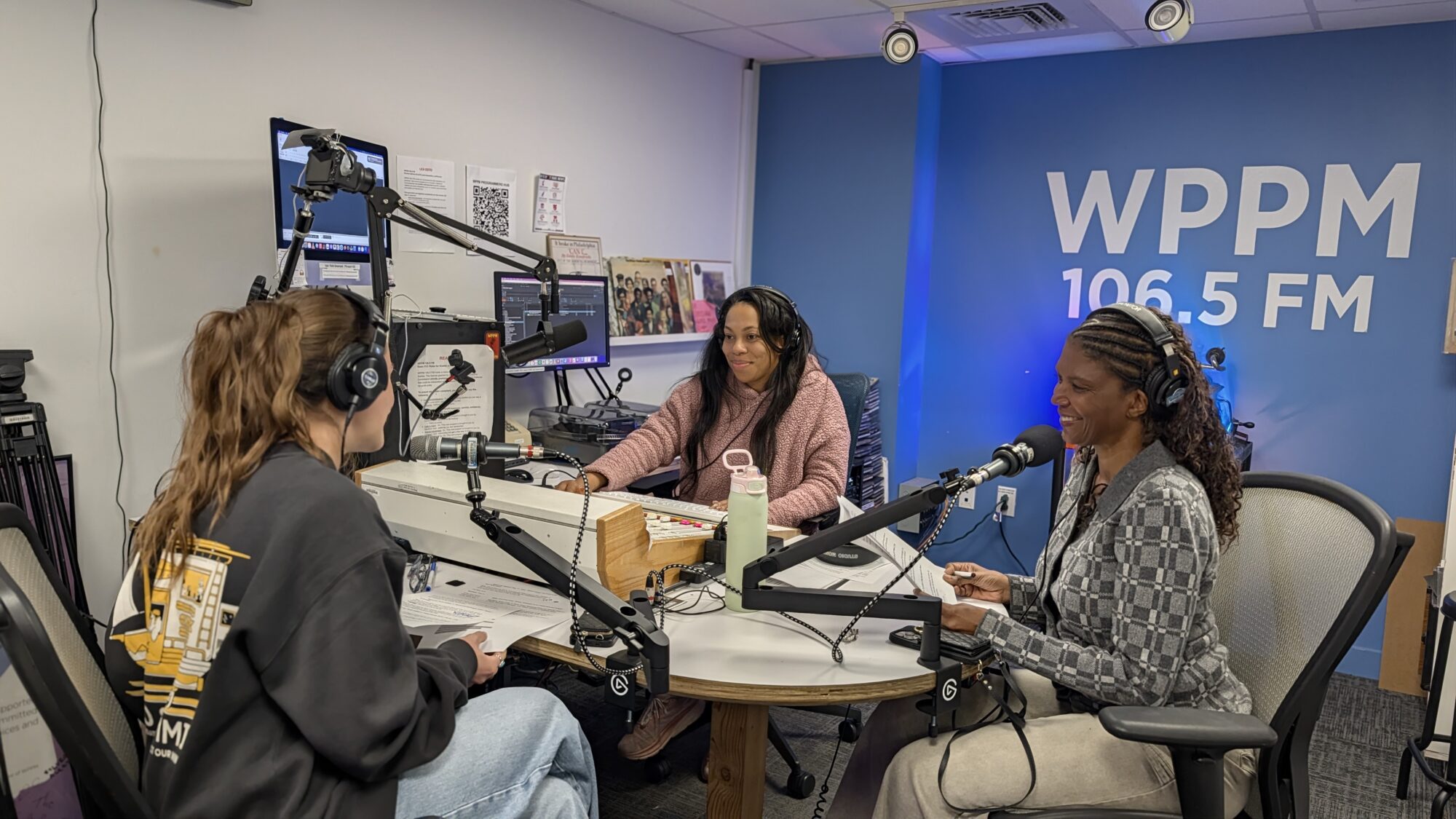
Dina Jovin: Este es Bloque by Block, un programa de noticias comunitarias de WPPM 106.5 FM, donde exploramos los problemas que afectan al área de Filadelfia Informes de noticias para los miembros de la comunidad. Soy Dina Jovin.
Monique Moore Pryor: Soy Monique Moore Pryor. En la próxima media hora, escucharemos sobre los desafíos que enfrentan pequeños organizaXiones sin fines de lucro en la región, un campamento de verano diseñado para niños y jóvenes adultos con autismo, y un golpe de poesía para la escuela secundaria Philly estudiantes.
Dina Jovin: Pero primero, El 20 de noviembre es el Día del Recuerdo Transgénero, también conocido como T-Door. Se están llevando a cabo varios eventos en Filadelfia este mes para conmemorar el ocasión. A principios de este mes, Block by Block reporter Chelsea Lubbe asistió a uno de Estos eventos y nos trae esta historia.
Chelsea Lubbe: El primer Día del Recuerdo Transgénero tuvo lugar en 1999. El día reconoce y honra a la mujer trans Rita Hessler, que fue asesinada en Massachusetts. El día fue creado para recordar aquellos que hemos perdido a manos de actos violentos y odiosos que tratan de borrarlos transgénero y no conformes con el género las poblaXiones.
El Departamento de Salud Conductual y ServiXios de Discapacidad Intelectual de la Ciudad de Filadelfia, Involucrar Iniciativa de Mujeres y Niñas de Color, y la iniciativa LGBTQI de la Ciudad organizó una feria de visitas y recursos el 7 de noviembre en Oeste Philly.
Para conmemorar el Día de la Memoria Transgénero y construir un espaXio seguro para honrar a los seres queridos, así como mostrar los diferentes recursos ciudad tiene que ofrecer. es especialista en participación de la comunidad LGBTQIA del departamento.
Ayudó a organizar el evento.
Chloe Weissman: T DOR es realmente personal para mí, y creo que muchos de nuestros hermanos trans Aquarians. Para poder Liderar este evento significa mucho confiar en que la comunidad para liderar este evento. Creo que tenemos que entender las experiencias de queer y trans personas de cerca, para que eso involucren investigación, con suerte, más cualitativamente, así que podemos entender las experiencias vividas de lo que enfrentan los homosexuales y las personas trans ahora, para que podamos dar forma a nuestros programas para conocerlos
Chelsea Lubbe: – están ahí. En los últimos 10 años, Los informes de delitos contra el transgénero han aumentado. Estos han ayudado a aumentar un nuevo nivel de conciencia sobre los problemas trans Las personas se enfrentan todos los días.
Representantes de la comunidad LGBTQ de Philly hablaron en el evento, incluyendo Naima de ACLU Sánchez, el presidente de Phyll Black Pride, Jason Bowman y Rue Landua desde la ciudad Consejo.
Rue Landau: Todos sabemos que las personas que nos han dejado son desproporXionadamente personas de color, mujeres de color. Esto es algo que ha estado sucediendo durante décadas.
Chelsea Lubbe: dice que aprecian ser parte de eventos como Esto en Filadelfia. Lo que tiene una comunidad muy inclusiva.
Twilla Dotson: Yo vivo en Lancaster. Yo soy originaria de Mechanicsburg. La comunidad queer aquí es mucho más diferente, creo, que veo en Lancaster desde los acontecimientos a los que he asistido allí. Y se siente mucho más como la familia, supongo, aquí que en Lancaster.
He estado por todas partes, así que he visto mucho de diferentes aspectos de la comunidad queer, pero En las principales áreas en las que he estado, lo veo evoluXionar en formas que me gusta y no me gusta.
Me siento como ciertas áreas, como Lancaster, por ejemplo, me siento ser muy rígidos en cómo ven las cosas y van por encima de las cosas. Pero me siento como Philly, y yo estaba en Nueva York recientemente, las comunidades queer encontré aquí y allá, me siento como han llegado a un punto que Es muy tolerante, muy abierto y como amoroso y queriendo Lo mejor para todos, pase lo que pase.
Chelsea Lubbe: también participó en el Paseo del Recuerdo. Terry perdió a un ser querido por la violencia antitrans, pero en este día Terry dijo que sentían un cambio de humor.
Terry Fells Edmonds: Durante los últimos años, he visto una espiral descendente dentro con soportes. Viniendo aquí hoy, hay esperanza y tenemos futuro. Y si tenemos organizaXiones y familias colectivas y amigos que apoyan el movimiento, creo que podemos llegar a un lugar donde hay Amor y paz, bondad e inclusión.
Me gustaría decir seguir trabajando juntos, cambiar Va a venir.
Chelsea Lubbe: La memoria camina. No es la única ceremonia de recuerdo aquí en Filadelfia. A medida que se acerca el Día del Recuerdo de Trance, hay varias ceremonias diferentes sobre el 19 en la zona de Filadelfia, incluyendo un Día del Trance de Memoria cena organizada por William Way y un levantamiento de banderas en la Comunidad Colegio de Filadelfia.
Para Block by Block, soy Chelsea Lubbe.
Monique Moore Pryor: Las organizaXiones sin fines de lucro en nuestra región satisfacen una amplia variedad de necesidades comunitarias, con muchos centrados en la educación, distribución de alimentos, desarrollo del trabajo y mucho más. Sin embargo, puede ser difícil asegurar la financiación para hacer que trabajo.
Especialmente para las organizaXiones más pequeñas. Block by Block reporter Lawanda Horton es consultor sin fines de lucro. Recientemente habló con otro profesional sin fines de lucro sobre algunos de los desafíos frente a organizaXiones más pequeñas.
Lawanda Horton: Los desafíos que enfrentan las organizaXiones sin fines de lucro es una realidad cotidiana. Las organizaXiones deben enfrentar los desafíos de marketing y los problemas regulatorios legales y de cumplimiento. Problemas. Deben garantizar que sus programas sigan siendo relevantes e impactantes.
Y tienen que tener la financiación para hacerlo todo. Me senté a charlar con C. Michael Robinson. Es el ex gerente de la oficina de Collingdale, Pensilvania y el fundador de Troubadour Solutions, una agencia consultora de Pensilvania que se centra en la estrategia de gobernanza como así como apoyo de gobierno sin fines de lucro.
Descubrí en tus posts de Instagram una publicación que fue muy Es interesante para mí. Es uno en el que usted hace referencia a lo que llamaría hambre sin fines de lucro Juegos. ¿Puedes decirme lo que querías decir con los juegos sin fines de lucro?
C. Michael Robinson: La referencia sin fines de lucro Los Juegos del Hambre realmente suplica al oyente: cómo Podemos mejorar el sistema sin fines de lucro y cómo se financia aquí – ¿Portero? ¿Cómo podemos apoyar mejor a nuestras organizaXiones y, en última instancia, a nuestras comunidades?
Lawanda Horton: Entonces, en los Juegos del Hambre, obviamente, Catness. Y todos los diferentes, supongo, distritos, otros distritos de allí, – ¿verdad? Están luchando por los recursos, ¿verdad? Así que eso es de lo que estás habLandua.
Estás habLandua de una situación en la que, ya sabes, estas organizaXiones sin fines de lucro estar enfrentando unos contra otros en busca de fondos.
C. Michael Robinson: En última instancia, no solo están luchando por recursos, luchan por la influencia y Incluso. Acceso a la derecha, mira la historia longitudinal de Katniss y su amable de desarrollo del carácter.
Lawanda Horton: Entonces, hay una conexión obvia en Filadelfia entre el gobierno y la organización sin fines de lucro
C. Michael Robinson: sector. ¿Crees que esa relación en Filadelfia ha sido un buen ¿Uno? Creo que ha sido un cumplido. Relación complicada. Creo que las organizaXiones que existen dependen en gran medida de la micro subvenXiones.
Lawanda Horton: Robinson dice que las organizaXiones sin fines de lucro más grandes en Filadelfia, como Achievability y Beyond La alfabetización, tienen un tiempo más fácil de recaudar dinero porque tienen la infraestructura ser competitivos en el espaXio de subvención.
Pero puede ser difícil para organizaXiones sin fines de lucro más pequeñas como Elegance Extreme en West Philly o alimentamos a la gente, que se queda sin Una cafetería en Mount Airy. Dice que son los tipos de grupos que podrían usar más apoyo.
C. Michael Robinson: Esos son los tipos de organizaXiones que necesitan poder crecer operativamente para que puedan calificar para las mismas macetas de dinero. Esos son tradiXional y consistentemente ir a los más allá de las alfabecias y probabilidades y otras organizaXiones sin fines de lucro que están haciendo un gran trabajo, pero a menudo son los destinatarios de la misma temporada de dinero después de una temporada.
Nuestras organizaXiones sin fines de lucro hacen un gran trabajo para articular necesidades, pero nuevamente Si no tienen la capacidad operativa para atender las necesidades, o si no reciben el incentivo para abordar la necesidad de forma permanente, ¿verdad?
El objetivo de una organización sin fines de lucro debe ser salirse de negoXios.
Lawanda Horton: Robinson también dice que la ciudad de Filadelfia tiene una subvención programa llamado Fondo de Actividades que está abierto a organizaXiones más pequeñas, pero Las subvenXiones son demasiado pequeñas para financiarlas. Cualquier organización o apoya su supervivencia a largo plazo.
C. Michael Robinson: Hay grandes organizaXiones que hacen un gran trabajo aquí, pero también hay Muchas organizaXiones dentro del ecosistema de Filadelfia que están recibiendo restos a través programas como el Fondo de Actividades. 1,000 500 a 1.000 no hace mella en Presupuesto.
Pero hay organizaXiones que confían en eso durante seis meses de su programación. ¿Qué van a hacer con 1,000 1,000? La respuesta no es nada. No hay forma de que dirijan una organización sin fines de lucro con solo un miles de dólares.
En algunas organizaXiones, ese es el único dinero que obtienen por todo el año. Básicamente son voluntarios. Son una organización voluntaria, no son una sin fines de lucro.
Lawanda Horton: dice que hay muchas pequeñas organizaXiones que poder hacer más por sus comunidades si pudieran criar más dinero. Pero muchas de las oportunidades de concesión de fundaXiones y gobiernos son limitadas un pequeño subconjunto de cuestiones.
C. Michael Robinson: En última instancia, nuestras organizaXiones están luchando. Operar, y no estamos proporXionando dólares operativos para nuestras organizaXiones en Este mismo momento. Gran parte del dinero que existe dentro de la trampa de financiación del gobierno son fondos específicamente para programas, programas específicos, ya sea prevención de violencia o alguna otra forma de intervención, pero no están proporXionando.
Los dólares que ayudan a las organizaXiones a aumentar su capacidad para operar y, en última instancia, impactar más gente. Todos sabemos que hay organizaXiones en Filadelfia. Todos sabemos que tiene que haber más programas de lectura y que los programas de lectura que tenemos deberían tener múltiples aulas y Tener más hijos inscritos en ellos.
La única forma en que pueden Puede hacerlo es si pueden operar en mayor capacidad que lo que son. El gobierno debería prestar serviXios de creación de capacidad a las organizaXiones para que puede calificar para estos recursos, por lo que tal vez haya un poco más competencia en el panorama de financiación sin fines de lucro.
Lawanda Horton: Competencia saludable, ¿verdad? No los Juegos del Hambre, pero más como los Juegos Olímpicos
C. Michael Robinson: Bloquear bloque, esto es Lawanda Horton.
Lawanda Horton: Campamento de verano puede ser un lugar tan especial para niños y jóvenes adultos para aprender artes y artesanías, participar en actividades al aire libre y hacer
Dina Jovin: nuevos amigos. Y un campamento de verano en el área filal tiene como objetivo traer a todos de esas experiencias a niños y adultos jóvenes. Bloqueo por el reportero de bloque Gina Faulkner. Recientemente visité el Centro Kinney en St.
Universidad de José aprender más sobre este campamento de verano y el centro otros programas a lo largo del año. Estamos en la zona del vestíbulo. ¿Puedes darme un pequeño tour y describir?
Gina Faulkner: ¿Qué vemos? Por supuesto. Así que entramos, tenemos nuestra encantadora recepción.
Colleen Kelly: Solo tratamos de hacer que sea un espaXio acogedor. Tenemos mucho tráfico peatonal en todo Kinney. Todos los días, dependiendo de la necesidad. Entonces, Halloween es lo que el sábado. Así que cada año el personal tiene un concurso de decoración para Halloween, y Los estudiantes aspiran a votar por quién es su puerta favorita.
Todavía estoy ganando, así que los dedos cruzados son mi año. Pero sí, tenemos una puerta de Candyland. Creo que este es Snoopy. En el corazón de San. Universidad de José.
Gina Faulkner: Es una organización que hace el importante trabajo de apoyar a la comunidad autista de Filadelfia desde la infancia hasta la edad adulta. Recientemente tuve la oportunidad de visitar el Kenny Center for Autism y aprender cómo apoyan a la comunidad autista desde el principio con su campamento de verano, Camp Kenny.
Nuestro guía, Colin Kelly, es analista de comportamiento certificado por la Junta o BCBA. Ella también es Director Asociado de Programas en Candy Center. Somos una organización sin fines de lucro y nuestra misión es en realidad doble.
Así que nuestro objetivo es servir a las familias de la comunidad de Filadelfia
Colleen Kelly: se ve afectado por un diagnóstico de autismo, pero también tenemos una característica única de enseñar a los estudiantes universitarios y más allá en St. La Universidad de José sobre el autismo, sobre la neurodivergencia en general.
Porque también queremos dar a nuestros futuros practicantes. Mientras me abría paso a través del centro, me impresionaron ¿Cuánto sucede dentro de las paredes del centro?
Gina Faulkner: El mismo espaXio podría usarse de muchas maneras diferentes, creando oportunidades para aprender, jugar, creatividad y conexión. Esta es nuestra sala de entrenamiento. Hacemos alguna programación nocturna de habilidades sociales aquí.
Colleen Kelly: Nosotros tenemos Reuniones de equipo aquí. Algunos de nuestros asistentes y estudiantes podrían pasar aquí entre clases y hacer algo de trabajo. Así que la mayoría de cada área aquí es multipropósito porque estamos haciendo lo que podemos con el espaXio que tenemos.
Esto es solo el back classroom. Nuevamente, otra área multipropósito. En este momento se están instaLandua. ¿Es este club de anime esta noche, Amy? Perfecto. Así que el departamento de Aspire tiene un gran trabajo.
Tienen muchos clubes a lo largo de la semana para atender a los diferentes intereses de cada uno. Este tipo aquí mismo es una especie de gran fidget pared interactiva. Hay bolas aquí, cadenas que puedes tirar, solo increíble y muy interactivo.
El Kinney Center alberga una variedad de programas durante todo el año en este espaXio multipropósito.
Gina Faulkner: Pero Kinney Center Director of Community Programs, Christina Hawk, dice un programa Ha sido un año más destacado tras año. Oh, el verano. El verano es honestamente la mejor época del año porque el verano
Christina Hauck: es cuando tenemos Camp Kinney, y ese es nuestro campamento para individuos autistas de cinco al 21 años. Y Colleen dice que es muy parecido a otros campos Fueron diseñados pensando en niños autistas.
Gina Faulkner: Piensa en cualquier campamento que hayas visto que tendrías asistieron, o se ve en las películas, como un campamento estereotipado.
Colleen Kelly: Como, estamos afuera haciendo artes y manualidades, hay brillo en El piso. Pero Camp Kinney simplemente elimina algunas de esas barreras que Algunos de nuestros amigos con autismo podrían enfrentar cuando intentan asistir esos campamentos durante el verano.
Ya sabes, teniendo espaXios sensoriales, estamos dando actividades de elección alternativa para el Campamento. Día. Estamos creando alguna estructura donde otros campamentos podrían ser un poco menos estructurado y es como un receso de cuatro horas.
Pero tenemos algunos períodos de tiempo diferentes durante el día en que estamos hacer actividades. Así que estamos tomando la idea del campamento y de tener un verano divertido y un tercer espaXio donde estos campistas pueden reunirse gente nueva y divertirse y salir.
Pero solo estamos agregando algunos apoyos adiXionales, reuniéndose campistas donde están a y dejar que tengan una experiencia interactiva de campo divertida. Experiencia y decirlo para el éxito. Campamento de Verano sin barreras comienza con personas especiales trabajando y aprendiendo en el Centro Kinney.
Gina Faulkner: es analista de comportamiento certificado por la junta en Kinney Center y Assistant Director de Programas Comunitarios. Así que entré aquí en el otoño de 2020 y no left.
Olivia Grainer: Todavía estoy aquí. Simplemente me presentó a la Campo me dio muchos recursos y realmente me ayudó solo como encontrar mi amor por apoyar a esta población y luego por amable de hacer una carrera sin ello.
Y luego es un círculo muy completo, como empezar aquí Ahora trabajar aquí a tiempo completo. Y Shannon Randall, una asistente de posgrado, compartió conmigo por qué el Kinney El Centro continúa atrayendo y reteniendo estudiantes y miembros del equipo.
Gina Faulkner: Yo diría que a todos aquí realmente les importa. Hay otros lugares en los que he trabajado dentro del campo donde la gente
Shannon Randall: Sólo lo embalan en todos los días. Y como, obviamente, las personas a quienes servimos aquí son vulnerables. Queremos asegurarnos de que estamos haciendo lo mejor para ellos cada día. Y diría que, sobre todo entre las GAs, todos los personal de tiempo completo, todos realmente aparecen aquí con una sonrisa en su cara y realmente quiere hacer todo lo que pueda para esta comunidad.
Colleen dice que el compromiso con los campistas es parte de lo que guarda El programa se mueve.
Gina Faulkner: Creo que tuvimos un aumento del 25% en los campistas desde el verano
Colleen Kelly: de 2025 a 2026. Así que hemos podido crecer y acomodarnos de manera creativa como continuamos teniendo un increíble apoyo del personal. Y asistentes de posgrado y nuestros académicos. Por lo tanto, mientras conozcas nuestro modelo de entrenamiento continúa crecer y expandirnos, continuamos creciendo y expandiéndonos.
Así que ha sido realmente increíble. Camp Kinney ofrece un espaXio seguro y acogedor para que los niños jueguen y aprender durante el verano.
Gina Faulkner: Pero Colleen y Christina dicen esto también acerca de ayudar a los padres entender que Los niños pueden ser niños. Ayuda a proporXionar un lugar para la próxima generación de personas que trabajan en los campos relaXionados con el autismo para entrenar.
Y eso puede tener un impacto que va mucho más allá de un verano Campamento. Creo que comenzó con esa conciencia del autismo.
Colleen Kelly: Creo que la gente es consciente. Así que ahora estamos avanzando hacia esa pieza de aceptación, lo cual creo que somos Hacer avances positivos cada día. Sabes, este no es un diagnóstico que necesitamos cambiar, que tenemos que arreglar, ya sabes, nosotros.
Christina Hauck: Tiene que hacer algo así. Necesitamos asegurarnos de que los cuidadores y las personas alrededor de estos La gente y las personas que los rodean son apoyados. Así que espero encontrar una manera como comunidad proporXionar aún más apoyo para ellos, encontrar formas que puedan tienen respiro, para encontrar formas en que podamos ayudar a estos participantes a crecer.
si está en la escuela, ya sea en los programas comunitarios. Para mí, esa es la mayor esperanza. Para más información sobre el Kinney Center y Camp Kinney, visite St. El sitio web de la Universidad Joseph en el centro de sju.edu slash kinney.
Gina Faulkner: Es muy divertido. Eso es realmente genial.
Colleen Kelly: Uno de ellos hace un ruido graXioso. O éste. Así que es muy divertido. Bloqueo por bloque. Soy Gina Faulkner.
Gina Faulkner: No faltan noticias sobre los adolescentes de Philly, pero con qué frecuencia ¿Los jóvenes de la ciudad tienen la oportunidad de controlar sus propias narrativas?
Monique Moore Pryor: Block by block reporter Sadie Troup nos trae esta historia sobre Philly Slam League, un concurso de poesía juvenil donde se celebran poetas de secundaria por hablar. La primavera pasada, me invitaron a ser un juez invitado en Philly Slam League competición.
Sadie Troup: Sentado en los asientos del auditorio de madera en la Academia de Liderazgo Científico, yo estaba alcanzado por el nivel de análisis social. Introspección y claridad dentro de la poesía que los estudiantes realizaron. Recientemente tuve la oportunidad de ponerse al día con Sio, un graduado de Esperanza Academy y participante de un golpe los cuatro años de alto escuela.
Nos sentamos juntos en su antigua aula de inglés mientras recitaba una de sus poemas más recientes, que explora el dolor de amar profundamente. Este poema se llama One Sided. Imagínate acostado, tus ojos cerrados y todo lo que oyes es
Xio: sus gritos. Tus sueños te obligan a ver a las personas que amas mueren, forzados para verlos aturdir el dolor, verlos llegar vosotros, mendigáis y llorando, por favor, mientras toman su último aliento de La vida.
El dolor es tan fuerte, te despiertas con el pecho apretado, No puedes respirar, con lágrimas corriendo por tus mejillas, llorando, por favor. Dios, por favor. No puedo perderlos. Es lo que es ser yo.
comenzó a escribir poesía su primer año después de ser presentado en Esperanza club de poesía por su profesora de inglés, Sra.
Sadie Troup: Pizamenti, a quien Xio se refiere cariñosamente como Olimpia. Cuando conocí a Pizzi, ella era muy brillante. en gran parte de la oscuridad que estaba pasando.
Xio: Así que cuando ella Me dijo sobre este espaXio donde la gente podía escribir acerca de cómo Sentirse y simplemente sacar esas palabras que están atrapadas dentro. Yo era como, me encantaría hacer eso. Y creo que lo que me hizo quedarme fue solo el ambiente, personas que estaban allí, la familia creada a lo largo de hacer eso y compartir cómo te sientes tantas veces.
A través del Club de Poesía y su propia investigación, CO se involucró con Philly Liga Slam.
Sadie Troup: Un concurso de poesía en vivo donde vienen los estudiantes de todas las escuelas secundarias Philly juntos para realizar sus poemas frente a otros estudiantes. Seo se enfrenta valientemente a temas difíciles en su poesía, y uno de los razones por las que fue atraída ante la Liga Slam es porque le permitió y sus compañeros compartir ideas que pueden provocar desacuerdo o incomodidad sin represalias.
Esta generación es una política. Hablar uno.
Xio: Todo el mundo tiene algo que decir, y si eso es algo que hace Otras personas se sienten incómodas, todavía hay que decirlo. Hice un poema con mi amiga Emma el año pasado sobre ser Latina y lo que parece en esta comunidad.
Y un grupo de mujeres terminó llegando a mí y Ella dijo cómo se sentían por completo. Lo que decíamos, y podrían conectarse con él. Nadie tenía nada malo que decir sobre eso. Creo que es algo muy grande.
Philly Slam League ha estado haciendo espaXio para poetas de secundaria Ten empleo por más de 15 años.
Sadie Troup: Según el fundador de la liga, Matt Kaye, su experiencia como un deporte Entrenó la idea. Tenía la idea de cosas, qué pasaría. Además de los equipos deportivos, teníamos equipos artísticos.
Matt Kay: equipos. Y cuanto más pensaba en ello, estoy como, esperar, eso es realmente Una cosa que podría pasar. Y un grupo de amigos, uno de ellos se convirtió en mi esposa Y yo, que ahora corre la liga conmigo, nos reunimos con algunos niños y nosotros éramos como, yo queremos – ¿Esto?
Y hablaron con sus maestros en sus escuelas y luego Empezó a llegar a las competiXiones y Salí de allí, y lo hemos hecho desde entonces. Así es como funXiona. Conduciendo a cada concurso de golpes, estudiantes en clubes de poesía de Philly
Sadie Troup: desarrollar sus poemas y taller con profesores y otros estudiantes. El día del slam, el equipo de poesía de cada escuela envía algunos de sus poetas en el escenario para actuar frente a los jueces, que se ubican los poemas basados en el uso fuerte de dispositivos literarios.
Si la poesía era una actuación grupal, y la fuerza general de La entrega del poeta. Al final de la noche, el equipo de una escuela es ganador. Mientras que los jueces califican sobre temas que animan a los poetas a fortalecer ambos Habilidades de escritura y rendimiento, CO dice que en realidad no se trata de ganar.
Para mí, no veo la competencia, pero hay mucho de las personas que lo hacen.
Xio: Así que diría eso no. Preste atención a eso porque una vez que se convierta en el foco, disminuirá para qué es. Es para que los estudiantes puedan hablar sobre cómo sentir en un espaXio que es cómodo y en un entorno donde todos escucharte y darle una oportunidad, ya sabes lo que yo ¿Quieres decir?
Y si estás enfocado en la competencia, estoy más centrado en mí Quieren ganar. En vez de eso, es una cosa que no somos solo un yo. A lo largo de los años, SLAM se ha enfrentado a algunos retos.
A su altura, SLAM tenía cerca de 40 escuelas participantes, pero COVID puso
Gina Faulkner: una gran abolladura en ese número, y parte del aislamiento generado Durante ese tiempo sigue siendo una barrera para el crecimiento. Matt tiene la esperanza de que esto cambie, especialmente cuando continúe encontrando enérgico educadores de eso.
Breve la vida en SLAM. Independientemente de la cantidad de escuelas presentes, el resultado final es lo mismo. Los estudiantes pueden convertir una actividad solitaria en una que construye una comunidad de interés compartido, colaboración y amistad.
A menudo, los niños que escriben, están escribiendo en su aplicación de notas en su teléfono, están escribiendo en diarios que almacenan bajo sus
Matt Kay: La cama. Es algo muy solitario. No he hecho nada elegante. Sólo se pone un micrófono delante de ellos y dice: ¿No lo compartes con otras personas? Y muchas veces los niños saltan a eso porque amablemente de apestos al tener la única audiencia que eres tú.
Y los niños quieren ser no solo niños, los humanos deben He oído. Me gusta crear estos espaXios donde los niños puedan. Siéntelo como alguien me va a escuchar en estos espaXios. Y luego, en un mejor caso, tendrán que ser escuchados en otros espaXios que no son SLAM.
Para Block by Block, soy Sadie Troup. Si algún profesor o estudiantes escuchando quisiera participar
Gina Faulkner: Slam League para la temporada de primavera, pueden llegar a Matt
Dina Jovin: a su correo electrónico. mkay en phillyslamleague.org o pueden buscar Philly Slam League en Instagram. Block by Block es producido por Kimberlei Davis, Gina Faulkner, Gigi Guida , Chelsea Lubbe, Lohen Parchment, Sadie Troup Ashley Whiteside y nosotros.
. Y Dina Jovin.
Monique Moore Pryor: Ashley Whiteside es nuestro operador de la junta.
Dina Jovin: Brad Linder es editor gerente de Radio News para WPPM. Peter Liu es Gerente de OperaXiones de Radio.
Monique Moore Pryor: Allison Durham es Director del Programa de Radio de WPPM. Volveremos en dos semanas con un nuevo episodio de. Bloquear bloque, con más historias sobre temas que afectan a la región de Filadelfia.
Dina Jovin: Y puedes encontrar episodios pasados de la serie en PhillyCAM SoundCloud, Apple Podcasts y cualquier otra cosa que encuentre su podcast.
Dina Jovin: This is Block by Block, a community news program from WPPM LP 106.5 FM, where we explore issues affecting the Philadelphia area with News reports for members of the community. I'm Dina Jovin.
Monique Moore Pryor: And I'm Monique Moore Pryor. In the next half hour, we'll hear about challenges faced by small nonprofit organizations in the region, a summer camp designed for children and young adults with autism, and a poetry slam for Philly high school students.
Dina Jovin: But first, November 20th is Transgender Day of Remembrance, also known as T-Door, and several events are taking place in Philadelphia this month to commemorate the occasion. Earlier this month, Block by Block reporter Chelsea Lubbe attended one of these events and brings us this story.
Chelsea Lubbe: The first Transgender Day of Remembrance took place in 1999. The day acknowledges and honors trans woman Rita Hessler, who was killed in Massachusetts. The day was created to remember those we've lost at the hands of violent and hateful acts trying to erase transgender and gender non-conforming populations.
The City of Philadelphia's Department of Behavioral Health and Intellectual Disability Services, Engaging Women and Girls of Color Initiative, and the City's LGBTQI initiative organized a remembrance walk and resource fair on November 7th in West Philly.
To commemorate Transgender Day of Remembrance and to build a safe space to honor loved ones, as well as showcase the different resources the city has to offer. Chloe Weissman is the department's LGBTQIA community engagement specialist.
She helped organize the event.
Chloe Weissman: TDOR is really personal to me, and I think for a lot of our Aquarians trans siblings. So to be able to Lead this event means a lot to be trusted by the community to lead this event.
I think we need to understand the experiences of queer and trans people closely, so that involves research, hopefully, more qualitatively, so we can understand the lived experiences of what queer and trans people are facing right now, so we can shape our programs to meet them where
Chelsea Lubbe: they're at. Within the past 10 years, Reports of anti-transgender crimes have increased. These have helped raise a new level of awareness about issues trans people face every day. Representatives of Philly's LGBTQ community spoke at the event, including ACLU's Naima Sanchez, Phyll Black Pride's President Jason Bowman, and Rue Landau from City Council.
Rue Landau: We all know that the folks who have left us are disproportionately people of color, women of color, trans women of color. This is something that has been going on for decades.
Chelsea Lubbe: Event attendee Twilla Dotson says they appreciate being part of events like this in Philadelphia. Which has a very inclusive community.
Twilla Dotson: I live in Lancaster. I'm originally from Mechanicsburg. The queer community here is a lot more like diverse, I think, than I see in Lancaster from the events I've attended there. And it just feels a lot more like family, I guess, here than it does in Lancaster.
I've been all over PA, so I've gotten to see a lot of different aspects of the queer community, but In the main areas I've been in, I have seen it evolve in ways that I like and that I don't like.
I feel like certain areas, like Lancaster, for instance, I feel can be very rigid in how they view things and go about things. But I feel like Philly, and I was in New York City recently, the queer communities I found here and there, I feel like they have gotten to a point that like He's very accepting, very open, and very just like loving and wanting the best for everybody, no matter what.
Chelsea Lubbe: also participated in the Remembrance Walk. Terry lost a loved one to anti-trans violence, but on this day, Terry said that they felt a mood shift.
Terry Fells Edmonds: During the last couple of years, I've seen a downward spiral within with supports. Coming here today, there's hope and we have a future. And if we have organizations and collective families and friends who support the movement, I think we can get to a place where there's love and peace and kindness and inclusion.
I just would like to say to continue to work together, change is going to come.
Chelsea Lubbe: The Remembrance Walk. Isn't the only ceremony of remembrance here in Philly. As Trance Day of Remembrance approaches, there are several different ceremonies on the 19th in the Philly area, including a Trance Day of Remembrance dinner organized by William Way and a flag raising at the Community Colleen of Philadelphia.
For Block by Block, I'm Chelsea Lubbe.
Monique Moore Pryor: Nonprofit organizations in our region serve a wide variety of community needs, with many focused on education, food distribution, workforce development, and much more. However, it can be difficult to secure the funding to do that work.
Especially for smaller organizations. Block by Block reporter Lawanda Horton is a nonprofit consultant. She recently spoke with another nonprofit professional about some of the challenges facing smaller organizations.
Lawanda Horton: The challenges facing nonprofit organizations is an everyday reality. Organizations must face marketing challenges and legal and compliance regulatory challenges. Issues. They must ensure that their programs remain relevant and impactful. And they have to have the funding to do it all.
I sat down to talk shop with C. Michael Robinson. He's the former bureau manager of Collingdale, Pennsylvania, and the founder of Troubadour Solutions, a Pennsylvania consulting agency that focuses on governance strategy as well as nonprofit governance support.
I discovered in your posts on Instagram a post that was very interesting to me. It's one where you reference what you would call the nonprofit hunger games. Can you tell me what you meant by the non-profit hunger games?
C. Michael Robinson: The non-profit Hunger Games reference really begs the listener to question: how can we improve the nonprofit system and how it's funded here in Philadelphia? How can we support our organizations and ultimately our communities better?
Lawanda Horton: So, in the Hunger Games, obviously, Catness. And all of the different, I guess, districts, other districts in there, right? They're fighting over resources, right? So that's kind of what you're talking about. You're talking about a situation where, you know, these nonprofit organizations are being pit against one another in pursuit of funds.
C. Michael Robinson: Ultimately, they're not just fighting for resources, they're fighting for influence and even. Access right, look at the longitudinal story of Katniss and her kind of character development.
Lawanda Horton: So, there's an obvious connection in Philadelphia between government and the non-profit
C. Michael Robinson: sector. Do you think that that relationship in Philadelphia has been a good one? I think it's been a compliment. Complicated relationship. I think that the organizations that exist are heavily reliant on micro grants.
Lawanda Horton: Robinson says that larger nonprofit organizations in Philly, like Achievability and Beyond Literacy, have an easier time raising money because they have the infrastructure to be competitive in the grant space. But it can be hard for smaller nonprofits like Elegance Extreme in West Philly or We Feed the People, which is run out of a coffee shop in Mount Airy.
He says that they're the kinds of groups that could use more support.
C. Michael Robinson: Those are the types of organizations that need to be able to grow operationally so that they can qualify for the same pots of money. That are traditionally and consistently going to the beyond literacies and the achievabilities, and other nonprofits that are doing great work, but they oftentimes are the recipients of the same pots of money season after season.
Our nonprofits do a great job at articulating needs, but again, If they don't have the operational capacity to address the needs, or if they're not given the incentive to address the need permanently, right?
The goal of a nonprofit should be to put itself out of business.
Lawanda Horton: Robinson also says that the city of Philadelphia does have a grant program called the Activities Fund that's open to smaller organizations, but the grants are far too small to fully fund. Any organization or support their long-term survival.
C. Michael Robinson: There's great organizations that do great work out here, but there's also a lot of organizations within Philadelphia's ecosystem that are getting scraps through programs like the Activities Fund. $500 to $1,000 is not making a dent in a Budget.
But there are organizations that rely on that for six months of their programming. What are they going to do with $1,000? The answer is nothing. There's no way that they're running a nonprofit organization with just a thousand dollars.
In some organizations, that's the only money that they get for the entire year. So they're essentially volunteering. They're a volunteer organization, they're not a nonprofit.
Lawanda Horton: says that there are plenty of small organizations that would be able to do more for their communities if they could raise more money. But many of the grant opportunities from foundations and governments are limited to a small subset of issues.
C. Michael Robinson: Ultimately, our organizations are struggling to. Operate, and we are not providing operational dollars for our organizations at this very moment. A lot of the money that exists within the government funding cachet are funds specifically for programs, specific programs, whether it's violence prevention or some other form of intervention, but they're not providing.
Dollars that help organizations grow their capacity to operate and ultimately impact more people. We all know that there are organizations that do great work in Philadelphia. We all know that there needs to be more reading programs and that the reading programs that we have should have multiple classrooms and have more children enrolled in them.
The only way that they can Can do that is if they are able to operate at a greater capacity than what they are. Government should be providing capacity building services to organizations so that they can qualify for these resources, so that maybe there's a little more competition in the nonprofit funding landscape.
Lawanda Horton: Healthy competition, right? Like, not the Hunger Games, but like more like the Olympics.
C. Michael Robinson: Yes.
Lawanda Horton: For Block by Block, this is Lawanda Horton.
Dina Jovin: Summer camp can be such a special place for kids and young adults to learn arts and crafts, engage in outdoor activities, and make new friends. And one Summer Camp in the Philly area aims to bring all of those experiences to autistic children and young adults.
Block by Block reporter Gina Faulkner. Recently, I visited the Kinney Center at St. Joseph's University to learn more about this summer camp and the center's other programs throughout the year.
Gina Faulkner: We are in the lobby area. Can you just sort of give me a little tour and describe what we're seeing?
Colleen Kelly: Of course. So we walk in, we have our lovely front desk. We just try to make it an inviting space. We have a lot of foot traffic throughout Kinney. Every single day, depending on the need.
So, Halloween is what on Saturday? So, every year the staff have a Halloween door decorating contest, and the aspire students actually vote for who their favorite door is. I'm yet to win, so fingers crossed that it's my year.
But, yeah, we have a Candyland door. I think this one's Snoopy.
Gina Faulkner: In the heart of St. Joseph University. Is an organization doing the important work of supporting Philadelphia's autistic community from childhood through adulthood. I recently got the opportunity to visit the Kenny Center for Autism and learn how they support the autistic community early on with their summer camp, Camp Kenny.
Our tour guide, Colleen Kelly, is a Board Certified Behavior Analyst or BCBA. She's also Associate Director of Programs at Candy Center.
Colleen Kelly: We're a nonprofit and our mission is actually twofold. So we aim to serve the families in the Philadelphia community who are impacted by an autism diagnosis, but we also have a really unique feature of teaching the undergraduate students and beyond at St.
Joseph's University about autism, about neurodivergence in general. Because we also want to give into our future practitioners.
Gina Faulkner: As I made my way through the center, I was struck by just how much happens within the center's walls. The same space could be used in so many different ways, creating opportunities for learning, playing, for creativity, and connection.
Colleen Kelly: This is our training room. We do some night social skills programming in here. We have Team meetings in here. Some of our graduate assistants and students might hang out here between classes and do some work.
So most every area in here is multipurpose because we're doing what we can with the space that we have. This is just the back classroom. Again, another very multi-purpose area. Right now they're getting set up.
Is this anime club tonight, Amy? Perfect. So the Aspire department does a really great job with. They have a lot of different clubs throughout the week to cater to everyone's different interests. This guy right here is a kind of like a big fidget interactive wall.
There are balls on here, chains that you can pull, just really awesome and really interactive.
Gina Faulkner: The Kinney Center hosts a variety of programs throughout the year in this multipurpose space. But Kinney Center Director of Community Programs, Christina Hawk, says one program has been a highlight year after year.
Christina Hauck: Oh, the summer. The summer is honestly the best time of year because the summer is when we have Camp Kinney, and that is our camp for autistic individuals age five through 21.
Gina Faulkner: And Colleen says it's a lot like other camps would be if they were designed with autistic kids in mind.
Colleen Kelly: Think about any camp you might have seen that you would have attended, or you see in the movies, like a stereotypical camp. Like, we're outside, we're doing arts and crafts, there is glitter on the floor.
But Camp Kinney just kind of eliminates some of those barriers that some of our friends with autism might face when trying to attend those camps over the summer. You know, having sensory spaces, we're giving alternative choice activities for the camp.
Day. We're creating some structure where other camps might be a little less structured and it's kind of just like a four-hour recess. But we have some different time periods throughout the day where we're doing activities.
So we're taking the idea of camp and the idea of having a fun summer and a third space where these campers can meet new people and have fun and get outside. But we're just adding in some extra supports, meeting campers where they're at and letting them have a fun camp interactive experience.
Experience and just saying that for success.
Gina Faulkner: Summer Camp Without Barriers begins with special people working and learning at the Kinney Center. Olivia Grainer is a board-certified behavior analyst at Kinney Center and Assistant Director of Community Programs.
Olivia Grainer: So I entered here in the fall of 2020 and have not left. I'm still here. It just really introduced me to the Field gave me a lot of resources and really helped me just like find my love for supporting this population and then to kind of make a career out of it.
And then it's very full circle, like starting here as a student to then now working here full time.
Gina Faulkner: And Shannon Randall, a graduate assistant, shared with me why the Kinney Center continues to attract and retain students and team members.
Shannon Randall: I would say that everyone here really cares. There are other places where I've worked within the field where people are just kind of packing it in every day. And like, obviously, the people we serve here are vulnerable.
We want to make sure that we're doing the best for them every single day. And I would say that, especially among the GAs, all of the full-time staff, everyone really shows up here with a smile on their face and really wants to do everything they can for this community.
Gina Faulkner: Colleen says that commitment to the campers is part of what keeps
Colleen Kelly: the program moving. I think we had like a 25% increase in campers from summer of 2025 to 2026. So we've been able to grow and accommodate in creative ways as we're continuing to have amazing support from staff.
And graduate assistants and our undergrad scholars. So, as long as you know our training model is continuing to grow and expand, we're continuing to grow and expand. So, it's been really awesome.
Gina Faulkner: Camp Kinney provides a safe and nurturing space for kids to play and learn during the summer. But Colleen and Christina say this also about helping parents understand that kids can be kids. And helps provide a place for the next generation of people working in autism-related fields to train.
And that can make an impact that goes far beyond one summer
Colleen Kelly: camp. I think it started with that autism awareness. I think people are aware. So now we're moving towards that acceptance piece, which I think we're making positive strides every single day.
Christina Hauck: You know, this is not a diagnosis that we need to change, that we need to fix, you know, that we. Need to do anything like that. We need to make sure that caregivers and the people around these folks and the people around them are supported.
So I hope that we find a way as a community to provide even more supports for them, to find ways that they can have respite, to find ways that we can help these participants grow, whether it's at school, whether it's at community programs.
To me, that's the biggest hope.
Gina Faulkner: For more information about the Kinney Center and Camp Kinney, visit St. Joseph's University's website at sju.edu slash kinney center.
Colleen Kelly: It's really fun. That is really cool. One of these makes a funny noise. Or this one. So it's really fun.
Gina Faulkner: So block by block. I'm Gina Faulkner.
Monique Moore Pryor: There's no shortage of news stories about Philly's teenagers, but how often do the city's youth get a chance to control their own narratives? Block by block reporter Sadie Troup brings us this story about Philly Slam League, a youth poetry competition where high school poets are celebrated for speaking up.
Sadie Troup: Last spring, I was invited to be a guest judge at a Philly Slam League competition. Sitting in the wooden auditorium seats at Science Leadership Academy, I was struck by the level of societal analysis.
Introspection and clarity within the poetry that students performed. I recently had the opportunity to catch up with Xio, a graduate of Esperanza Academy and a slam participant all four years of high school. We sat together in her old English classroom as she recited one of her most recent poems, which explores the pain of loving deeply.
Xio: This poem is called One Sided. Imagine yourself laying down, your eyes closed, and all you hear is their screams. Your dreams forcing you to watch the people you love die, forced to watch them writhe in pain, to watch them reach out to you, begging and crying, please, as they take their last breath of life.
The pain is so strong, you wake up with your chest tight, you can't breathe, with tears rushing down your cheeks, crying, please. God, please. I can't lose them. This is what it's like to be me.
Sadie Troup: began writing poetry her freshman year after being introduced to Esperanza's poetry club by her English teacher, Ms. Pizamenti, who Xio affectionately refers to as Pizzy.
Xio: When I had first met Pizzi, she was a very bright light in a lot of the darkness that I was going through. So when she Told me about this space where people could write about how they feel and to just get out those words that are stuck inside.
I was like, I would love to do that. And I think what made me stay was just the environment, the people that were there, the family that's created along the way of doing that and sharing how you feel so many times.
Sadie Troup: Through Poetry Club and her own research, CO got involved with Philly Slam League. A live poetry competition where students from across Philly high schools come together to perform their poems in front of other students.
Seo bravely confronts difficult themes in her poetry, and one of the reasons she was drawn to Slam League is because it allowed her and her peers to share ideas that may spark disagreement or discomfort without retaliation.
Xio: This generation is an outspoken. Spoken one. Everybody has something to say, and whether that be something that makes other people feel uncomfortable, it still has to be said. I did a poem with my friend Emma last year about being Latina and what that looks like in this community.
And a bunch of women ended up coming up to me and her saying how they completely just felt exactly. What we were saying, and they could connect to it. And nobody had anything bad to say about that.
And I think that's a very big thing.
Sadie Troup: Philly Slam League has been making space for high school poets to perform for over 15 years. According to the league's founder, Matt Kay, his background as a sports coach inspired the idea.
Matt Kay: I had the idea of like, what if. In addition to sports teams, we had arts teams, they had poetry teams. And the more I thought about it, I'm like, wait, that's actually a thing that could happen.
And a bunch of friends, one of them turned into my wife and I, who now runs the league with me, we got together with some kids and we were like, yo, do you want to do this?
And they talked to their teachers at their schools and then they started coming to competitions and it Got going from there, and we've just been doing it ever since.
Sadie Troup: Here's how it works. Leading up to each slam competition, students in poetry clubs across Philly develop their poems and workshop them with teachers and other students. The day of the slam, each school's poetry team sends some of their poets on stage to perform in front of judges, who rank the poems based on strong use of literary devices.
Whether the poetry was a group performance, and the overall strength of the poet's delivery. By the end of the night, one school's team is crowned winner. While judges grade on items that encourage poets to strengthen both their writing and performance skills, CO says that it's really not about winning.
Xio: For me, I don't see the competition, but there are a lot of people that do. So I would just say that don't. Pay attention to that because once that becomes the focus, it'll diminish what it's for.
It's for students to be able to speak up about how they feel in a space that's comfortable and in a setting where everybody's listening to you and giving you a chance, you know what I mean?
And if you're focused on the competition, you're more focused on, I want to win. Instead of, it's a we thing, it's not just an I.
Gina Faulkner: Over the years, SLAM has faced some challenges. At its height, SLAM had nearly 40 participating schools, but COVID put a large dent in that number, and some of the isolation generated during that time continues to be a barrier for growth.
Matt's hopeful this will change, especially as he continues to find energetic educators that. Breathe life into SLAM. Regardless of the amount of schools in attendance, the end result is the same. Students are able to turn a solitary activity into one that builds a community of shared interest, collaboration, and friendship.
Matt Kay: Oftentimes, the kids who write, they are writing in their notes app on their phone, they're writing in journals that they store under their bed. It's a very solitary thing. I've not done anything fancy.
It's just put a mic in front of them and say, why don't you share it with other people? And a lot of times kids jump at that because it kind of stinks having the only audience ever be you.
And kids want to be not just kids, humans need to be heard. I like to create these spaces where the kids can. Feel like someone's going to listen to me in these spaces. And then, in a best case scenario, they'll demand to be listened to in other spaces that aren't SLAM.
Gina Faulkner: For Block by Block, I'm Sadie Troup.
Dina Jovin: If any teachers or students listening would like to get involved with Slam League for the spring season, they can reach out to Matt at his email mkay@phillyslamleague.org, or they can search Philly Slam League on Instagram.
Block by Block is produced by Kimberlei Davis, Gina Faulkner, Gigi Guida, Lawanda Horton, Chelsea Lubbe, Lohen Parchment, Sadie Troup, Kevin Walker, Ashley Whiteside and us.
Monique Moore Pryor: .
Dina Jovin: And Dina Jovin. And Ashley Whiteside is our board operator tonight.
Monique Moore Pryor: Brad Linder is Radio News Managing Editor for WPPM. Peter Liu is Radio Operations Manager. And Allison Durham is WPPM's Radio Program Director.
Dina Jovin: We'll be back in two weeks with a new episode of. Block by block, featuring more stories about issues affecting the Philly region. And you can find past episodes of the show on PhillyCAM's SoundCloud, Apple Podcasts, and wherever else you find your podcast.