


This transcript was machine-generated and may contain spelling errors or other inaccuracies.
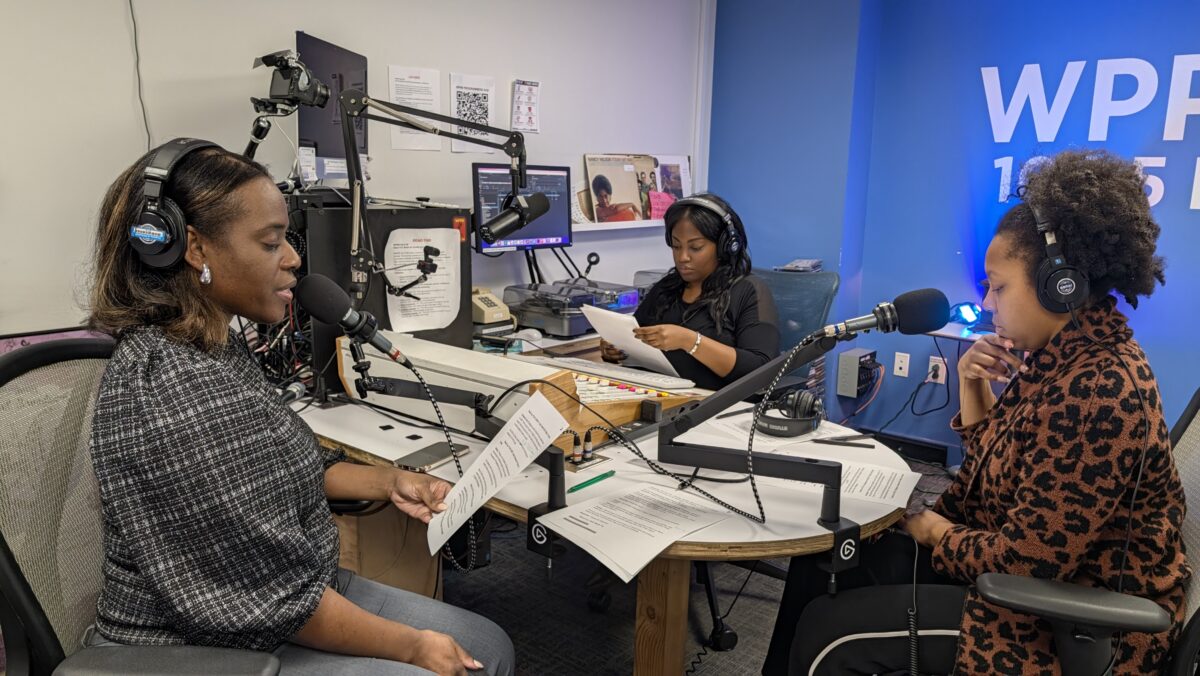
Ashley Whiteside: This is Block by Block, a community news program from WPPM LP 106.5 FM, where we explore issues affecting the Philadelphia area. With news reports from members of the community. I’m Ashley Whiteside.
Kimberlei Davis: And I’m Kimberly Davis. In the next half hour, we’ll hear stories from our community news reporters about the challenges facing mental health professionals, how some community members are helping fill the gaps left by a shortage of school librarians in the city, and how a local Burlesque show provides a safe space for members of Philly’s queer community to express themselves.
Ashley Whiteside: But first, over the years, lawsuits seeking compensation from gunmakers for the harms caused by their products have rarely succeeded. That’s because of special protections Congress has extended to the gun industry. But a handful of states and cities think that they have found a workaround. They’re seeking to exploit a wrinkle in federal law that was passed more than 20 years ago. And Philadelphia is at the forefront of this legal battle.
Block-by-block reporter Kevin Walker, who worked in the criminal justice system for more than 30 years, first as a prosecutor and then a public defender, has been following the case.
Kevin Walker: Eight years ago, Stanley Crawford’s son was shot. And he was killed while he stood on a porch in northeast Philadelphia. Since then, Crawford has worked to address the causes of gun violence in the city. He is motivated, he says, by the thought of his 19 grandchildren and his 11 great-grandchildren.
Stanley Crawford: I love my grandbabies. I love my family. I love my son. It’s the love that keeps me going and not giving up. Those who we say we love will pay the price for us not trying. You know, I wish we had a world where we didn’t have to have this weaponry.
Kevin Walker: After his son was killed, Crawford founded the Blackmail Community Council of Philadelphia, a grassroots organization that. Promotes safe neighborhoods by focusing on violence prevention, workforce development, and other initiatives. But Crawford knows that more is needed. The gun violence epidemic is complex, and it requires a multi-pronged approach, says Lydia First. First leads the special litigation unit at the city solicitor’s office.
Lydia Furst: Gun violence is a complicated problem. It continues to be a problem in Philadelphia, although it has improved a lot in the last couple of years. So I do want to acknowledge that. And I think that the solutions can also be multifaceted and complicated. I think civil litigation can be one piece of the puzzle.
Kevin Walker: In March, the city solicitor’s office filed a complaint against Glock, the manufacturer of popular guns that until recently could be quickly converted from semi-automatic to fully automatic weapons with the addition of tiny illegal devices known as switches. Switches, which can be purchased for less than $20, are override the gun’s normal trigger mechanism and allow a shooter to discharge as many as twenty bullets a second with a single trigger pull.
The result? The handgun becomes a machine gun. The city’s complaint alleges that Glock has mounted a deceptive marketing campaign. That campaign, the city says, Targets vulnerable consumers, mainly young men, by falsely representing that its converted handguns can be legally possessed for recreational use. According to the complaint, the gunmaker has boasted on social media that the only thing more fun than a Glock is a full auto Glock.
In an answer filed in early September, Glock denied wrongdoing. Its lawyers did not respond to requests for further comment. For at least the last two decades, lawsuits against the gun industry have fizzled. That’s largely because of something known as the Protection of Lawful Commerce in Arms Act, a law backed by the NRA and passed by Congress in 2005. The law shields gun manufacturers from lawsuits seeking compensation for the misuse of their firearms by third parties.
But the industry’s fortunes may be changing. A handful of blue states and cities are seeking to exploit a section of the 2005 law that has lain dormant for nearly 20 years. Known as the Predicate Exception, it permits lawsuits for harms caused by a manufacturer’s direct violation of laws regulating the sale or marketing of firearms. According to the Giffords Law Center to Prevent Gun Violence, in the last four years at least eleven states, all Democratic have passed standards of conduct for the gun industry. If those standards are violated, an aggrieved party can sue under the predicate exception. Lydia first applauds this legal development.
Lydia Furst: We’re seeing, I think, a real change and some positive progress in civil litigation to hold the gun industry accountable.
Kevin Walker: In Philadelphia’s case, the city is claiming that Glock violated fair trade practices. This is say first, and she is careful to emphasize what the case is not about.
Lydia Furst: It’s not about preventing anybody from obtaining a firearm who wants one and is legally permitted to have one. It’s about some very shocking marketing tactics that were used by a company. I think Philadelphians, when they see some of this content that Glock has put out, There will be quite shocked.
Kevin Walker: The litigation against Glock comes at a difficult moment for gun control advocates. Just this summer, the third U.S. Circuit Court of Appeals, based in Philadelphia, ruled that New Jersey’s long-standing ban on assault weapons violated the Second Amendment. And the United States Supreme Court, under Chief Justice John Roberts may extend that rationale nationwide in a case that will be argued this fall. But FIRST does not believe that the Second Amendment or the federal court’s expansive interpretation of the right to bear arms poses a threat to the city’s lawsuit.
Lydia Furst: Machine guns and fully automatic weapons are not protected by the Second Amendment. Amendment when it comes to civilians, so it’s not really something that we see as being relevant.
Kevin Walker: In the face of multiple lawsuits, Glock recently redesigned its handguns, making them more difficult to convert to automatic weapons. First welcomes the modifications, but she believes Glock had little choice.
Lydia Furst: With all this litigation that they’re facing, And the fact that they did finally have to make this change to their pistol, I think that kind of shows that they have a very big problem.
Kevin Walker: The Court of Common Pleas recently rebuffed the company’s attempt to short-circuit the litigation with a motion to dismiss. Now says First, the parties will move to the most time-consuming phase, known as pretrial discovery. The city is seeking civil penalties and an order requiring Glock to adopt marketing practices that accurately convey the dangers and the unlawful nature of fully automatic handguns and switches. Stanley Crawford believes Philadelphia can prevail in its suit against Glock if people see the human costs of gun violence.
Stanley Crawford: Well, I think the lawsuit would make a difference if those who are going to make the decision would add some humanity in their observation of what’s being presented. My son was a human being, okay? When that human being, my son, was murdered, it did a rippling effect that’s still affecting us today.
Kevin Walker: For Crawford, litigation is important. But the real key is to provide hope and opportunity to the same young men to whom Glock is marketing its lethal products.
Stanley Crawford: You gotta create opportunities for people, and you gotta give some people something to live for and something not to kill for.
Kevin Walker: For Block My Block, this is Kevin Walker.
Kimberlei Davis: Most Philadelphia public schools don’t have a certified librarian on staff. That’s a result of years of budget cuts and staffing changes. And it means that even schools that do have a library may not have the resources to allow students to check out books. Block by block contributor Milan Parker reports that some community groups are stepping in to fill the gap.
Milan Parker: At Laura W. Warring School in Philadelphia’s Spring Garden neighborhood, the library is a place where students can choose their own books. They can look for graphic novels, sports stories, or the next book in a series that they’ve already started. But that Was not always the case. Donna Perkins is the chair of Friends of Warring Library, which is a group of volunteers that manages the library. She says that when volunteers first got involved with rebuilding the school’s library in 2016, the library did not look like a place where students could borrow books.
Donna Perkins: When we saw it that day, it looked like someone’s old. full of old furniture and old books and dusty. And that was really the impetus to working closely with the principal and figuring out how and what we needed to do to make a library in that space functional for the students at Waring.
Milan Parker: Friends of Waring spent the next several years cleaning out the space, organizing books, building a collection, and working with the school to carve out library time and student schedules. In 2022, the group opened the library as a lending library for students from kindergarten through the eighth grade. But the dust that it collected in Waring’s library did not happen by accident. Jenny Loman is the coordinator of the Philadelphia Alliance to Restore School Librarians.
She says Philadelphia once had far more school librarians, 176 of them, in 1991. But Loman says that number began to fall as the district faced major funding problems in the early 2000s. In Philly, public schools moved to a system known as site-based budgeting.
Jenny Lowman: And so, what Philadelphia did was to sort of decentralize much of its budgeting. And so, it would give the building principals a certain pot of money and say, here’s your money, you figure out how to use it for your building. Of course, it wasn’t enough money, so principals had to prioritize: do I need an assistant principal? Do I need a counselor? Do I need a DSC? Students or disciplinarian? Do I need a school librarian? And when they only had a small amount of money, the school librarians got deprioritized.
Milan Parker: Loman says as librarians retired or left their jobs, many were not replaced. Laura W. Waring School is one of many Philadelphia schools where community members have worked to bring the library back into use. Caitlin Beck works with WEPAC, a nonprofit that partners with public elementary schools in West and Southwest Philadelphia. She says that many of the schools that reach out still have a room built to be a library and sometimes even books on the shelves, but no staff member assigned to run it.
Katelin Beck: All of the schools that reach out to us, they have what once was a vibrant. Library space where kids used to, you know, get to rotate through. There was once a school librarian there, but because of budget cuts in the School District of Philadelphia, unfortunately, those spaces, most of them have sat empty for quite a while.
Milan Parker: We PAC helps schools get those spaces ready for students again. The organization catalogs books. Organizes collections and trains volunteer teams to lead regular library programming. Caitlin says during a library visit, students hear a story, take part in an activity, and then get the chance to choose and check out books.
Speaker 8: And the most important part of library programming, and the thing I think that kids get most excited about, is they get to then check out books. So a large part of what the volunteers are doing is actually. Exploring the library with the kids and trying to honor requests and helping students find what it is they’re looking to read.
Milan Parker: Caitlin says instead of deciding what students should be interested in, we pack volunteers try to make room for students’ choices.
Katelin Beck: And we really do try to give students agency with that part of their day. So we’re generally not trying to steer kids. To a certain section or a certain level of book based on a reading level or things like that. Like, we really do try to honor what the kids are interested in and giving them choice about what they’re reading so that they can feel empowered. And I think it just makes the process more exciting for students.
And we know that so much of a student’s day is prescribed to them, like, they don’t get really much of a In which classes they go to or what they’re learning in their classes. So we do really try to make sure that library time is a time for them to get a say in, you know, what is it that they’re reading.
Milan Parker: And Donna at Friends of Warring says that’s one of her favorite things about volunteering with the school library. If a student wants a book about their favorite athlete or a story connecting to something they’re learning in class, Volunteers can add it to the group’s wish list. And while Friends of Warring keeps students’ autonomy in mind, families also give permission before 7th and 8th grade students can check out books from the young adult section.
Because much of the collection comes from donations, Friends of Warring has some flexibility in the range of books it can offer. Donna says there’s something special about watching a reading neutral student become a reading positive one.
Donna Perkins: You know, I had one student this year actually, so I’ll never forget he was adamant. He wasn’t going to read. And I kept asking him what he was watching and what he was interested in. And I ordered a graphic novel series that he said he would read. And he read them. He was reading series throughout the school year, which of course just made me so happy. So those little wins that hopefully were laying this foundation, not only to help them improve their literacy and comprehension, which we all know is a challenge throughout the country, not just here in Philadelphia. But hopefully, this is the lifelong love of reading.
Milan Parker: Rather than focusing on what their schools may be missing, volunteers and community members like Donna Perkins, Caitlin Beck, and Jenny Loman are focused on what they can do right now. And Donna Perkins, with Friends of Waring Library, says she sees the impact that the effort has had on her community.
Donnar Perkins: People say, How can I help? How can I get involved? What can I do? We’ve created this group of volunteers that’s just this wonderful community of people in our neighborhood that are passionate about children and literacy and wanting to have a positive information. Influence on these students.
Milan Parker: For Block by Block, I’m Milan Parker.
Ashley Whiteside: Therapy can be expensive, and federal funding cuts and work requirements for Medicaid recipients could make it easier. Even harder for thousands of Philadelphians to pay for mental health care. But patients aren’t the only ones struggling with the cost of care. Mental health care workers are also feeling the weight. Block by Block reporter Lohen Parchment brings us this story about two mental health care workers who are trying to maintain compassion and caregiving. In spite of new challenges,
Lohen Parchment: Brian and Lucia are two Philly based therapists at different stages in their careers, but both came to the field later in life. Lucia has been working at a nonprofit advocacy organization in New York, but during the COVID-19 pandemic, she began thinking about a career change.
Lucia: So I remember talking to my therapist and being like, I’m thinking about becoming a therapist. Like, I don’t know. And I was really nervous because I thought she was going to be like, oh God, no, you’re too messed up for that. But, you know, a great therapist. And so I was also really supportive of my journey with that. And talking to other people and talking to my friends and family and close supporters, a lot of folks were like, That makes sense for you.
And so I started to see that too. It was a lot to kind of change, make that leap, but I knew that, as burnt out as I was, it did need to involve something that was like a really big value for me and involve working with people.
Lohen Parchment: Therapy is also a second career for Brian. He’s now co-owner of a group therapy practice called. PHL Therapy Collective. But up until 15 years ago, he was working in an industry that he says didn’t seem to have many career prospects.
Brian: So I was working in newspapers for about 10 years, and that was not going to go very far. And I was in an alternative relationship structure at the time. So it wasn’t just any kind of therapy that I was looking for. As far as where I might be interested in working, it was in working with relationships that are either married or unmarried or poly or open or whatever it happens to be.
PHL Therapy Collective has always been centered in the LGBTQ population, which is where I identify and where a lot of the clients come here are. It’s also Something that then attracts that kind of intern identities interested in that work.
Lohen Parchment: Both Brian and Lucia find their new careers rewarding, but there are also challenges. Lucia says one of those challenges is making a living wage when working with clients who may not be able to afford to pay very much for their care.
Lucia: One of the hard parts about therapy is that so much of it is dependent. Financially, on where the client is or where someone seeking services is. One thing I’ve been really struggling with is figuring out exactly how much I earn day to day. So much of what we make as therapists can be so dependent on a lot of different factors: if you have a session scheduled that day, if insurance is going to reimburse you.
If someone’s able to make it to your session, either be physically present or emotionally present in the session. If there are emergencies in your own life or anyone else’s life. So there’s a lot of factors that go into how much you’re going to make in a specific week or day or month.
Lohen Parchment: While therapists can charge anywhere from $50 to $300 per hour for a session, Lucia says it’s important to remember that therapists who are independent contractors or who own their own practices don’t get benefits like healthcare, pay time off, or retirement plans unless they pay for them out of their own pockets. And for therapists like her who are newer to the field and just looking to start their own practice, it can be difficult to make a living wage.
Lucia: This year I’m working on transitioning to going full time in my private practice and building that up. And so it is a low earning, hopefully, year, but I’m hoping to make like just under 50K. Reflective of the having a graduate degree and all the training that we put in, it’s definitely not enough. I think that’s one of the big barriers. I knew going into this profession that I wasn’t going to be making a ton of money. And what I thought was it was gonna provide a little bit more security than it has.
Lohen Parchment: Another factor is the role that insurance companies play in the cost
Lucia: of care. Insurance companies have so much power in the rates that they set. What that does is a lot of therapists, as you might see, like go into cash pay. Going to private pay, which makes sense because insurance companies having that much power over your livelihood, over how you do therapy and all of that, it impacts so much. And so that puts the onus of paying on the client.
And so it really only means that you can only access therapy if you have the stability and the finances to pay for it. And then that creates an unjust system.
Lohen Parchment: At PHL Therapy Collective. Brian says all of the therapists are independent contractors who are dealing with these same pressures. He says therapists also face other challenges. The world of private practice can be very lonely. I could be in the office here all day and only see other therapists here for about 30 seconds when I go out to get a client and come back because we’re all just going into our rooms and disappearing for.
About an hour. So it can be pretty lonely work. One of the reasons why I’m thinking about doing the collective in the way that I am, so that there is cross-pollination with interns and people who have graduated already, but certainly connections to people that don’t just happen normally like they would at some office places where there’s a lunch hour that everyone’s mostly doing and they can do together. It can be very lonely. Despite those challenges, Brian says he remains deeply connected to the work.
Brian: I’ve been doing this for about 15 years now. So I really get to work with the cases and the kind of clients that feed me. And so it’s really nice to have the privilege to make some of those choices. But working with people who are new to therapy. Working with people who have not really thought about themselves or their life in different ways, like I’m thinking about them systemically, makes for some really great conversations in the therapy room.
Lohen Parchment: And despite the financial challenges, Lucia also remains compassionate and dedicated to providing care for others.
Lucia: It’s so amazing to be able to give an hour into kind of like. Their day and their lives, and to really be there as a support. And that hour, that day looks completely different depending on what someone’s bringing in, how you’re sharing this space with someone. But there are some moments and times that are just, it makes it all worth it because you’re there to help. Empower someone to get through the systems and being there while someone can feel seen and heard and supported. Yeah, that keeps you going through a lot.
Lohen Parchment: For Block by Block, I’m Lohan Parchment.
Philadelphia’s queer nightlife is about more than a night out.
Kimberlei Davis: For many performers and audience members, these spaces are places to create, earn money, build community, and fully be themselves. My co-host, Ashley Whiteside, takes us inside Whispers Cabaret, a recurring burlesque. And poll show to find out what makes events like these so special.
Whisper: Ready for our next performer on a Saturday night inside the Velvet Whip, the room is loud, intimate, and pretty clear about its rules. Do you guys know how burlesque performances work? Do you guys know what you do when you see something you like? Somebody said I throw money. So when you see something you like, you throw money, you cheer, you do all that.
Ashley Whiteside: Whisper’s Cabaret mixes pole and modern burlesque with everything from aerial acts to sideshow performers and singers. Producer and pole performer Whisper started the show in part. Because he wasn’t finding many opportunities for himself in Philly.
Whisper: Being a male pole dancer here in the Philly scene, there’s not many opportunities in terms of stripping, pole dancing, things like that. So I wanted to create something for me, but also have something that I can bring my friends onto because I have a lot of talented friends, and there were also people that I’ve met. Through the burlesque and strip scene that I didn’t know that well, but I’m like, they’re talented. I would love to see them in something recurring that they can really show their talents.
Ashley Whiteside: And for cast member desire, what happens here goes beyond the performance.
Desire: It’s super important to have third spaces as an adult, right? I feel like we always have our home life and then we have our work life. Where do we put ourselves in between that? And I think pole and performance for me has been that space that has just been a place I can be happy, joyful, fearful, learn so much about myself, express my sensuality.
Whisper: Is everyone ready for our next performer? Let’s give a round of applause. To my girl, the one and only Jordan Monroe.
Ashley Whiteside: That freedom is something the audience notices too. Mike and Melissa were seeing Whispers Cabaret for the first time.
Mike: I don’t think I’ve seen people move like that, that look like real people.
Melissa: Real body, real love, I love it.
Ashley Whiteside: Whispers Cabaret is growing, but across Philly, queer nightlife spaces are still fighting to hold onto their place in the city. This summer, a newly formed group filed a lawsuit against Bar X on Carmack Street, asking a judge to shut the bar down. As a public nuisance. Bar X has been open for about a decade and serves a largely black LGBT clientele. Owner Tony Sang disputes the allegations in the lawsuit and has questioned why his bar is being singled out on a block with several nightlife venues.
The fight comes after the closure of other spaces that have become important gathering places for black and brown queer people in the neighborhood. And that raises a bigger question about what gets lost when these spaces disappear. Because for the people who build their lives, art, and community around nightlife, A venue is rarely just a venue. Whisper says there are already limited places where some performers can work safely and actually get paid.
Whisper: I feel like the creative scene would be missing a lot, for one, from an entertainment standpoint, but also like there’s not a lot of places for some performers to safely perform. I feel like just having these spaces is great because it offers an outlet, but also a means of income for people who want to have their creative desires fulfilled.
Ashley Whiteside: Here, pleasure is entertainment, but it’s also work, community, and a place for people to make something of their own. Whisper says he wants an opportunity to keep expanding.
Whisper: I just want things to keep going well. I want my dancers to flourish. I want them to have other opportunities. And I just want things to continue to grow.
Ashley Whiteside: For Block by Block, I’m Ashley Whiteside.
Whisper: DJ Honeyworld on the one that you’re going to be just looking for.
Kimberlei Davis: Monday, October 19th is the last day to register to vote in Pennsylvania for the November 3rd election. To register to vote, check your registration status or Change your name or address. You can visit vote.pa.gov/slash register. This year, voters will be casting ballots and races for Congress, governor, lieutenant governor, and the Pennsylvania House of Representatives.
Ashley Whiteside: Block by Block is produced by Gina Faulkner, Gigi Guida, Luanda Horton, Dina Jovin, Chelsea Luby, Monique Moore Pryor, Lohen Parchman, Sadie Troup, Kevin Walker, and us.
Kimberlei Davis: Kimberly Davis.
Ashley Whiteside: And Ashley Whiteside. Lohen Parchman is our board operator tonight.
Kimberlei Davis: Brad Linder is Radio News Managing Editor for WPPM. Peta Liu is Radio Operator. Operations Manager and Allison Durham is WPPM’s radio program director.
Ashley Whiteside: And we’ll be back in two weeks with a new episode of Block by Block featuring more stories about issues affecting life in the Philly region. And you can find this and past episodes of the show on Philly Cam SoundCloud, Apple Podcasts, and wherever else you find your podcasts.
Kimberlei Davis: Thanks for listening.