
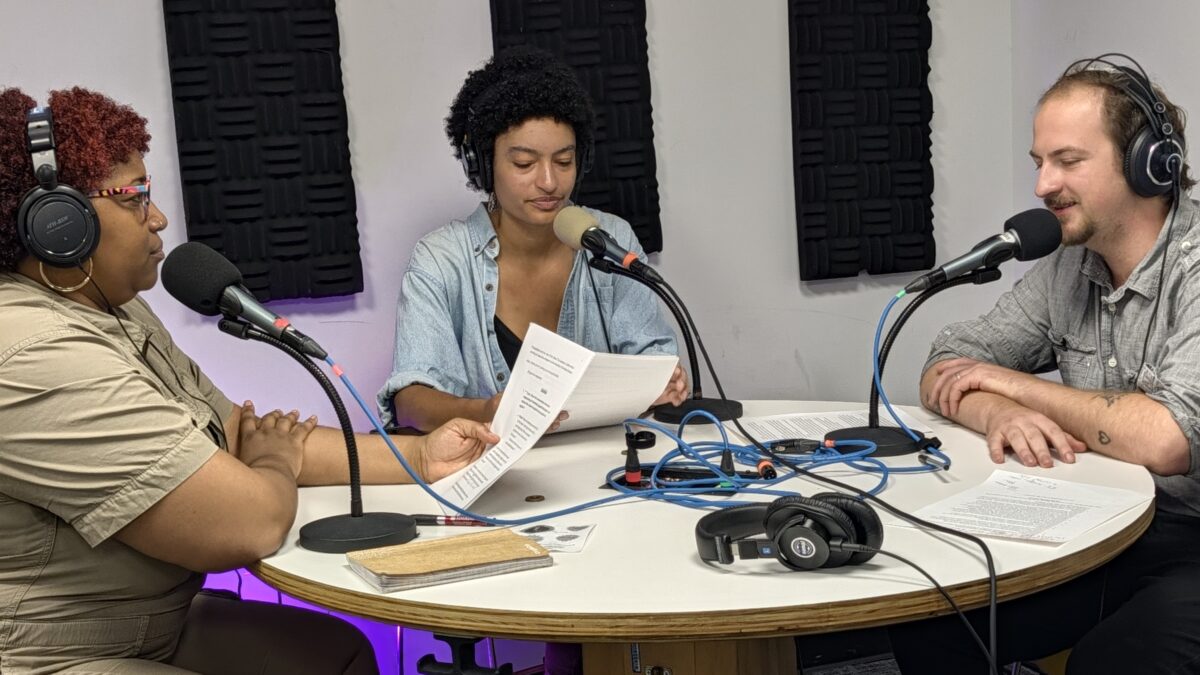

Around the Block is a community news program from the Block by Block team at WPPM-LP 106.5 FM. On this program we explore issues in the Philadelphia region with voices from the community – with reports from our team of community journalists and live in-studio interviews.
This episode features stories from reporters Milan Parker and Alisha Miranda about how communities are stepping up to fill a gap left by the small number of Philadelphia schools staffed by professional librarians, and a look a the history of Philadelphia’s iconic Bellevue hotel. We also speak with Alexa Palma about the Save the Academy Movement that has arisen since Drexel University announced it would close the Academy of Natural Sciences, effective September 27th. Alex Palma is an archivist, lecturer and grants consultant in the Philadelphia area. He is president of the Museum Council of Greater Philadelphia and an ally of the Save The Academy coalition.
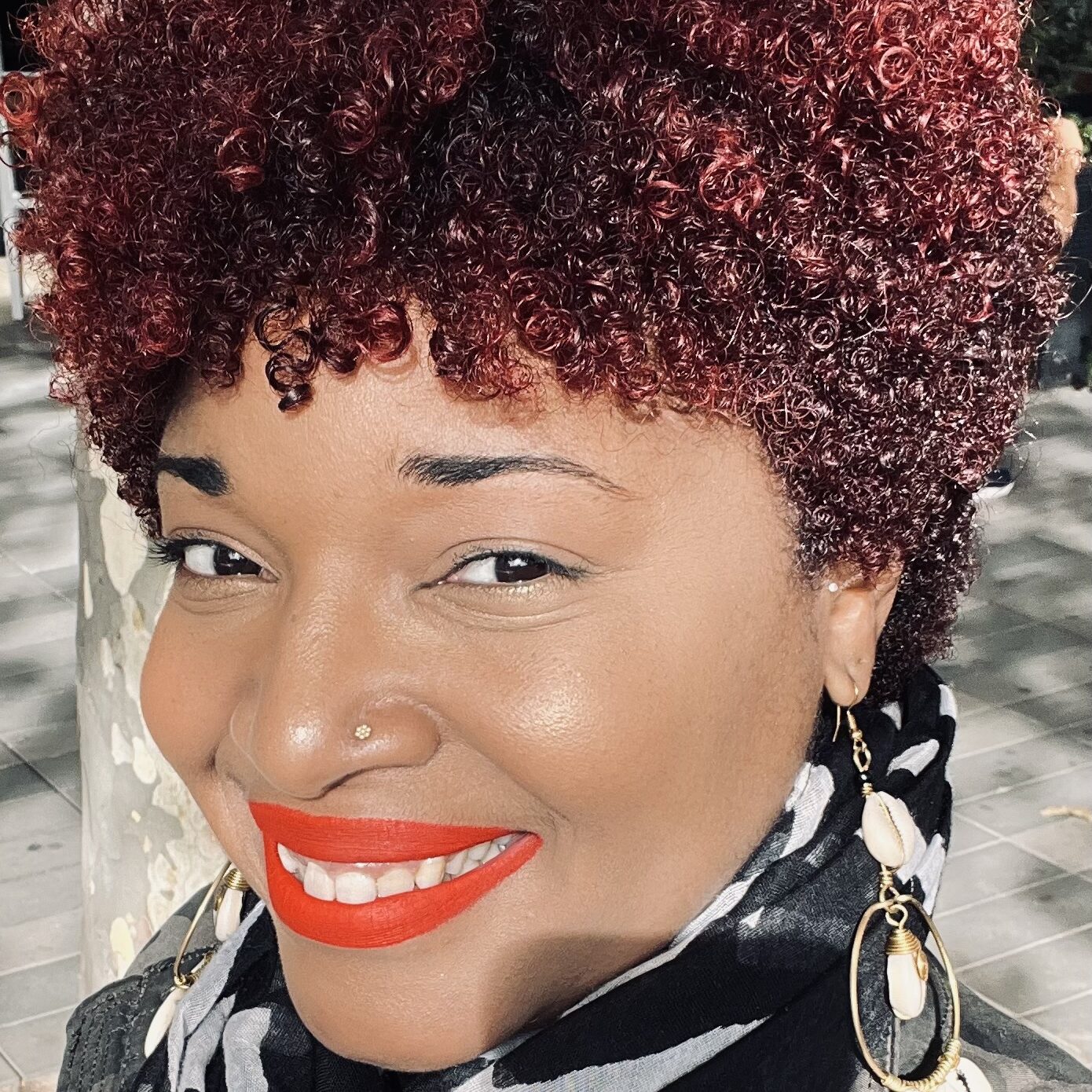
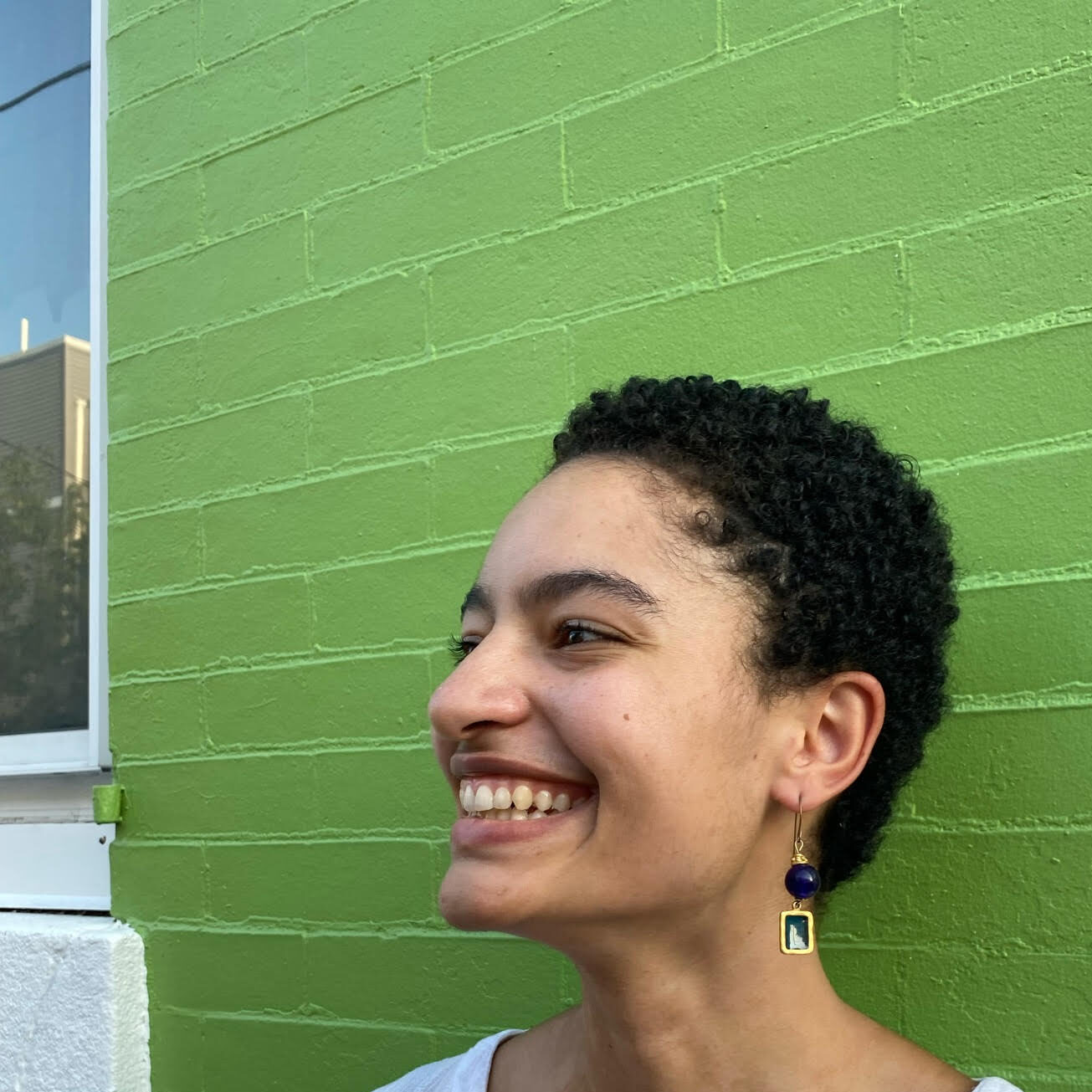
Campbell Simmons and Koren Martin hosted this episode, and Winter Schneider was our board operator.
Brad Linder is Radio News Managing Editor for WPPM. Peta Liu is Radio Operations Manager. And Allison Durham is WPPM’s Radio Program Director.
Episode Transcript
This transcript was machine-generated and may contain spelling errors or other inaccuracies.
Campbell Simmons: Good afternoon. You’re listening to Around the Block, a community news program from the Block by Block team at WPPMLP Philadelphia 106.5 FM. On this show, we explore issues in the Philadelphia Region with voices from the community. Through original reports from our team of journalists and live interviews, I’m Campbell Simmons.
Koren Martin: And I’m Koren Martin. Coming up, we’ll have a conversation with a leader in the movement to save the Academy of Natural Sciences Museum. Drexel University recently announced plans to shut it down before the end of the month.
Campbell Simmons: But first, it’s back to school season and Many students at Philadelphia Public Schools are back in the classroom interacting with their new teachers and classmates. But if they head down the hall to check out a book from the school library, they might not be able to because years of budget cuts and staffing changes have left most Philly public schools without a certified librarian. Around the Block reporter Milan Parker reports that some community groups are stepping in to fill the gap.
Milan Parker: At Laura W. Waring School in Philadelphia’s Spring Garden neighborhood, the library is a place where students can choose their own books. They can look for graphic novels, sports stories, or the next book in a series that they’ve already started. But that was not always the case. Donna Perkins is the chair of Friends of Warring Library, which is a group of volunteers that manages the library. She says that when volunteers first got involved with rebuilding the school’s library in 2016, the library did not look like a place where students could borrow books.
Donna Perkins: When we saw it that day, it looked like someone’s old full of old furniture and old books and dusty. And that was really the impetus to Working closely with the principal and figuring out how and what we needed to do to make a library in that space functional for the students at Waring.
Milan Parker: Friends of Waring spent the next several years cleaning out the space, organizing books, building a collection, and working with the school to carve out library time and student schedules. In 2022, the group opened the library as a lending library for students from kindergarten through the eighth grade. But the dust that it collected in Warring’s library did not happen by accident. Jenny Lowman is the coordinator of the Philadelphia Alliance to Restore School Librarians. She says Philadelphia once had far more school librarians, 176 of them, in 1991. BaLowman says that number began to fall as the district faced major funding problems in the early 2000s.
In Philly, public schools moved to a system known as site-based budgeting.
Jenny Lowman: And so, what Philadelphia did was to sort of decentralize much of its budgeting. And so, it would give the building principals a certain pot of money and say, here’s your money. You figure out how to use it for your building. Of course, it wasn’t enough money. So principals had to prioritize: do I need an assistant principal? Do I need a counselor? Do I need a dean of students or disciplinarian? Do I need a school librarian? And when they only had a small amount of money, the school librarians got deprioritized.
Milan Parker: Lowman says, as librarians retired or left their jobs, many were not replaced. Laura W. Waring School is one of many Philadelphia schools where community members have worked to bring the library back into use. Katelin Beck works with WEPAC, a nonprofit that partners with public elementary schools in West and Southwest Philadelphia. She says that many of the schools that reach out still Still have a room built to be a library and sometimes even books on the shelves, but no staff member assigned to run it.
Katelin Beck: All of the schools that reach out to us, they have what once was a vibrant library space where kids used to get to rotate through. There was once a school librarian there, but because of budget cuts in the school district of Philadelphia, unfortunately, those spaces. Most of them have sat empty for quite a while.
Milan Parker: We PAC helps schools get those spaces ready for students again. The organization catalogs books, organizes collections, and trains volunteer teams to lead regular library programming. Katelin says during a library visit, students hear a story, take part in an activity, and then get the chance to choose and check out books.
Katelin Beck: And the most important part of library programming, and the thing I think that kids get most excited about, is they get to then check out books. So, a large part of what the volunteers are doing is actually exploring the library with the kids and trying to honor requests and helping students find what it is they’re looking to read.
Milan Parker: Katelin says: instead of deciding what students should be interested in, We PAC volunteers try to make room for students’ choices.
Katelin Beck: And we really do try to give students agency with that part of their day. So we’re generally not trying to steer kids to a certain section or a certain level of book based on a reading level or things like that. Like we really do try to honor what the kids are interested in and giving them choice about what they’re reading. so that they can feel empowered. And I think it just makes the process more exciting for students. And we know that so much of a student’s day is prescribed to them. Like they don’t get really much of a say in which classes they go to or what they’re learning in their classes.
So we do really try to make sure that library time is a time for them to get a say in, you know, what is it that they’re reading.
Milan Parker: And Donna at Friends of Warring says that’s one of her favorite things about volunteering with the school library. If a student wants a book about their favorite athlete or a story connecting to something they’re learning in class, volunteers can add it to the group’s wish list. And while Friends of Warring keeps students’ autonomy in mind, families also get permission before 7th and 8th grade students can check out books from the young adults section. Because much of the collection comes from donations, Friends of Warring has some flexibility in the range of books it can offer. Donna says there’s something special about watching a reading-neutral student become a reading-positive one.
Donna Perkins: You know, I had one student this year, actually. I’ll never forget. He was adamant he wasn’t going to read, and I kept asking him what. He was watching and what he was interested in. And I ordered a graphic novel series that he said he would read. And he read them. He was reading the series throughout the school year, which, of course, just made me so happy. So those little wins. That hopefully we’re laying this foundation not only to help them improve their literacy and comprehension, which we all know is a challenge throughout the country, not just here in Philadelphia, but hopefully, this is the lifelong love of reading.
Milan Parker: Rather than focusing on what their schools may Be missing. Volunteers and community members like Donna Perkins, Katelin Beck, and Jenny Lohman are focused on what they can do right now. And Donna Perkins, for Friends of Warren Library, says she sees the impact that the effort has had on her community.
Donna Perkins: People say, How can I help? How can I get involved? What can I do? We’ve created this group of volunteers that’s just this. Wonderful community of people in our neighborhood that are passionate about children and literacy and wanting to have a positive influence on these students.
Milan Parker: For Around the Block, I’m Milan Parker.
Koren Martin: There’s a historic building on Broad Street, just a few blocks south of City Hall, that many Philadelphians may only know as an exclusive hotel. But around-the-block reporter Alicia Miranda recently took a tour of this spot and found out how it plays a unique role in Philadelphia’s story as a city known for its dining and hospitality. Alicia brings us this story:
Alisha Miranda: One of my favorite cocktails. Was invented right here in Philadelphia in a building called the Bellevue. It’s a grand hotel on Broad and Walnut Streets that I recently learned not only has a deep connection to the Clover Club cocktail, but also laid the groundwork for hospitality and entertainment in downtown Philly. And that story starts with a guy named George Bolt.
David Kurlander: He was born in 1851. On an island in the Baltic called a Rugin. His parents were involved in managing the hotels. And when he was 17, he boarded the ship by himself and headed to New York to attempt to make a career as a hotel maven and had a frustrating few years of trying to break into this business by himself.
Alisha Miranda: That’s David Kerlander, who’s been studying Bolt and the Bellevue as part of a two-year archival project and forthcoming book. In fact, he’s the building’s resident historian and unofficial storyteller. He says without Bolt, there’d be no Clover Club cocktail and no Bellevue Hotel.
David Kurlander: Bolt, from his perch at Parkers in New York, started hearing more and more about Philly. So He actually makes the move and he manages to get a job as an assistant steward at the Philadelphia Club, this kind of eminent gentleman’s dining club, which is just a couple blocks away on 13th and Walnut. Very quickly, he gets a cheering section that loves his cooking, that loves how he plans events, that loves the way that he communicates. So in 1881, They help him finance his own hotel. And that is the original Bellevue Hotel. And he also started working with a club that was called the Clover Club.
This was an all-male club, first chartered as a journalism club, but you also saw a lot of politicians, a lot of industrialists in there. Passed around a loving cup at their monthly dinners that was filled with huge amounts of alcohol. Bolt became their leader and their mascot. And he developed all sorts of recipes that were custom-designed for them, including the Clover Club cocktail, which emerged probably sometime in the late 1880s or 1890s. The recipe has changed over time, but the standard Clover Club is a half lemon’s worth of lemon juice, a unit of gin, a splash of raspberry, and egg whites.
That cocktail came to personify Bolt’s very close relationship with this club and also just the type of culinary innovation that he was taking on.
Alisha Miranda: Kurt Lander says the Clover Club and its namesake cocktail are part of what’s made the Bellevue a social hub for so long. He started taking people on tours of the Bellevue earlier this year. And over the summer, I joined one where he took visitors throughout the building and explained how, for more than a century, it’s been a place where Philadelphians have come to be seen, to drink well, and to celebrate their biggest moments.
David Kurlander: This really was party central for the city from the time that it opened in 1904. I have people come on the tours every week who had their high school prom here, who got married here, went on a very memorable first date here, and celebrated New Year’s here, celebrated Valentine’s Day. The list goes on.
Alisha Miranda: In the 1990s, Kerrlander says an upscale steakhouse called the Palm became a hotspot inside the Bellevue. And ushered in a restaurant renaissance. It was open for over 30 years and once featured hand-painted cartoon caricatures of lots of Philadelphians on its walls, many of whom were Palm regulars.
David Kurlander: The opening of the Palm, which was 89 into early 90, I mean, that was transformative for the city and for South Broad in having sort of a truly Colorful watering hole on this street. The district attorney dining with a defense attorney, dining with the mayor, dining with a suspected mafia member. It was a real melting pot of the famous and infamous in the city, and it had this old world feel to it.
Alisha Miranda: I recently joined Curlander with locals and out-of-towners on a tour. Inside the Bellevue, where several folks shared their memories at the hotel.
Bob: My name is Bob, and with these two fine gentlemen, we worked here from 1979 when the hotel reopened as a Fairmont after the three-year closure. And we were here until 1986 until it closed again, unfortunately. We had great experiences here, through a lot of great Friendships, you know, this will always be my favorite hotel.
Alisha Miranda: Since the palm’s closing during the pandemic, Kerlander says the Bellevue has gone under a transformation to bring back extravagant dinner and a show vibes to the ground floor hotel. A new supper club, restaurant, and bar called Mr. Edison opened earlier this summer, and he thinks it will bring back the energy the palm once had. Adrian Hardy is Mr. Edison’s entertainment director. He says the restaurant is reviving the Belleby’s nightlife scene.
Adrian Hardy: In 1904, the building was electrified by Thomas Edison and allowed the city to kind of socialize late into the night. And that concept kind of parallels that idea, right? Where it’s you come in early evening, you come for dinner, but you stay for the show, you stay for the energy, the liveliness, and Every seat in the house can have a good view. You can have a view of the bar, view of the stage. We’re doing live entertainment seven days a week. Towards the weekend, when things get busier and livelier, I’ll be bringing in larger jazz ensembles.
Alisha Miranda: Mr. Edison is just one example of the many changes that Bellevue has seen in 120 years. Now, Kerrlander says that Bellevue continues its evolution from luxury hotel. To mixed-use building.
David Kurlander: Got 155 rental residences. They’re fully leased and the residents are so cool. And it’s like a very tight-knit community. I think they should have a reality TV show. But it’s brought this real sense of community to the hotel. Sporting Club got a full redesign and is amazing. Then you’re gonna have a bar in the old palm space that’ll be a little bit more. Accessible in terms of price point and also just be sort of a meeting place and fun place to party. And then in the 90s, part of the whole mixed-use renovation was putting a food court in the bottom level.
That’s now gonna all be a giant spa.
Alisha Miranda: While the Bellevue may have once been for politicians and socialites, it now welcomes the whole city into its future. Even if you can only afford a drink inside like me. To find out more, visit thebelleviewhotel.com and click on the events tab. Mr. Edison is open every day for dinner, drinks, and live music starting at 5 p.m. For Around the Block, I’m Alicia Miranda.
Campbell Simmons: Earlier this month, Drexel University announced that it would close the Museum of the Academy of Natural Sciences. The last day it will be open to the public is next Sunday, September 27th. Many people who loved the museum were upset, including me. I was introduced to the museum through Black Birders Week early on in my time in Philly. And it opened all kinds of doors. I’ve been a panelist and participated in programming. It’s where I connected with so many people who would mean so much to me throughout my time here. So when I saw that a coalition to save the academy was formed within days of Drexel’s announcement, I reached out to the group to find out more about that effort and what the prospects for the future of the museum there could be.
is joining us live to talk about community-led efforts to save the Academy. Alex is an archivist, lecturer, and grants consultant in the Philadelphia area. He is the president of the Museum Council of Greater Philadelphia and an ally of the Save the Academy Coalition, which is working to save the museum at the Academy of Natural Sciences. Alex, thank you for joining us on Around the Block.
Alex Palma: Oh, well, geez. Thanks so much for having me, guys. I appreciate it.
Koren Martin: It’s a pleasure for us.
Campbell Simmons: So, since the announcement, we’ve seen an outpouring of community support for the museum. What makes this place so special for so many people in the region?
Alex Palma: Well, so it’s definitely like a multifaceted importance, right? So, first of all, it is, as far as I know, the oldest. Science Museum in the United States, right? So the Academy of Natural Sciences was founded in 1812, but it became a museum in 1828. So it’s either just over or just under 200 years old, depending on how you want to measure it. And it’s been on the parkway since 1876, right? So unbelievable, like. Unbelievably important and venerated museum and institution in Philadelphia. Outside of that, right, a lot of people have like these incredibly emotionally resonant experiences.
I grew up in Philadelphia. I’ve gone to the museum probably 10 times at least. I’ve chaperoned trips there. And, you know, a lot of people have these like. intense memories of going and being a kid and and just like learning about the natural world right for the first time really. I mean it’s that like it’s it’s uh it’s ANS and it’s the Franklin Institute are these like two core things for kids to go to on the parkway there. Um but outside of that, right, the academy is super important from a academic research point of view.
Right. They have 19 million specimens, fossils, biological specimens from all over the world. Some of them are over 100 years old. And scientists literally will come to Philadelphia to do research at the Academy of Natural Sciences because of that, because they have stuff that you can’t get anywhere else. So yeah, anyway, that’s why the Academy is important. And that’s why I think a lot of us are so shocked. About this sort of sudden announcement. We’re still reeling just a couple of weeks later.
Koren Martin: I think we all are. I think behind the scenes, connected with was the visceral connection that people have, their memories of going to the museum for the first time and then seeing in social media. A second and third generation now bringing their grandkids to the museum. And so I think what would be good for the listeners is like describing actually what it’s like to walk through like the dinosaur exhibit, like for you, you know, as you were sharing that you’re from the Philadelphia region.
Alex Palma: Like, well, I mean, and I’m blessed to have been from here and to like sort of grow up. Like with the Academy. And actually, even when I chaperoned those two trips, my wife’s a school teacher, so we’ve chaperoned trips there. And to see it again through their eyes, I feel super lucky to have had these multi-variable perspectives of the Academy and its exhibits. I mean, what I’m always impressed by, um I’m more impressed now that I’m an ad an adult, right, than when I was a kid, um, was the ability to make science accessible um and make it fun, but still like be very uh what’s the word?
Um thorough, right. And and you know, we’re we’re not we’re not telling kids something that’s like not complete. We’re telling them like rigorous science, right? And getting them interested. Right. And I think that that means a lot to kids that they’re taken seriously. You know? I’m not sure if that totally answers that.
Koren Martin: No, you answered that question. Yeah. I think in a time where I think in a time where there’s so much technology-driven engagement, it’s so important for young people. Families to engage with the tactile, the analog, right? Like, what does it mean to see these really large bones in
Alex Palma: the dinosaur hall and for it to be the real thing?
Koren Martin: And the scale. Yeah.
Campbell Simmons: So, absolutely. And that kind of also brings me to this other point: that, like, it’s not just about these exhibits as well, right? It’s also the programming, the fact that people can come to a physical space and Participate in an event. That’s how I originally got connected to the museum. So, how events like these played a role in the museum’s engagement with the community?
Alex Palma: Yeah, well, and so that’s a really interesting point because that’s kind of that, you know, as president of the museum council, this is something I think a lot about. You know, why are museums important? I think that people don’t realize that museums like our These like community lodestones, right? You’re talking about the Blackbirders group or collective. Weak, yeah. Yeah, we’re weak. And I mean, think about the community that comes up out of that, right? And where else do you find stuff like that, right? I mean, I’m sure that there’s other places, but like each and every opportunity that you have to.
Bring Philadelphians and people outside the city too together means a lot. And museums have a lot of trust. People really, really, really trust museums. And so to lose one and to lose one that’s like a community touch point is a tragedy that really kind of can’t be fully described to me.
Koren Martin: I think we’re all still in shock. I think this is a very much an ever-evolving. Circumstance situation. And as we noted, there’s a lot of support for the academy. But this month, you know, Drexel announced that it would be closing the museum and moving its archives to the university. Do you know why?
Alex Palma: I personally don’t. And that’s something that’s really been super, super frustrating about all this is that we have not been. In touch with Drexel that much, right? And I would love if they were more in touch, right? I know everyone’s mad at them, but how else are we going to get out of it? You guys should come to the table, tell us what’s wrong. We know by looking at the sort of non-profit related documents, the 990s and things, that The university, uh, that the academy has been running about a $600,000 deficit the last couple years.
Um, and so they do need money, they do need help, however, right, um, you know, there’s nothing that we can’t fix here. I don’t think, you know, the community, the cultural community in Philadelphia is really strong. It’s very tight, yeah, and close-knit. So in in terms of like what do we know about why this is happening, I really I wish I knew more. And basically we have to go off of what we know and that is that the academy is struggling financially. Um and I suspect that there’s a lot of deferred maintenance um and obviously they’ve gone down to being open to the public three days a week.
Maybe because of staffing costs or whatever. But like I said, I really believe that if Drexel came to the table and if the Academy came to the table with the cultural community and the museum and philanthropic community, that we could talk it out figure out.
Koren Martin: There’s nothing that can’t be strategized or figured out. Oh, 100%. But I think transparency. Is one of the things that a lot of community members are grappling with, just like you’re saying. Yeah. And we want to, we, we want to know more, but unfortunately, there just hasn’t been that much information provided about the black, you know, like the tactile things that, you know, are true and then ways, creative ways that could be thought of to get. You know, us moving to a solution.
Alex Palma: Sure. I mean, and the other thing too is that the timeline is so brisk, right? Exactly. So this was this was announced on September 1st, right? Now, look, I mean, I won’t brag, but I feel like I’m pretty involved with the museum stuff in the city. Nobody had any sense that this was going to happen. And they’re closing less than a month later. There’s been no public town hall. There’s been no public anything that we and our group didn’t put together, right? So, yeah, come on, like, let’s talk. That’s that’s what I’m saying.
Campbell Simmons: Yeah. Um, and I’m also just curious: like, thinking about future generations of Philadelphians and the fact that they won’t be able to engage in this museum if it does. Close. What is the impact of that? What is being lost, really?
Alex Palma: You know, this institution has to be preserved for Philadelphia youth. And especially when I feel like young people are struggling with misinformation. Yeah. Right. I mean, there’s a lot of like AI YouTube slop that I see kids watch and just, you know. Having a place where people can just learn the real science, man, is so I know, I know, it’s crazy. I mean, what’s being lost is the possibility for future generations to experience this expression of science at education, which is so, so important. I mean, you can get other places in Philadelphia, at the Franklin Institute, they’ve worked really hard at the Mooter Museum, at the Wagner.
But what they do at the Academy of Natural Sciences does have a uniqueness to it that’s really important to preserve. And speaking of preserving, right, not only losing that community aspect, you’re losing a literal scientific resource in these specimens, these 19 million specimens. And speaking as an archivist and speaking as somebody who has been in touch with collections people and scientists at the Academy, some of this stuff is really fragile. It’s really old, it’s really fragile, and there are special conditions to the preservation of some of these specimens that we can’t be sure will be.
Like, paid attention to. Yeah. You know? Do you know how much it costs to move a collection like that? Like millions and millions of dollars. Right. And it takes years of planning. Has there been planning? We don’t know. Right. And there’s a lot we don’t know. Right.
Koren Martin: Yeah. I think that that’s my next question is in terms of accessibility to the public. It’s like what’s been shared so far is the education component will be. Still open, but in what way? Where are the specimens going? You know, will they be properly stewarded? I just feel like there’s a lot of up in the air. But I think in terms of accessibility and losing that access, it’s quite devastating.
Alex Palma: It’s incredibly devastating. Yeah. And Yeah, I mean that’s a huge frustrating part of this is that we don’t know. Yeah. Right. And nobody’s really said anything.
Campbell Simmons: Absolutely. And I mean this is also just making me think about, you know, in the current political climate, we’ve seen cuts and frankly attacks on funding and support for the arts, sciences, historical archives, among many other things. And I’m curious, like what role have institutions like the Academy of Natural Sciences played in that environment as places where you can learn about science and nature outside of an academic setting? And then also if you’re comfortable commenting on it, how do you think the political environment may have played a role in the decision to close the museum?
Alex Palma: Well so again, I can’t totally speak for Drexel. I don’t know like what the ultimate like straw that broke the camel’s back was. But like let’s look at things at like a local level and at a federal level. You know grants have been cut at the federal level and we’ve gone back and forth like is the NEH going to close? Is the IMLS going to close? And so, like a lot of grants have been, the possibility of certain grants have been lost. A lot of local institutions have lost grants that they already had. And a lot of people I know now are more wary about going for grants at the federal level at all.
So, why are you going to apply for something that isn’t guaranteed? At the local level, we have seen year after year cuts to arts and culture funding in Philadelphia, right? In fact, just like just speaking for the Philadelphia Cultural Fund, right? Last year they had a $5 million budget. This year they have like a $3.5 million budget. And so if you look at. Other cities its size. Philadelphia is like going down, down, down in terms of art funding. And if you look at a city not so far away, New York, much bigger city, right? But in Mom Dani’s New York City, we’ve seen the largest allocation to the arts ever.
So we’re seeing possibility. We’re seeing possibility. And I think that. There are certain factions that realize the potential that arts and culture have, that science education has for young people. But we just need to invest in it, man.
Campbell Simmons: Definitely. Yeah. So within days of the announcement, the Save the Academy movement started rallying support to keep the museum open. How did that happen?
Alex Palma: So There are people that are friends of the museum, right? And so a couple of people that have been really, really involved are Issa Bettencourt and her sister Ileana as well as Sarah McAnulti who runs the Skype a Scientist podcast. And so when the closure was announced, they started immediately putting together this coalition. Right. And so they wanted to put together a rally, which they held on September 8th. Right. And my involvement as president of the Museum Council came just before that, almost like two or three days before that, because I was seeing all the stuff, right?
Like the Save the Coalition, Save the Academy Coalition stuff coming across my feed. And I was like, Museum Council has to be involved. This is like what we’re here for. And so I just cold wrote them on Instagram. I guess that’s how things happen now. I was like, what do you need? What do you need? And Sarah wrote me back and said, call me. Right. And so I just called her and helped out with the rally a little bit. And, you know, since then, we’ve been. You know, all of us have been, and with other people too, across the cultural community, have been in conversation with each other and with civic leaders about what can we do, right?
And so we testified at city council this past week on the 17th, and we held a press conference there with Nina Ahmad and Jeffrey Young, who’ve both Been very helpful and illuminating to us about what our options are. Unfortunately, that day there was a bomb threat at City Council, so they had to evacuate City Hall. It was, I don’t really know what happened, but we’re all safe. It was all good. And now I’m here. I mean, it’s really been a very Crazy and brisk situations.
Campbell Simmons: Yeah. Are there solutions that you all have been able to identify?
Alex Palma: So there are some. We don’t know what’s totally actionable. So in my mind, the easiest one is that someone steps forward, whether it’s a donor or an organization, and says, look, we want to help. We have a couple million dollars that we don’t need. The Academy of Natural Sciences is presented by the Philadelphia Eagles. Why not? Another option is the city council people have been talking about zoning, right? Right now, the Academy is zoned as a multifamily household, which is obviously incorrect. So maybe now this won’t necessarily fix the museum’s finances, but it could make it harder to develop it into something else, right?
If they zoned it as a museum. There are other political levers that we haven’t fully had a chance to so like city council wants to bring Drexel in front of their I don’t know what you’d call legislature or whatever to like question them about that.
Koren Martin: And they also have the power of subpoena.
Alex Palma: Yeah, and the power of subpoena is being pushed for too. So maybe just that would be a huge help to see like what’s actually going on. And then finally, something that we have been talking about is just pressuring Drexel’s alumni. Right. Because Drexel is involved with this from top to bottom. And if there are alumni who care about science, which I think Drexel alumni would, then maybe pressure can be routed through like different alumni associations and organizations to get the university To come talk to us, sit at the table and find out a solution. I’m hopeful for that one too.
Koren Martin: Well, as we come to the end of the interview, I just wanted to make sure our listeners could have a tangible way that they could support Save the Academy the movement. And also, you know, we have the 27th, which is fast. Fastly approaching. Yeah. What would your call to action be to our listeners?
Alex Palma: Well, so first of all, follow us. Follow the Save the Academy Coalition on Instagram. There’s also a website. Look up our website. And if you sign up for our mailing list, you’ll get calls to action as they come. Besides that, though, write your local representatives. I’ve been working with Jeffrey Young and Nina Ahmad on this closely, and they’ve been great. And you know, go to the museum while it’s still there because I don’t know if it’ll be there. But anyway, I appreciate you guys and I appreciate your time today.
Koren Martin: Thank you. Brad Linder is Radio News Managing Editor for WPPM. Peter Liu is Radio Operations Manager. And Allison Durham is WPPM’s Radio Program Director. I’m Koren Martin.
Campbell Simmons: And I’m Campbell Simmons. And thanks to Winter Schneider, who’s our board operator for this episode.
Koren Martin: Around the Block will be back next month with another episode featuring more stories and conversation from our team of Philadelphia area community journalists. And you can find more episodes of Around the Block and Block by Block on Phil Cam’s SoundCloud, Apple Podcasts, and wherever else you may find podcasts.
Campbell Simmons: Thanks for listening.