

This transcript was machine-generated and may contain spelling errors or other inaccuracies.
Leer en Español
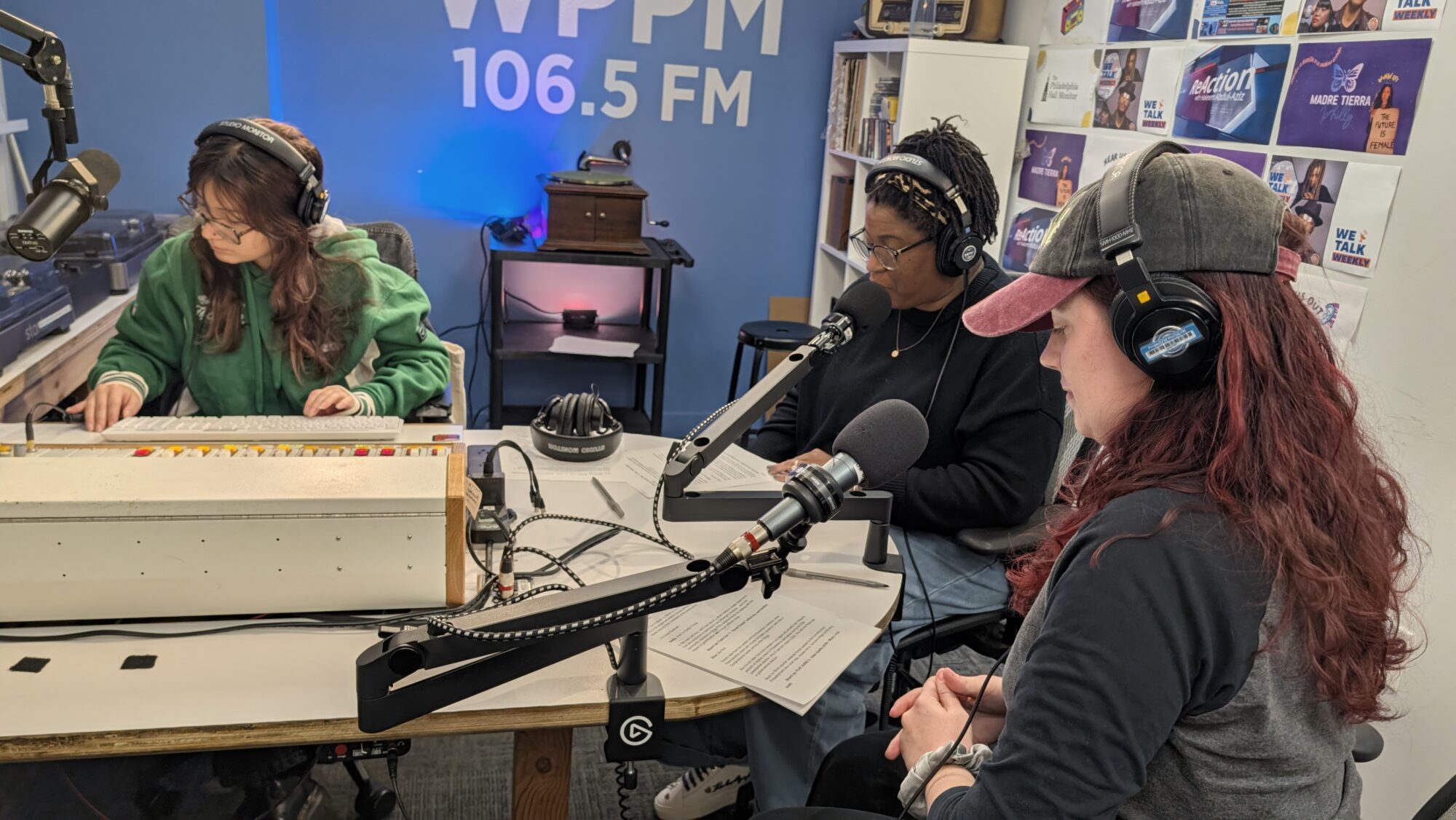
Gina Faulkner: Este es Bloque by Block, un programa de noticias comunitarias de WPPM 106.5 FM, donde exploramos los problemas que afectan al área de Filadelfia con noticias Informes de miembros de la comunidad. Soy Gina Faulkner.
Sadie Troup: Y soy Sadie Troop. En la próxima media hora, escucharemos lo que se necesita crear aulas que sean propician el aprendizaje de los estudiantes neurodivergentes y cómo miembros de la comunidad en tres barrios Philly están tratando con el impacto gentrificación de tres maneras diferentes.
Gina Faulkner: Pero primero, hay menos de dos semanas hasta las elecciones del 3 de noviembre. Pero no está claro cuántas personas en nuestra región. De hecho, votará este año. Mientras que el 65% de los votantes elegibles en Filadelfia votaron la última vez Hubo unas elecciones presidenciales, este año las carreras más grandes Gobernador y Congreso.
Y la última vez que ocurrió en 2022, solo el 47% de Filadelfia Los votantes participaron en las elecciones. Block by Block de Block reporter Lawanda Horton quería averiguar por qué algunos Los habitantes de Filadelfia que podrían Votar, elegir no.
Y nos trae esta historia.
Lawanda Horton: tiene 36 años y la madre de seis hijos, Nunca ha votado antes, pero está considerando participar por primera vez esta temporada de elecciones. es un amigo mío y me dijo recientemente que algo Le dije que quería registrarse para votar por la primera tiempo.
Le pregunté qué le hacía cambiar de opinión.
Tiffany: Fue un par de cosas diferentes. Básicamente, hablando de cómo los diferentes políticos, cómo son como personas, como realmente no los miramos, y esas son las personas Eso está manejando nuestras leyes.
Lawanda Horton: Mientras Tiffany parecía motivado para darle un tiro. Este año, todavía escéptica sobre qué impacto tendría. ¿Sientes que tu voto en este momento podría cambiar cualquier cosa ¿Dónde vives?
Tiffany: Voy a ser honesto, no lo sé. Como, podría, pero entonces si todos los demás no votan, eso ¿Debería votar como si realmente hiciera una diferencia?
Lawanda Horton: Así que sientes como si otras personas no estuvieran participando, entonces podría ofrecer su visión, pero realmente no importaría a menos que más personas ¿Lo hacía?
Tiffany: – Casi mucho.
Lawanda Horton: dice que se sentía como el proceso de registro es bastante fácil, Pero hay algunos inconvenientes menores.
Tiffany: Creo que el trabajo probablemente será como lo más que como detenerme ir a votar porque el horario y cosas así.
Lawanda Horton: También hablé con Nasir. Es un chef de 49 años que vive en Logan.
Nasir: Realmente no siento la necesidad de votar provenientes del grupo demográfico. Vengo del centro de la ciudad, el área de North Philly. Realmente no veo. Los resultados de la persona por la que votas por hacer algo como resultados en cuanto a ayudar a cualquiera que conozca.
Lawanda Horton: ¿Ves a personas que se parecen a ti actualmente, como tu fondo? ¿Su comunidad representada en la política?
Nasir: En realidad, sí, ese es el problema. Creo que ver a la gente que se parece a mí y a la misma Sé que por un hecho provengo de áreas y antecedentes que Viene de, sería más cambio y más progreso y cosas.
Y sería como la parte decepcionante.
Lawanda Horton: Si bien Nasir no planea votar, está registrado. Dice que el proceso de registro es fácil.
Nasir: Sería un millón de personas tratando de firmarte. Así que si no, podrías hacerlo en tu teléfono. Nada sobre el proceso es difícil.
Gina Faulkner: Una de esas personas fuera y sobre en la ciudad trabajando registrarse para inscribirse es Tyrone. Es un locudero que pasa su tiempo a través de Filadelfia con un portapapeles y los chalecos que hacen que la gente se registre para votar.
Quiero escuchar sobre este trabajo que tienes y qué ¿Es que realmente haces cada día?
Tyrone: Todos los días salimos y exploramos las calles, tratamos de Haz que la gente se registre y vote. Y si necesitan actualizar cualquier cosa, podrían actualizar la información.
Lawanda Horton: Vale, así que cuéntame un poco acerca de cuáles son tus interacciones como cuando estás aquí tratando de que la gente se registre voto. ¿Cuáles son algunas de las cosas que la gente te dice?
¿Están de acuerdo en registrarse? ¿Qué pasa?
Tyrone: Así que tienes tus pros y tus contras. Tienes algo de gente. Una firma, y tienes a las otras que dicen que son registrarse para votar, no hará nada que nos ayude porque ya está amañado.
Lawanda Horton: Entonces, cuando dices que la gente está diciendo cosas negativas y No interesado en el proceso de votación, ¿qué es lo que eres amable? ¿Obtener a la mayoría de las personas? En términos de razones para no participar, que el gobierno tiene
Tyrone: ya está amañado.
Lawanda Horton: El día de las elecciones es martes, 3 de noviembre y Pensilvania votarán en estado razas como el gobernador, teniente gobernador y miembros de la casa estatal y senado, así como votar por los miembros de Estados Unidos.
Cámara de Representantes. También hay Dos preguntas electorales para los votantes considerar en Filadelfia. Para Block by Block, soy Lawanda Horton.
Sadie Troup: Cuando piensas en la educación, puedes pensar en lo que son los niños El aprendizaje y cómo se enseñan. Pero, ¿qué pasa con los espacios donde se lleva a cabo la educación? Para muchos niños, Las vistas, los sonidos y el entorno físico del aula típico puede hacer Aprender al lado de imposible.
Pero mi co-anfitrión Gina Faulkner ha estado pensando mucho últimamente y nos trae esta historia.
Gina Faulkner: Hace poco asistí a un gran evento organizado por una universidad local. Las voces se hicieron eco, las luces eran duras y parecían parpadear, El sistema de ventilación hizo un zumbido. Se esperaba que escuchara y participara, pero luché para concentrarme.
Mis sentidos estaban bajo asalto. Me hizo pensar en la pregunta más grande: ¿cuántos lo hacemos? Considere el entorno físico del aula cuando hablamos de la capacidad de un estudiante ¿Para aprender? Basta con considerar por un momento cómo es la experiencia típica en el aula.
Lady Rios-Vega: No te atrevas a jugar. O no te atreves a hacer ruido. Tienes que estar sentado y tienes que asistir Tiene que aprender.
Gina Faulkner: Eso es el Dr. Lady Riels Vega, investigadora y profesora en el Centro de Autismo Jefferson Excelencia en la Universidad Thomas Jefferson. Dr. Riels Vega estudia cómo las personas experimentan y responden al mundo a través del procesamiento sensorial.
Y ella dice que entiende esto comienza con el reconocimiento de algo Ni siquiera somos conscientes.
Lady Rios-Vega: Tenemos más de cinco sentidos. Por alguna razón, hemos sido educados que tenemos visión, audición, sabor, olor y tacto. Pero, ¿qué hay de los otros sentidos? El sistema vestibular. El sistema propioceptivo y el sistema interoceptivo.
Gina Faulkner: Grandes palabras, pero básicamente, nos ayudan a entender el movimiento, donde nuestros cuerpos están en el espacio, y señales internas como sed, hambre y dolor. Estos sentidos nos ayudan a navegar e interactuar con nuestro entorno.
Las diferencias sensoriales también pueden afectar la forma en que experimentan los niños. ambientes cotidianos de clase.
Lady Rios-Vega: Tienes los niños que son muy sensibles, por ejemplo, a ruidos. Ese niño que es súper reactivo al sistema auditivo, por lo que Cubre las orejas. No parecen sentirse cómodos en un ambiente lleno de gente.
Las luces realmente les molestan.
Gina Faulkner: Con demasiada frecuencia, la mayoría de las diferencias sensoriales no se reconocen o malinterpretan.
Lady Rios-Vega: Muchas veces piensan que todo es conductual. Pero muchas veces, no lo es. Al niño se le pide un comportamiento que no puede controlar porque. Hay mucho más en cuestión. Además, al obligar a los individuos autistas a tratar de adaptarse como neurotípicos.
causando muchos desafíos de salud mental. Hace que mastiquen mucha personalidad y sufrimiento interno.
Gina Faulkner: Así que. Cómo diseñamos espacios de aprendizaje que soportan diferencias sensoriales para cada ¿El niño tiene la oportunidad de aprender y prosperar? Según el Dr. Rios Vega, no requiere una tonelada de equipo costoso. Se necesita planificación para diferencias sensoriales en el entorno de aprendizaje de antemano y no como una pensada.
A veces significa dar opciones a los estudiantes.
Lady Rios-Vega: Diversas oportunidades para interactuar con el cuerpo. Eso significa rupturas de movimiento. Esto significa diferentes oportunidades para sentarse. Eso significa diferentes oportunidades para el juego, para aprender e incluso para el autocuidado.
Gina Faulkner: Asientos flexibles, ajustes a la iluminación del aula, auriculares para estudiantes sensibles para el ruido. Incluso reconsiderar cuántas decoraciones cubren una pared de aula puede hacer diferencia. Otra opción es crear espacios sensoriales.
Lady Rios-Vega: En estos entornos, el niño que podría no tener un buen día, por ejemplo, en la escuela, pueden ir allí y seguir adelante y explorar y saben lo que necesitan. Y pueden utilizar lo que está disponible allí para autorregularse y entonces para continuar.
Gina Faulkner: Algunas escuelas de Filadelfia ya están empezando a explorar estos enfoques.
Lady Rios-Vega: Colaboramos con una escuela en Filadelfia e implementaron uno dos hace años con uno de nuestros estudiantes, y ha sido así éxito. Construimos esta habitación. Con un presupuesto muy limitado y con la orientación de expertos, estaban involucrados, los estudiantes.
¿Qué es lo que la escuela ya dispone de utilizar para construir este tipo de habitaciones?
Gina Faulkner: Dr. Ríos Vega insta a los padres a involucrarse y buscar apoyo del trabajo terapeutas.
Lady Rios-Vega: Abogar por las necesidades. No te rindas si me dicen que no. Porque especialmente los padres, son expertos en sus hijos. Si observas que hay algo sensorial, tienes un 99% correcto. Me gustaría ver un mundo más inclusivo, ¿verdad?
Más aceptación, viendo neurodiverso como lo que parece ser, un diverso. De la función cerebral frente a, whoa, eres autismo. Eso significa que hay algo mal contigo. Absolutamente no.
Gina Faulkner: Para Block by Block, soy Gina Faulkner. El barrio East Parkside de Filadelfia en West Philly se encuentra justo Detrás de atracciones como el Please Touch Museum y el zoológico de Filadelfia. Es un barrio histórico con casas junto a Parkside Avenue que datan A finales de 1800, cuando los ricos empresarios alemanes construyeron muchas mansiones desde Fairmount Park.
Hoy en día, es un barrio predominantemente negro con una mezcla de propietarios de clase trabajadora. Rentres y personas mayores con renta fija. Algunas casas más antiguas que han caído en mal estado o se vende, dejando lotes vacíos en su lugar.
Mi co-anfitriona Sadie Troup nos lleva esta historia sobre cómo una comunidad Los miembros quieren ver esos sitios remodelados, pero también quieren decir en cómo ocurre ese desarrollo.
Sadie Troup: Frente a un lote vacío, volantes en la cerca del eslabón de cadena anunció la fecha y hora para una audiencia de zonificación para el construcción de un edificio de 18 unidades. Esta es la tercera propuesta de desarrollo presentada para esta propiedad por el mismo desarrollador, alemán Yakubov.
La junta de zonificación rechazó las dos primeras propuestas, pero eso no se ha detenido Yakubov de intentarlo otra vez. es el presidente del Consejo de Desarrollo Comunitario de Oriente Parkside. Explica que estas propuestas se presentan a la Junta de Zoning Ajustes, o ZBA, porque Jakubov está solicitando rezonificar sus propiedades desde Viviendas unifamiliares para varias unidades.
Joyce Smith: Compró dos casas y un lote adyacente donde una casa soltera Una vez lo fue. Y en esos tres lotes, quiere poner 16 apartamentos. Fue negado por la ZBA, y lo apeló a Common Tribunal de Paz.
Volvió con una nueva propuesta para poner un grupo en casa con hasta 50 ocupantes en ese mismo sitio. Fuimos a una audiencia de ZBA para eso, y el ZBA negó Eso también.
Sadie Troup: Su tercera propuesta solicita permiso para construir 18 apartamentos, aunque Se negó el plan original para 16. Según los residentes, este es el último de una serie de esfuerzos por Yakubov para remodelar el barrio.
Combinado, Yakubov y su hermano han comprado más de 20 propiedades en un barrio que constituye solo una quinta parte de milla. Los residentes están frustrados por esto por algunas razones.
Joyce Smith: Existe una preocupación abrumadora de que el desarrollo parece estar ocurriendo en un escala y ritmo que el vecindario puede no ser capaz de Absorbe. Y también, que no tenemos una voz significativa para determinar ¿Qué es apropiado para nuestra comunidad?
Se están tomando decisiones sin tener suficientemente en cuenta los efectos acumulativos sobre Aparcamiento. Tráfico, infraestructuras, aguas pluviales, basura, acceso de emergencia y la calidad de esta construcción.
Sadie Troup: Según Joyce, los residentes no piden Yakubov que no se desarrolle en Todos, pero para reducir el número de apartamentos que propone por construcción. Pero los miembros de la comunidad informan que Yakubov no ha estado dispuesto a comprometerse.
es el director de Servicios constituyentes para el senador estatal Vincent Hughes. Para Ray, parece que Yakubov toma represalias cuando la comunidad rechaza su planes.
Ray Jones: Ha demandado a algunos de los residentes, y he hablado con varios residentes que me dijeron que han estado en los tribunales con respecto a las cuestiones de Una cubierta a los problemas de coches que están en el camino.
Y así ha habido una serie de Esos casos que he escuchado e incluso presenciado por ahí barrio y la zona y viéndolo.
Sadie Troup: Algunos vecinos se sienten como Yakubov también toman represalias al permitir casas que ha comprado caer en mal estado hasta que los residentes acepten su plan. Cuando los vecinos rechazaron la propuesta de Yakubov de poner 16 apartamentos en dos viviendas en Parkside Avenue, la casa está ocupada por más de 10 años.
Joyce Smith: Presentamos numerosas denuncias ante el LI y 311. No había ventanas, hubo problemas en el techo, y esta era de las casas más bellas en Filadelfia. Así que nos sentamos allí y lo vimos deteriorado e informamos una y otra vez.
Fuimos a la Alianza de Preservación, les pedimos que hablar nuestro nombre en la Misión Histórica. Y continuó deteriorándose.
Sadie Troup: Esto dejó el barrio con una decisión dolorosa: o dejen que las casas continuar desmoronando o concediendo los planes originales propuestos por el desarrollador.
Joyce Smith: Aunque no votamos en la reunión del RCO, no protestar porque queríamos que se almacenaran esas propiedades.
Sadie Troup: Para la mayoría de las propuestas que Yakubov. En marcha, el tablero de zonificación es la principal línea de defensa del vecindario organizaciones comunitarias en Parkside trabajaron con los miembros del consejo en la década de 2010 a la zona muchas casas Parkside como viviendas unifamiliares, de modo que cada vez un desarrollador quiere construir viviendas multifamiliares, deben solicitar que la propiedad se rezonifica y presenta su caso a la tabla de zonificación.
Desafortunadamente, Las comunidades de bajos ingresos están en desventaja inmediata en estas reuniones.
Joyce Smith: Casi siempre, los desarrolladores vienen a la audiencia de ZBA con un abogado, a veces tienen un arquitecto, tendrán estos expertos. Si una comunidad no tiene esos mismos recursos, y la mayoría de estos grupos de la comunidad no, tenemos que representarnos a nosotros mismos y no podemos Sujeto.
Experto, a menos que nosotros mismosamos como abogado o planificador arquitecto, está muy desequilibrado.
Sadie Troup: Cuando las comunidades expresan preocupaciones sobre el desarrollo, a veces son descartadas como justas ser resistente al cambio. Pero Joyce lo ve de manera diferente. Para Joyce, la visión de un east Parkside próspero todavía puede implicar desarrollo, pero sería reflexivo, colaborativo y planificado.
Esto es lo que espera.
Joyce Smith: Viviendas intergeneracionales, un próspero corredor comercial, apartamentos de bajos ingresos, ancianos y viviendas unifamiliares. Solo veo una variedad, una variedad de planificación, pero sensato, plana sensible. Haz que tenga sentido.
Sadie Troup: Para Block by Block, soy Sadie Troup. Una tienda de comestibles a las 23 y South Street cerró este verano después Sirviendo el vecindario del Hospital de Posgrado durante casi dos décadas. En estos días, el Hospital de Posgrado es lo contrario de un desierto alimentario.
Hay otras nueve tiendas de comestibles a una milla. Pero algunos vecinos siguen llorando la pérdida. El bloqueado por el reportero de bloque Gigi Guida creció en la zona y Quería saber lo que significa el cierre de este supermercado para cambiar barrio.
Dina Jovin: Hola, ¿cómo estás hoy? Bien, ¿cómo estás? – Bien. ¿Encontraste todo bien? Sí. ¿Necesitas una bolsa? Por favor. Incluso pequeños intercambios como este. Fortalecer el tejido social de un barrio. Incluso cuando no hay contacto visual, incluso cuando usted no sabe cada Los nombres de los demás y no estos 15 años que has estado diciendo el uno al otro.
947. ¿Quieres una bolsa pequeña o un bolso marrón? Toma una pico bolsa. Aunque lo recuerdo como el tocador de mis jóvenes, en el momento en que cerró para siempre el mes pasado, South Square se había convertido en la querida tienda local anticuada en un área donde la automatización corporativa se convierte en norma.
Recientemente visité Ridden House Market en 18th y Spruce, donde muchos Los antiguos empleados de South Square ahora trabajan. Recuerdan su vieja tienda con cariño. Los clientes realmente llevaban ese negocio. Sí. De verdad lo hicieron.
Somos personas muy agradecidas. Entrarían, sabía que su verde era. Conocimos sus cumpleaños, sus perros. Ese fue el cambio más grande. Ella conocía sus cumpleaños. No sabía que eran cumpleaños. Cuando pases por la vieja tienda ahora, podrías atrapar un vislumbrando su interior vacío, que data de 1918.
Ya está destripado para dar paso a su nuevo ocupante corporativo. Estaba caminando ayer porque lo era. Oh, sí, he estado muriendo por verlo. Mira por dentro. Charlene, es la Plaza del Sur. Es tan hermoso, hombre.
Déjame decirte eso, chicos. Quiero ver lo que todos vamos a hacer. Ese fue el interior de South Square, parece ahora. Eso es loco.
Gigi Guida: South Square cerró este mes de agosto con poca antelación a los clientes y empleados. Su edificio está actualmente en proceso de renovación para convertirse en un Diario Plenal, que es lo que Amazon llama a sus supermercados de formato más pequeño ya pilotado en Nueva York y Londres.
Cuando los clientes de South Square descubrieron que estaba cerrado, 1.500 personas Firma una petición para salvar la tienda. Y quería saber por qué. La petición fue organizada por un equipo de vecinos, Alaire Walgamuth Volpe, y Ellen danés.
Devin dice que los vecinos no solo estaban molestos por perder la tienda. Tampoco querían ver su supermercado del vecindario reemplazado por un Cadena corporativa. Y estaban molestos con el proceso.
Devon Volpe: La petición no sólo se oponía a perder la Plaza del Sur, sino que También fue a quien iba a ser reemplazado. Colocación de la Plaza del Sur, así como desaprobabilidad de la forma en que La comunidad y los empleados se enteraron.
El artículo de Philly Voice salió, y entramos y preguntamos empleados si sabían nada. No habían sido informados. Realmente parecía que había un intento de mantener a la gente desinformada.
Gigi Guida: Whole Foods Daily se unirá a la creciente lista de tiendas corporativas que han abierto en este corredor comercial en los últimos 10 o 15 años. En solo una cuadra de South Street, hay un CVS, un Wawa.
un centro de recogida de Amazon, y hasta hace unas semanas, Starbucks II. Muchas de las propiedades son propiedad de la misma persona, Jason Nusbaum. En medio de este contexto de creciente corporatización, Alaire dice que South Square Market se había convertido en un accesorio de vecindario lucha por.
Allaire Wohlgemuth: Debido a que era una tienda local, realmente atenderon lo que la gente Necesito. Y si dijiste, oyente, como, qué piensas en llevar ¿Por ejemplo, por ejemplo? Estaban como, claro, lo llevaremos en seis sabores.
Done. Estaría allí la semana que viene, ¿sabes?
Gigi Guida: Y Devon dice que eso es parte de lo que hizo que South Square se sintiera así diferente de una gran cadena de supermercados.
Devon Volpe: Al ser un pequeño mercado local que almacena productos locales, realmente tienen responder a sus clientes con el fin de permanecer en los negocios. Ese no es el caso de Whole Foods.
Gigi Guida: Cuando las corporaciones comienzan a cotizar en pequeñas empresas locales, cuando los propietarios hacen Opciones que apoyen ese tipo de cambio, ¿Qué hace con la integridad del tejido social de un vecindario? ¿Qué responsabilidades tienen las personas como Jason Nusbaum a las comunidades que ¿Los negocios en?
Allaire Wohlgemuth: Diré lo mismo de él que hago Drexel, sobre la Academia de Ciencias Naturales, que una vez son el titular de una importante institución comunitaria que es fundamental para La seguridad, el apoyo, los recursos de una comunidad, ahora una responsabilidad con esa comunidad también.
Tenía una obligación, creo, a esta comunidad que pienso Podría haber sido más estratégico.
Gigi Guida: Para Block by Block, soy GG Guido.
Gina Faulkner: Kensington es un barrio de Filadelfia en el centro del opioide epidemia. Es conocido por su alta tasa de pobreza. Kensington también es gentrificante. Los valores de propiedad están escalando a medida que los desarrolladores compran casas y lotes de bajo costo.
Y atacarlos para la reurbanización. Una cosa por la que Kensington no es tan conocido como sus espacios verdes. Pero Black de Black reporter Dina Jovin nos trae una historia sobre un grupo que trabaja para limpiar los parques de Kensington, tender jardines comunitarios y ayudar a los vecinos a sentirse invertidos en la comunidad.
Dina Jovin: Sobre la larga historia de Kensington de organización comunitaria. fundó Clean Kensington en 2020 con la esperanza de promover un enfoque más holístico y impulsado por la comunidad para el crecimiento. La organización contrata a los adolescentes locales para limpiar bloques de vecindario y transformar la basura vacantes en espacios verdes y jardines comunitarios.
Me reuní con Jeremy en un sábado por la tarde de East Willard y Shelburne, el sitio de lo que solía ser un lote vacante. Pero esta vez, la lluvia no se estaba lavando envoltorios o montones desechados de la basura.
En cambio, estaba nutriendo un próspero jardín comunitario lleno de manzanos. arbustos de frambuesa, flores y un área de asientos donde los vecinos podían reunirse. Rodeado por los resultados del arduo trabajo de Clean Kensington, Jeremy habló la importancia de trabajar juntos para crear un cambio duradero y por qué dar Los jóvenes son un papel importante en este proceso.
en los cambios.
Jeremy Chen: Hay algo acerca de estar involucrado en el proceso de ser cambiar y encabezar el cambio aquí que antes de todo te hace siento, wow, soy parte de un movimiento. Creo que todos tenemos esto en un deseo de construir y hacer las cosas más bonitas y vemos algo horrible y queremos para que sea más agradable y queremos mantenerlo así.
Creo que eso es inherente a los jóvenes también, donde quieren ser cambiado. Así que. Sí, estamos comprometidos a pagar a nuestros adolescentes muy bien en el proceso. Les pagamos 19 dólares o más. Incluso si tenemos que apresurarnos después de ese dinero, estamos comprometidos con hacer el trabajo que hacemos con los adolescentes económicamente viables.
Y eso los recompensa por el arduo trabajo en el que están haciendo de nuestra comunidad. Trabajan muy duro, y es uno de los barrios más difíciles El país. Así que sentimos que queremos los involucrados en nuestro programa ser parte de un movimiento de cambio.
Dina Jovin: Y ese compromiso para asegurarse de que los residentes locales se beneficien del trabajo Se extiende más allá de lo que Clean Kensington paga a su tripulación. Proyectos de vegetación urbana, que tienen como objetivo mejorar los barrios a través de nuevos parques, jardines y espacios verdes, a menudo se presentan como soluciones a las desigualdades ambientales.
Pero Jeremy señala que cuando estos proyectos están planeados y llevados fuera sin una participación significativa de la comunidad, los beneficios no siempre llegan las personas que realmente viven allí. O al menos no en las formas que estaban destinados.
Jeremy Chen: Los métodos de ecologización del desarrollo no deben centralizarse demasiado. Cuando lo están, no creo que eso sea intencional, pero tiende a ser los jugadores más grandes que no terminan teniendo una participación en la comunidad que acaba de obtener los beneficios, ¿verdad?
Los contratos. No estoy diciendo que sea fácil averiguarlo, porque sé lo ciudad quiere ver desarrollo en Kensington, pero. Uno de mis lemas es el camino más rápido a seguir siempre es lento. Como este tipo de parque, si fue diseñado por algún desarrollador, Tal vez lo harían muy rápido y tendría un estética ligeramente diferente, pero los vecinos se sentirían alienados de ella.
Esos intangibles sobre como el vecindario suben a medida que contribuyen a hacer el barrio un lugar más agradable, todas esas cosas importan. Hay un ritmo natural a ese crecimiento.
Dina Jovin: Pero Jeremy no está abogando por una menor participación del gobierno. En cambio, ve una oportunidad para que la ciudad abrace un acercamiento a la revitalización del vecindario.
Jeremy Chen: Si el gobierno de la ciudad se involucra en más colaborativo en conversaciones con local en áreas como esta, los jugadores son las organizaciones sin fines de lucro. CDC, ponlos todos involucrados en la misma conversación.
Y luego veamos cómo podemos co-crear dónde se beneficia realmente el proceso Yo.
Dina Jovin: Y quizás el ejemplo más claro de por qué este enfoque importa impacto que tiene en las personas haciendo el trabajo ellos mismos. Después de hablar con Jeremy, entramos por la calle en un estacionamiento garaje donde me presentaron al equipo de Clean Kensington mientras Trabajó en la construcción de más bancos para el barrio.
Allí me senté con Kai. Un reciente graduado de secundaria que ha estado trabajando con Clean Kensington durante los últimos meses.
Kai: Yo diría que este es probablemente el proyecto que estoy más orgulloso de por qué no solo cerrarlo es para mí y mi familia, pero cuánto había en nuestras vidas. Ese siempre fue el lote de aguja.
Y enseño a estos niños, mis sobrinas y sobrinos, y hermanos pequeños y las hermanas pequeñas, y los niños que durmieron desde una edad temprana: como, no toques agujas, no hagas esto, no lo hagas.
Y eso es horrible, pero es lo que tenemos que hacer crecer En Kensington. Nunca me di cuenta de que tal vez algún día no será lo que Tiene que hacer. Fue una gran revelación para mí.
Ver ese lote se convierte en algo realmente hermoso, muy bueno.
Dina Jovin: A través de su trabajo con Clean Kensington, Kai también ha ganado un Comprender cómo el acceso al espacio verde refleja desigualdades más amplias en todos los ciudad.
Kai: Realmente soy capaz de no solo aprender sobre la forma en que así Espacios y plantas y árboles importan especialmente. Pero cuánto pueden ser un signo de lo que las comunidades ciudad cuida. Y abogar por esto me ha dado un nuevo propósito.
Dina Jovin: terminó nuestra conversación reflexionando sobre la importancia de los árboles, no solo por sus beneficios ambientales, pero por lo que representan para el El futuro de Kensington.
Kai: Pueden bajar la temperatura. Hasta 22 grados en un área. Kensington es una isla de calor. Necesitamos eso. Y lo que creo que es más interesante es que están viviendo inversiones. Plantas este pequeño y a través del tiempo, los beneficios que obtienes de ese árbol sólo crece.
No se puede decir eso sobre los edificios de desarrolladores.
Sadie Troup: Bloqueo por bloque es Producida por Kimberly Davis, Gigi Guida, Lawanda Horton, Dina Jovin, Chelsea Luby, Monique Moore Pryor, Lohan Parchment, Kevin Walker, Ashley Whiteside y nosotros. y Sadie Troop. Chelsea Luby es nuestro operador de la junta.
Gina Faulkner: Brad Linder es editor gerente de Radio News para WPPM. Peter Liu es operador de radio. Gerente de Operaciones, y Allison Durham es Director del Programa Radio de WPPM.
Sadie Troup: Volveremos en dos semanas con un nuevo episodio de Block Bloquear con más historias sobre temas que afectan la vida en el Fiel región. Y puedes encontrar episodios pasados de la serie en Philly Cam's SoundCloud, Apple Podcasts y en cualquier otro lugar encontrarás tus podcasts.
Gina Faulkner: Gracias por escuchar.
Gina Faulkner: This is Block by Block, a community news program from WPPM LP 106.5 FM, where we explore issues affecting the Philadelphia area with news reports from members of the community. I'm Gina Faulkner.
Sadie Troup: And I'm Sadie Troop. In the next half hour, we'll hear about what it takes to create classrooms that are conducive to learning for neurodivergent students and how community members in three Philly neighborhoods are dealing with the impact of gentrification in three different ways.
Gina Faulkner: But first, there's less than two weeks until the November 3rd election, but it's not clear how many people in our region. Will actually vote this year. While 65% of eligible voters in Philadelphia cast ballots the last time there was a presidential election, this year the biggest races are for governor and Congress.
And the last time that happened in 2022, only 47% of Philadelphia voters took part in the election. Block by Block reporter Lawanda Horton wanted to find out why some Philadelphians who could Vote, choose not to.
And she brings us this story.
Lawanda Horton: is 36 years old and the mother of six children, and she's never voted before, but she's considering participating for the first time this election season. Tiffany is a friend of mine and recently told me that something I said made her want to register to vote for the first time.
I asked her what made her change her mind.
Tiffany: It was a couple different things. Basically, talking about how the different politicians, how they are as people, like we don't really look into them, and those are the people that's handling our laws.
Lawanda Horton: While Tiffany seemed motivated to give it a shot. This year, she's still skeptical about what impact it would have. Do you feel like your vote right now could actually change anything where you live?
Tiffany: I'm gonna be honest, I don't know. Like, it could, but then if everybody else isn't voting, that should be voting like does does it really make a difference?
Lawanda Horton: So you feel as though if other people aren't participating, then you could offer your insight, but it wouldn't really matter unless more people were doing it?
Tiffany: Pretty much.
Lawanda Horton: says she felt like the process of registering is pretty easy, but there are some minor inconveniences.
Tiffany: I think work will probably be like the most thing that would like stop me from going to go vote because the time schedules and stuff like that.
Lawanda Horton: I also spoke with Nasir. He's a 49-year-old chef who lives in Logan.
Nasir: I don't really feel the need to vote coming from the demographic. I come from inner city, North Philly area. I don't really see. The results of the person you vote for doing anything as like results as far as helping anybody I know.
Lawanda Horton: Do you see people that look like you currently, like your background, your community represented in politics?
Nasir: Actually, yeah, that's kind of the problem. I think with seeing people that look like me and people that I know for a fact come from areas and backgrounds that I come from, it would be more change and more progress and things.
And that'd be kind of like the disappointing part.
Lawanda Horton: While Nasir isn't planning to vote, he is registered. He says the process of registering is easy.
Nasir: It'd be a million people walking around trying to sign you up. So if not, you could do it on your phone. Nothing about the process is hard.
Gina Faulkner: One of those people out and about in the city working on signing people up to register is Tyrone. He's a canvasser who spends his time across Philadelphia with a clipboard and vests getting people to register to vote.
I want to hear about this job that you have and what is it that you actually do each day?
Tyrone: Every day we go out and we canvass the streets, try to get people to sign up and vote. And if they need to update anything, they could update the information.
Lawanda Horton: Okay, so tell me a little bit about what your interactions are like when you're out here trying to get people to register to vote. What are some of the things folks are saying to you?
Are they agreeing to register? What's happening?
Tyrone: So you got your pros and your cons. You got some people that. A sign up, and you got the other ones that say they're registering to vote, not gonna do nothing to help us because it's rigged already.
Lawanda Horton: So, when you say that people are saying negative things and they're not interested in the voting process, what's the thing that you're kind of hearing the most from people? In terms of reasons not to participate, that the government has it
Tyrone: rigged already.
Lawanda Horton: Election Day is Tuesday, November 3rd, and Pennsylvanians will vote in state races like the governor, lieutenant governor, and members of the state house and senate, as well as voting for members of the U.S.
House of Representatives. There are also Two ballot questions for voters to consider in Philadelphia. For Block by Block, I'm Lawanda Horton.
Sadie Troup: When you think about education, you may think about what children are learning and how they are being taught. But what about the spaces where the education is taking place? For many children, The sights, sounds, and physical environment of the typical classroom can make learning next to impossible.
But my co-host Gina Faulkner has been thinking about this a lot lately and brings us this story.
Gina Faulkner: I recently attended a large event hosted by a local college. Voices echoed, the lights were harsh and seemed to flicker, and the ventilation system made a hum. I was expected to listen and participate, but I struggled to focus.
My senses were under assault. It got me thinking about the bigger question: how often do we consider the physical classroom environment when we talk about a student's ability to learn? Just consider for a moment what the typical classroom experience is like.
Lady Rios-Vega: Don't you dare fidget. Or don't you dare make noises. You have to be sitting and you have to attend and you have to learn.
Gina Faulkner: That's Dr. Lady Riels Vega, a researcher and professor at Jefferson Autism Center of Excellence at Thomas Jefferson University. Dr. Riels Vega studies how people experience and respond to the world around them through sensory processing.
And she says to understand this begins with recognizing something many of us aren't even aware of.
Lady Rios-Vega: We have more than five senses. For some reason, we have been educated that we have vision, hearing, taste, smell, and touch. But how about the other senses? The vestibular system. The propioceptive system and the interoceptive system.
Gina Faulkner: Big words, but basically, they help us understand movement, where our bodies are in space, and internal signals like thirst, hunger, and pain. These senses help us navigate and interact with our surroundings. Sensory differences can also impact how children experience.
Everyday classroom environments.
Lady Rios-Vega: You have the children that are very sensitive, for example, to noises. That child that is super reactive to the auditory system, so they cover the ears. They don't seem to be comfortable in a crowded environment.
The lights really bother them.
Gina Faulkner: Too often, most sensory differences go unrecognized or misunderstood.
Lady Rios-Vega: And a lot of the times, they think it's all behavioral. But a lot of the times, it is not. The child is being asked for a behavior that they cannot control because. There is a lot more internally happening.
Also, by forcing autistic individuals to try to fit as neurotypicals, it's causing a lot of mental health challenges. It's causing them to mask a lot of their personality and they're internally suffering.
Gina Faulkner: So. How do we design learning spaces that support sensory differences so every child gets an opportunity to learn and thrive? According to Dr. Rios Vega, it doesn't require a ton of expensive equipment. It takes planning for sensory differences in the learning environment beforehand and not as an afterthought.
And sometimes it means giving students choices.
Lady Rios-Vega: Diverse opportunities to engage with the body. That means movement breaks. That means different opportunities for sitting. That means different opportunities for play, for learning, and even for self-care.
Gina Faulkner: Flexible seating, adjustments to classroom lighting, headphones for students who are sensitive to noise. Even reconsidering how many decorations cover a classroom wall can make a difference. Another option is creating sensory-friendly spaces.
Lady Rios-Vega: In these environments, the child who might not be having a good day, for example, at school, they can go there and they can go ahead and explore and they know what they need. And they can utilize what is available in there to self-regulate and then to continue.
Gina Faulkner: Some Philadelphia schools are already starting to explore these approaches.
Lady Rios-Vega: I collaborate with a school in Philadelphia and they implemented one two years ago with one of our students, and it has been so successful. We built this room. With a very limited budget and with the guidance of experts, I was involved, the students.
What is it that the school has already available that we can utilize to build these types of rooms?
Gina Faulkner: Dr. Rios Vega urges parents to get involved and seek support from occupational therapists.
Lady Rios-Vega: Advocate for the needs. Don't give up if you're told no. Because especially parents, they're the experts on their children. If you observe there is something sensory happening, you are 99% correct. I would like to see a more inclusive world, right?
More accepting, seeing neurodiverse as what it sounds like, a diverse. Of brain function versus, whoa, you're autistic. That means there's something wrong with you. Absolutely not.
Gina Faulkner: For Block by Block, I'm Gina Faulkner. Philadelphia's East Parkside neighborhood in West Philly is located right Behind attractions like the Please Touch Museum and Philadelphia Zoo. It's a historic neighborhood with homes along Parkside Avenue that date back to the late 1800s when wealthy German businessmen built many mansions across from Fairmount Park.
Today, it's a predominantly black neighborhood with a mix of working-class homeowners. Renters and seniors on a fixed income. Some older homes that have fallen into disrepair have been torn down or sold, leaving empty lots in their place.
My co-host Sadie Troup brings us this story about how some community members want to see those sites redeveloped, but also want a say in how that development happens.
Sadie Troup: In front of one empty lot, flyers on the chain link fence announced the date and time for a zoning board hearing for the construction of an 18-unit building. This is the third development proposal submitted for this property by the same developer, German Yakubov.
The zoning board rejected the first two proposals, but that hasn't stopped Yakubov from trying again. Joyce Smith is the president of the Community Development Board of East Parkside. She explains that these proposals are submitted to the Zoning Board of Adjustments, or ZBA, because Jakubov is requesting to rezone his properties from single-family to multi-unit housing.
Joyce Smith: He purchased two homes and an adjacent lot where a single-family home once was. And on those three lots, he wants to put 16 apartments. It was denied by the ZBA, and he appealed it to Common Peace Court.
He came back with a new proposal to put a group home with up to 50 occupants on that same site. We went to a ZBA hearing for that, and the ZBA denied that also.
Sadie Troup: His third proposal requests permission to build 18 apartments, even though the original plan for 16 was denied. According to residents, this is the latest in a series of efforts by Yakubov to reshape the neighborhood.
Combined, Yakubov and his brother have purchased over 20 properties in a neighborhood that makes up just one-fifth of a mile. Residents are frustrated by this for a few reasons.
Joyce Smith: There's an overwhelming concern that development seems to be occurring at a scale and pace that the neighborhood may not be able to reasonably absorb. And also, that we're just not having a meaningful voice in determining what is appropriate for our community.
Decisions are being made without enough consideration of the cumulative impact on parking. Traffic, infrastructure, stormwater, trash, emergency access, and the quality of this construction.
Sadie Troup: According to Joyce, residents aren't asking for Yakubov not to develop at all, but to reduce the number of apartments he's proposing per building. But community members report that Yakubov hasn't been willing to compromise.
is the director of Constituent services for State Senator Vincent Hughes. To Ray, it seems like Yakubov retaliates when the community rejects his plans.
Ray Jones: He has sued some of the residents, and I've talked to several residents who told me that they've been in court regarding issues from a deck to issues of cars being in the driveway. And so there have been a number of Those cases that I've heard and even witnessed by going around the neighborhood and the area and seeing it.
Sadie Troup: Some neighbors feel like Yakubov also retaliates by allowing houses he's purchased to fall into disrepair until residents agree to his plan. When neighbors rejected Yakubov's proposal to put 16 apartments in two homes on Parkside Avenue, the house is sat unoccupied for over 10 years.
Joyce Smith: We filed numerous complaints with the LI and 311. There were no windows, there were roof problems, and this was one of the most beautiful homes in Philadelphia. So we just sat there and watched it deteriorate and reported it over and over again.
We went to the Preservation Alliance, we asked them to speak on our behalf at the Historical Mission. And it continued to deteriorate.
Sadie Troup: This left the neighborhood with a painful decision: either let the houses continue to fall apart or concede to the original plans put forward by the developer.
Joyce Smith: Even though we voted no at the RCO meeting, we did not protest it because we wanted those properties to be stored.
Sadie Troup: For most of the proposals that Yakubov. Puts forward, the zoning board is the neighborhood's main line of defense community organizations in Parkside worked with council members back in the 2010s to zone many Parkside homes as single-family housing, so that every time a developer wants to build multifamily housing, they need to request that the property be rezoned and present their case to the zoning board.
Unfortunately, Low-income communities are placed at an immediate disadvantage at these meetings.
Joyce Smith: Almost always, developers come to the ZBA hearing with an attorney, sometimes they have an architect, they'll have these experts. If a community does not have those same resources, and most of these community groups don't, we have to represent ourselves and we can't submit.
Expertimony, unless we ourselves as an attorney or a planner or an architect, it's very imbalanced.
Sadie Troup: When communities express concerns about development, sometimes they are dismissed as just being resistant to change. But Joyce sees it differently. For Joyce, the vision of a thriving East Parkside can still involve development, but it would be thoughtful, collaborative, and planned.
This is what she hopes for.
Joyce Smith: Intergenerational housing, a thriving commercial corridor, apartments, low-income, senior, single-family homes. I just see a variety, a variety, but sensible planning, sensible planning. Make it make sense.
Sadie Troup: For Block by Block, I'm Sadie Troup. A grocery store at 23rd and South Street closed this summer after serving the Graduate Hospital neighborhood for almost two decades. These days, Graduate Hospital is the opposite of a food desert.
There are nine other grocery stores within one mile. But some neighbors are still mourning the loss. Block by block reporter Gigi Guida grew up in the area and wanted to know what this grocery store's closure means for the changing neighborhood.
Dina Jovin: Hi, how are you today? Good, how are you? Good. Did you find everything okay? Yeah. Do you need a bag? Yes, please. Even tiny exchanges like this. Strengthen a neighborhood's social fabric. Even when there's no eye contact, even when you don't know each other's names and haven't these whole 15 years you've been saying hi to each other.
947. You want a small bag or a brown bag? Uh, take it a pico bag. Though I remember it as the bougie grocery store of my youth, by the time it closed for good last month, South Square had become the beloved old-fashioned local grocery in an area where corporate automation is becoming the norm.
I recently visited Ridden House Market at 18th and Spruce, where many former South Square employees now work. They remember their old store fondly. The customers really carried that business. Yeah. They really did. We're just very grateful people.
They would come in, I knew their green is. We knew their birthdays, their dogs. That was the biggest change. She knew their birthdays. I didn't know it were birthdays. When you walk by the old store now, you might catch a glimpse of its vacuous interior, which dates back to 1918.
It's already gutted to make way for its new corporate occupant. I was just walking by there yesterday because I was. Oh, yeah, I've been dying to see it. Look at the inside. Charlene, it's South Square.
It's so beautiful, man. Let me tell you that, guys. I want to see what we're all going to do. That was the inside of South Square, it looks like right now. That's nuts.
Gigi Guida: South Square closed this August on short notice to customers and employees. Its building is currently under renovations to become a Whole Foods Daily, which is what Amazon is calling its smaller format supermarkets already piloted in New York and London.
When South Square's customers found out that it was closing, 1,500 people signed a petition to save the store. And I wanted to know why. The petition was organized by a team of neighbors, Alaire Walgamuth, Devin Volpe, and Ellen Danish.
Devin says neighbors weren't just upset about losing the store. They also didn't want to see their neighborhood grocery replaced by a corporate chain. And they were upset with the process.
Devon Volpe: The petition was not only in opposition to losing South Square, it was also to who was going to be replaced. Placing South Square, as well as disapproval of the way that the community and employees found out.
The Philly Voice article came out, and we walked in and asked employees if they knew anything about it. They had not been informed. It really felt like there was an attempt to keep people uninformed.
Gigi Guida: Whole Foods Daily will join the growing list of corporate storefronts that have opened in this commercial corridor in the past 10 or 15 years. On just one block of South Street, there's a CVS, a Wawa, an Amazon pickup center, and, up until a few weeks ago, a Starbucks II.
Many of the properties are owned by the same person, Jason Nussbaum. Amidst this context of growing corporatization, Alaire says that South Square Market had become a neighborhood fixture to fight for.
Allaire Wohlgemuth: Because it was a local store, they really catered to what people needed. And if you said, hey, like, what do you think about carrying some kefir, for instance? They were like, sure, we'll carry it in six flavors.
Done. It'd be there next week, you know?
Gigi Guida: And Devon says that's part of what made South Square feel so different from a big supermarket chain.
Devon Volpe: Being a small local market that stocks local products, they truly have to be responsive to their customers in order to stay in business. That is not the case with Whole Foods.
Gigi Guida: When corporations start to outnumber small local businesses, when property owners make choices that support that type of change, What does it do to the integrity of a neighborhood's social fabric? What responsibilities do people like Jason Nussbaum have to the communities they do business in?
Allaire Wohlgemuth: I will say the same thing about him that I do about Drexel, about the Academy of Natural Sciences, which is that once you are the holder of a beloved community institution that is critical to The safety, the support, the resources of a community, you now have a responsibility to that community as well.
He had an obligation, I think, to this community that I think he could have been more strategic about.
Gigi Guida: For Block by Block, I'm Gigi Guida.
Gina Faulkner: Kensington is a Philadelphia neighborhood at the center of the city's opioid epidemic. It's known for its high poverty rate. Kensington is also gentrifying. Property values are climbing as developers purchase low-cost homes and lots.
And target them for redevelopment. One thing Kensington isn't as well known for are its green spaces. But Black by Black reporter Dina Jovin brings us a story about one group working to clean up Kensington parks, tend community gardens, and help neighbors feel invested in the community.
Dina Jovin: Building on Kensington's long history of community organizing. Jeremy Chen founded Klean Kensington in 2020 with the hope of promoting a more holistic, community-driven approach to growth. The organization hires local teenagers to clean neighborhood blocks and transform trash-filled vacant lots into green spaces and community gardens.
I met with Jeremy on a rainy Saturday afternoon on the corner of East Willard and Shelburne, the site of what used to be a vacant lot. But this time, the rain wasn't washing away discarded wrappers or piles of trash.
Instead, it was nourishing a thriving community garden filled with apple trees, raspberry bushes, flowers, and a seating area where neighbors could gather. Surrounded by the results of Klean Kensington's hard work, Jeremy spoke about the importance of working together to create lasting change and why giving young people a role in that process matters just as much.
at the changes themselves.
Jeremy Chen: There's something about being involved in the process of like being the change and spearheading the change here that first of all makes you feel, wow, I am part of a movement. I think we all have this in a Desire to build and to make things nicer and we see something crappy and we want to make it nicer and we want to keep it that way.
I think that's inherent to young people too, where they want to be changed. So. Yeah, we're just committed to paying our teens really well in the process. We pay them $19 an hour or more.
Even if we have to hustle after that money, we're committed to making the work that we do with the teens economically viable. And that rewards them for the hard work that they're doing in our community.
They work really hard, and it's one of the toughest neighborhoods in the country. So we just feel that we want those involved with our program to be kind of part of a movement of change.
Dina Jovin: And that commitment to making sure local residents benefit from the work extends beyond just how Klean Kensington pays its crew. Urban greening projects, which aim to improve neighborhoods through new parks, gardens, and green spaces, are often presented as solutions to environmental inequalities.
But Jeremy points out that when these projects are planned and carried out without meaningful involvement from the community, the benefits don't always reach the people who actually live there. Or at least not in the ways that they were intended to.
Jeremy Chen: Development greening methods should be not too top-down centralized. When they are, I don't think that's intentional, but it tends to be the bigger players that don't end up having a stake in the community that end up getting the benefits, right?
The contracts. I'm not saying it's easy to figure out, because I know the city wants to see development in Kensington, but. One of my mottos is the fastest way forward is always slow. Like this kind of park, if it was designed by some developer, maybe they would do it really quick and it would have a slightly different aesthetic, but the neighbors would feel alienated from it.
Those intangibles about like the neighborhood rising as they're contributing to making the neighborhood a nicer place, all those things matter. There's a natural pace to that growth.
Dina Jovin: But Jeremy isn't advocating for less government involvement. Instead, he sees an opportunity for the city to embrace a different approach to neighborhood revitalization.
Jeremy Chen: If city government gets involved in more collaborative in conversations with the local local in areas like this, the players are the nonprofits, the CDCs, get them all involved in the same conversation. And then see how we can co-create where the process actually benefits me.
Dina Jovin: And perhaps the clearest example of why this approach matters is the impact it has on the people doing the work themselves. After speaking with Jeremy, we walked across the street into a parking garage where I was introduced to the Klean Kensington crew as they worked on building more benches for the neighborhood.
There, I sat down with Kai. A recent high school graduate who has been working with Klean Kensington for the past few months.
Kai: I would say that this is probably the project I'm most proud of because of how not just close it is to me and my family, but how much that lot was in our lives before.
That was always the needle lot. And I teach these kids, my nieces and nephews, and little brothers and little sisters, and the kids I babysit from a young age: like, don't touch needles, don't do this, don't do that.
And that's awful, but it is what we have to do growing up in Kensington. I never realized that maybe one day it won't be what we have to do. It was a huge revelation for me.
Seeing that lot turn into something really beautiful, really good.
Dina Jovin: Through his work with Klean Kensington, Kai has also gained a deeper understanding of how access to green space reflects broader inequalities across the city.
Kai: I'm really able to not just learn about the way that green spaces and plants and trees especially matter. But how much they can be a sign of what communities the city cares for. And advocating for this has kind of given me a new purpose.
Dina Jovin: ended our conversation by reflecting on the importance of trees, not just for their environmental benefits, but for what they represent for the future of Kensington.
Kai: They can lower the temperature. By up to 22 degrees in an area. And Kensington is a heat island. We need that. And what I think is most interesting is that they are living investments.
You plant this little sapling, and over time, the benefits you get from that tree only grow. You can't say that about developer buildings.
Sadie Troup: Block by block is Produced by Kimberlei Davis, Gigi Guida, Lawanda Horton, Dina Jovin, Chelsea Lubbe, Monique Moore Pryor, Lohen Parchment, Kevin Walker, Ashley Whiteside, and us, Gina Faulkner and Sadie Troup. Chelsea Lubbe is our board operator tonight.
Gina Faulkner: Brad Linder is Radio News Managing Editor for WPPM. Peta Liu is Radio Operator. Operations Manager, and Allison Durham is WPPM's Radio Program Director.
Sadie Troup: We'll be back in two weeks with a new episode of Block by Block featuring more stories about issues affecting life in the Philly region. And you can find past episodes of the show on PhillyCAM's SoundCloud, Apple Podcasts, and wherever else you find your podcasts.
Gina Faulkner: Thanks for listening.