
This transcript was machine-generated and may contain spelling errors or other inaccuracies.
Leer en Español
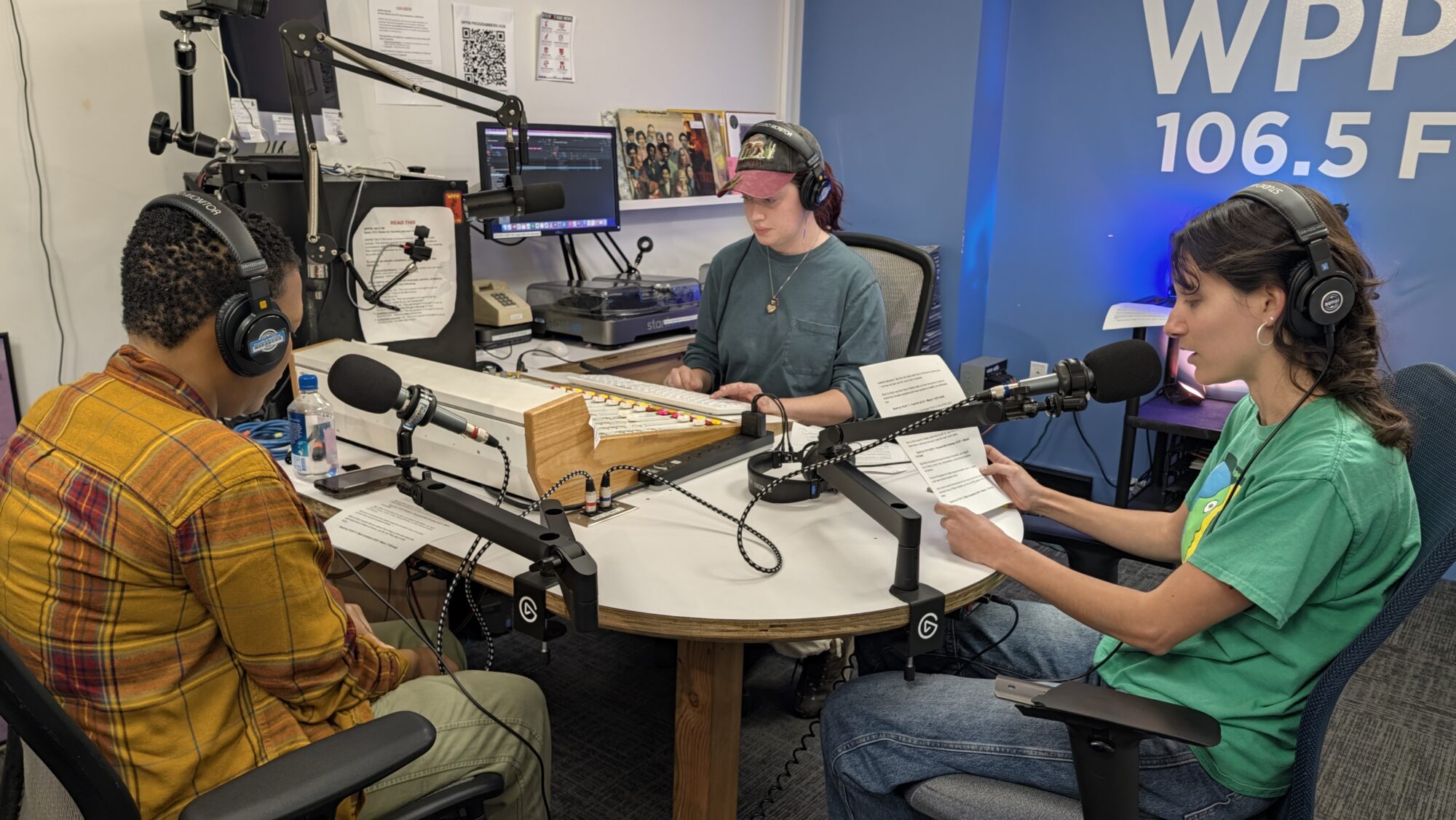
Lawanda Horton: Este es Block by Block, un programa de noticias comunitarias del WPP MLP 106.5 FM, donde exploramos los problemas que afectan el área de Filadelfia. Noticias de miembros de la comunidad. Soy Lawanda Horton y soy Gigi Guida.
Gigi Guida: En la próxima media hora, escucharemos sobre un plan de larga duración para Construye un metro a lo largo del bulevar Roosevelt de Filadelfia, la historia oculta de negro animadores y un programa de transporte que lleva a los residentes de Camden al más cercano Tiendas de alimentación en Cherry Hill.
Lawanda Horton: Pero primero, Se planean reparaciones importantes para Cecil B. Biblioteca Moore en el norte de Filadelfia. Pero después de años de retrasos y desacuerdo sobre lo que deberían Parece que algunos vecinos dicen que el plan actual aún no va lejos – suficiente.
Así que una vez al mes se reúnen fuera de la persona del consejo de distrito oficina para un tipo inusual Protestas. Bloquear bloque, el reportero Ashley Whiteside nos lleva allí.
Demonstrators: Jeffrey Young, no esperaremos. Liberar los fondos y renovar. Jeffrey Young!
Ashley Whiteside: En una mañana de otoño, los vecinos se reúnen en la esquina de Sedgley y Ridge Avenues en el norte de Filadelfia. Están fuera de la oficina del concejal Jeffrey Young Jr. Y comienzan haciendo ruido.
Demonstrators: Jeffrey Young, no esperaremos! ReleaseLibere los fondos y deshagalos!
Ashley Whiteside: Pero unos minutos después, las cosas se ponen mucho más tranquilas. La gente saca los libros, encuentra un lugar para estar de pie y comienza a leer. Esto es una lectura mensual. Después de unos 20 minutos de lectura tranquila, el grupo.
Vuelve a hablar sobre lo que quieren para el Cecil B. Biblioteca de Moore.
Demonstrators: Vamos a empezar con la lectura tranquila para los próximos 15 20 minutos con todos leyendo el libro que trajeron, y luego Vuelve y revisa nuestras demandas y cosas. Gracias a todos por venir.
Ashley Whiteside: Para entender por qué están aquí, tienes que volver algunos años. El Cecil B. Moore Library ha tenido problemas con un sistema de calefacción y refrigeración envejecido. otros problemas de construcción. Una renovación más grande ya estaba siendo planeada cuando Young asumió el cargo 2024.
Young detuvo el proyecto mientras consideraba otras posibilidades, incluyendo la demolición del edificio y reemplazarlo con una nueva biblioteca por vivienda encima de ella. Muchos residentes retrocedieron. Desde entonces, esa propuesta de vivienda ha sido retirada.
Ahora, la ciudad se está preparando para lo que llama la primera fase de reformas. La biblioteca libre dice que el trabajo reemplazará la calefacción y refrigeración sistema y realizar mejoras en los baños, entrada, ascensor y otra seguridad sistemas.
La ciudad ha reservado aproximadamente 10 millones de dólares para la biblioteca, pero solo se están utilizando alrededor de 2 millones de dólares para esta primera fase. Lo que sucede con el resto del dinero no se ha decidido.
Y esa es una gran parte de por qué estos vecinos siguen presentándose con una lista de demandas.
Demonstrators: Retener el control comunitario. Garantizar que la biblioteca sigue siendo un activo público. Ninguna parte de la renovación o plan debe permitir privatizar o conversión residencial que disminuiría el acceso comunitario. Escasos y deglose presupuestarios claros, creados públicamente.
Funcionarios elegidos, funcionarios de la ciudad y líderes del proyecto deben comprometerse a actualizaciones regulares e incorporar comentarios directos de la comunidad.
Ashley Whiteside: Tampoco está claro. Cuando la primera fase del trabajo realmente comience. Se esperaba que la construcción comenzara en septiembre de 2026, luego funcionarios Dijo octubre. La biblioteca gratuita ahora dice que se espera que la construcción comience en algún momento La caída.
En octubre se informó que la incertidumbre ya había causado algo de biblioteca. programas que cancelarán. O movido. Para las personas que usan Cecil B. Moore, esas interrupciones importan La biblioteca hace mucho más que dar libros.
es el joven en la educación co-líquete del barrio Brewerytown-Sharswood coalición.
Paul Brown: Principalmente solo he utilizado la biblioteca para espacios comunitarios, para actividades, o Si la gente necesita reunirse, pero otras personas, es un espacio utilizar la tecnología, las computadoras, el acceso a la impresión, el uso de programas de alfabetización habilidades de la vida.
Es realmente un espacio de reunión accesible que tiene los recursos que podrías necesitarlo gratis.
Ashley Whiteside: Paul dice que a veces lo que la biblioteca proporciona es aún más simple. Es en algún lugar esperar el autobús cuando el tiempo es malo. En algún lugar para sentarse sin tener que comprar nada.
En algún lugar la gente puede reunirse sin ser tratado como no pertenecen.
Paul Brown: Mientras que una biblioteca, la gente puede realmente reunirse allí y – no lo es. Visto como una molestia.
Ashley Whiteside: Entonces, para los residentes en el Readin, esta pelea no se trata de arreglar una Problema de HVAC. También quieren saber cuál es el resto de los 10 millones de dólares Con el tiempo se proveerá.
Paul dice que le preocupa que se estire la renovación en múltiples fases podría hacer que el proyecto sea más caro. Con el tiempo, concejal Young ha dicho que quiere que el barrio Dispone de una moderna biblioteca del siglo 21.
En una reunión comunitaria de septiembre, dijo que el edificio actual puede ser demasiado pequeño para todo lo que cree una biblioteca moderna oferta. También dijo a los residentes que sus voces se incluirían en el progreso.
Pero después de años de cambiar de planes, Paul dice que la frustración es sobre si los miembros de la comunidad están siendo escuchados.
Paul Brown: El mensaje que solo quiero gustar de doblar es el comunidad te dirá lo que necesitan. Solo necesitamos que lo hagan o la proporcionen. La mayoría de los miembros de la comunidad le dirán claramente lo que se necesita, cómo las cosas funcionará o no en el vecindario.
Se trata solo de estos políticos, líderes comunitarios escuchando y siguiendo.
Ashley Whiteside: Paul se involucró en la campaña porque se cansaba de quejarse en línea y decidió que si tenía algo que decir sobre su barrio, Necesitaba aparecer. Dice que el proceso ha sido frustrante, pero también lo trajo Más cercano a sus vecinos.
Paul Brown: Es gratificante estar en comunidad con la gente, para saber realmente más que asumir.
Demonstrators: Así que cuando las bibliotecas están bajo ataque, ¿qué hacemos? No les gusta eso. StandDetente, lucha de nuevo!
Ashley Whiteside: Por ahora, las lecturas continúan. Y antes de que finalice este, los organizadores dan a todos una tarea más. No otro capítulo, sino un vecino.
Demonstrators: Si todos pudieran sacar sus teléfonos y enviar mensajes de texto a un vecino, es invitarlos a la siguiente lectura. Envía a un amigo que vive en la zona. Eso sería increíble. El pueblo unido nunca será derrotado.
El pueblo unido será derrotado.
Ashley Whiteside: Por el bloque, soy Ashley White diciendo.
Demonstrators: El pueblo unido nunca será derrotado.
Gigi Guida: Camden es el hogar de la instalación de prácticas 76ers, la sede nacional de Subaru of America, y una serie de instituciones de educación superior e médicas. Pero la ciudad no tiene un supermercado de servicio completo y tiene Durante más de una década.
El bloqueador por el reportero de bloque Kevin Walker nos dice cómo es un grupo Tratando de garantizar que los residentes de Camden todavía tengan acceso a un sano. Y comida asequible.
Lorene Watkins: – ¿Cómo lo haces? Disfrutar de este buen tiempo aquí? Yo simplemente salí ahora. Siempre estoy atrapado allí en el tercer piso. Bueno, al menos vas de compras hoy.
Kevin Walker: Lorraine Watkins está sentada en una nueva camioneta mientras se enrolla por las calles de South Camden. Watkins trabaja para New Beginnings Behavioral Health, una organización basada en la fe en Kane La avenida. Es la directora de su programa Feed NJ.
Camden fue calificado en el desierto de la comida superior de Nueva Jersey en 2022, y van es cerrado residentes de la ciudad a una gran tienda suburbana en cinco a kilómetros de distancia.
Lorene Watkins: Esto es muy importante porque tienen la oportunidad de comer más saludable y comprar alimentos de calidad desde un supermercado completo. Versos aquí en la ciudad de Camden, no hay tienda bien. No Acme, ninguno de esos grandes supermercados aquí.
Así que tienen la oportunidad de comprar comida de buena calidad en precio razonable y no tienen que pagar para ir en taxi o Uber o Lyft. Así que con ese dinero extra, pueden comprar más comida.
Kevin Walker: Nuevos comienzos servicio de transporte gratuito está siendo Financiado por una subvención de medio millón en dólares de la economía de Nueva Jersey Autoridad de Desarrollo. Es una de una serie de subvenciones concedidas a los desiertos alimentarios A finales de 2025.
Y según Tara Colton, jefe de seguridad económica de la autoridad. se centra en un desafío común.
Tara Colton: Lo que hacen los nuevos comienzos es parte de Tema que hemos escuchado y financiado a lo largo de nuestro programa, reconociendo la importancia del transporte. Cuando piensas en lo que vas a hacer por comida seguridad, la gente a menudo habla de que necesitamos construir un supermercado Necesitas crecer más productos aquí.
Y todo lo que supone que hay una manera de conseguir gente a la comida o a la gente.
Amir Khan: Hola, Yola. ¿Cómo estás?
Kevin Walker: Pastor Amir Khan fundó Nuevos Comienzos hace casi una década para servir Residentes de Camden. La ciudad tiene una población de 71.000, y según el censo Oficina, casi un tercio vive por debajo de la línea de pobreza.
Además de la lanzadera, Nuevos Comienzos Proporciona refugio y otros recursos a los no domésticos y aquellos que luchan adicción. Pero Khan dice que la nutrición es un gran desafío.
Amir Khan: Las inseguridades alimentarias son un gran problema que tenemos en Estados Unidos, especialmente aquí en Camden, y tenemos que ser creativos al respecto Haz algo al respecto.
Kevin Walker: Programa de lanzadera Khan, que emplea dos grandes Vans ofrece servicio puerta a puerta cinco días a la semana. Cada furgoneta hace hasta seis viajes al día, con paradas en Shopright y Walmart y Cherry Hill, y ocasionalmente un Aldi en Cerca de Collingswood.
Camden tiene más de 150 bodegas y tiendas, y muchos ofrecen algunos alimentos saludables. También hay una palanca de guardado entre una zona automática y un Licorama en la Avenida Ephraim. Pero Kahn no dice ni el salto ni las Bodegas de Camden pueden igualar los precios o la diversidad de productos de las grandes tiendas en Cherry Colina.
Amir Khan: Suburbios, tienes las grandes, hermosas 600.000, 80.000 pies cuadrados con fruta fresca. Verduras frescas, iluminación adecuada. Se ve bien. Te sientes bien caminando allí. Y no estoy golpeando los supermercados que hacen lo mejor que pueden Aquí en Camden.
No estoy golpeando los bodegos, pero hay una gran diferencia en el comida allí en lugar de los supermercados de servicio completo en las afueras.
Kevin Walker: Camden no ha tenido una tienda de comestibles de servicio completo desde 2013. Cuando se cerró una marca de camino en la sección Fairview, llegó la ciudad Cerca de adquirir uno en 2019, pero un plan para un supermercado El almirante Wilson Boulevard se derrumbó cuando quedó enredado en una controversia sobre los créditos fiscales estatales.
dice que el negocio de comestibles está evolucionando rápidamente. Todavía hay mega tiendas, dice ella. Pero también hay una tendencia hacia operaciones más inclinadas que dependen de Compras en línea y funcionan como los centros de distribución Amazon.
Así que tal vez un supermercado Camden pueda prosperar con una huella más pequeña. Aún así, Colton ve valor en tener una tienda importante de cadena ¿La ciudad?
Tara Colton: Sí, absolutamente. Siempre que sea accesible a las personas que viven allí. Y creo que algunos de los cuentos de advertencia que he oído habían estado alrededor de grandes tiendas emblemáticas abiertas y luego las personas que vivir en la comunidad no puede permitirse comprar las cosas que son
Kevin Walker: para la venta allí. El pastor Khan dice que continuará abogando por un servicio completo supermercado y cree que Camden puede obtener uno si las partes interesadas de la comunidad deben la voluntad política y el acuerdo sobre un modelo factible.
Pero por ahora, Khan se centra en su servicio de transporte. La gente de Camden merece opciones saludables, dice. No deben consignarse a vidas más cortas porque residen en un desierto de comida.
Amir Khan: Tenemos más personas muriendo por empuje que por delante. Tirándolo a McDonald's y Burger King y Kentucky Fried Chicken, en y sobre y sobre. Comer comida poco saludable, me sorprende. Cortar cinco años de mi vida, así que ahora el Camden promedio residente está perdiendo cinco años de su vida en comparación con esa persona en Cherry Hill porque estoy comiendo comida poco saludable.
Kevin Walker: Cheryl Denise acaba de dejarse caer en la tienda Cherry Hill Right. Denise es residente de New Beginnings, ha golpeado un duro Patch, pero comprar es su terapia, dice ella, y aprecia la Servicio de transporte.
Sherl Denise: Estoy entre los trabajos. Tomé una jubilación anticipada, así que es muy útil tener a alguien para ayudarte, tienes que llevarte a la tienda, eliges De nuevo. Es casi como un servicio de valet. Creo que es como VIP.
Creo que es increíble. Me encanta porque es mucho estrés Ahora mismo.
Kevin Walker: vive en North Camden. Estima que haya ahorrado 400 dólares al mes desde que ha estado usando el servicio de transporte.
Stephen Collins: Pude conseguir mi comida y pasar un poco más dinero en la comida porque lo que pasaba al ascensor, Podría usarlo en mi comida. Y ayuda con el autobús que va y viene, – Lo sabes.
Así que me gusta.
Kevin Walker: La subvención del transbordador es de dos años, y el pastor Khan espera El estado lo extenderá. Pero si no, dice, buscará corporaciones o privadas donantes.
Amir Khan: Tenemos que sostenerlo hasta que se abra un supermercado. Tenemos que hacer lo que tenemos que hacer por Block
Kevin Walker: Bloqueo. Esto es Kevin Walker.
Lawanda Horton: Roosevelt Boulevard en Northeast Philly es una de las granjas enteras más concurridas. También es una de las carreteras más peligrosas de la ciudad. Según el Departamento de Transporte de Pennsylvania, Más de una de cada 10 muertes por accidentes de tráfico ocurren en Filadelfia Boulevard.
Block by Block reportero Chelsea Lubbe se reunió con el Dr. J. Arzu en 30th Street Station para hablar sobre una forma de hacer el camino mucho más seguro.
Jay Arzu: ¿Qué es Roosevelt Boulevard? Es un monstruo. Se ha quitado la vida de mucha gente. Sé que algunas personas son como, oh, por qué estás tratando de ¿Personificar un camino? Bueno, la forma en que Roosevelt Boulevard era antes de 1955 Muy diferente.
Fue más parecido a la autopista Benjamin Franklin. Eran puentes ornamentales que eran hermosos y cuidadosos. Era un lugar muy bonito. Pero en última instancia, cuando hicieron la expansión de ella a los 12 carriles que existen hoy, Lo hicieron muy inseguro.
Así que mi esperanza es que podamos convertir el Boulevard de la Muerte en el Boulevard de la Vida. Y la forma de hacerlo es rehacer la vía por completo y convirtiéndolo en peatonal primero, pero también teniendo el metro Boulevard finalmente conectados a estas comunidades para que podamos ser una Filadelfia.
Chelsea Lubbe: Funcionarios de Filadelfia han estado hablando de construir un metro de Roosevelt Bouvard para más de 100 años. Y cuando J.R. Zu se mudó de Nueva York a Filadelfia para obtener un doctorado en de la ciudad y planificación regional, decidió completar una disertación en el tema.
Abogar por un transporte público accesible es una pasión que nace de su propia urgencia para construir una ciudad más fuerte y más conexiones a través de los Philadelphians. A lo largo de su investigación, ha visto similitudes con Nueva York.
Su ciudad comenzó finalmente la construcción de una segunda avenida metro recientemente después Casi 100 años de planificación. Pero Arzu dice que el progreso en Filadelfia ha sido aún más lento.
Jay Arzu: Encontré que Filadelfia tenía su propia versión de eso, el Roosevelt Boulevard metro, y en realidad habían construido una estación para él A finales de la década de 1960, Estación Adams. Finalmente fue demolido en 1994.
pero el hecho de que habían construido la estación, anticipó que sucediera, había construido viviendas destinadas a comunidades transitadas o comunidades dependientes del tránsito, y el metro nunca llegó, ya sabes, fue una tragedia para Yo.
Así que quería aprender más sobre eso.
Chelsea Lubbe: Los planes para el bulevar Roosevelt incluirían una extensión de 14 millas del Línea de calle ancha. Eso se integraría con una extensión de unmil de la línea Market-Frankfurt en Busselton Station. A pesar del trabajo inicial en la década de 1960, Arzu dice que no ha sido mucho progreso para construir un metro operativo dentro de los límites del El bulevar de Roosevelt.
Jay Arzu: Si vienes del noreste, estás hablando de una hora de viaje o más veces, y eso es Eso no es propicio para el crecimiento económico. Eso no es propicio para tener una cohesión de la comunidad.
Chelsea Lubbe: Después de que Arzu escribió un artículo para el Philadelphia Inquirer hace cuatro años, mirando la viabilidad del proyecto y lo que significaría para la comunidad, el Representante Estatal Jared Solomon se acercó a Arzu organizar un ayuntamiento para ver lo que los miembros de la comunidad pensaban.
Jay Arzu: Las personas no solo se presentaron al frente Primer ayuntamiento, lanzamos dos más y teníamos la misma cantidad de números. Personas que fueron como, ¿Qué podemos hacer para mover esto? ¿Proyecto a seguir? En el segundo ayuntamiento, la gente venía a poner la presión en el Departamento de Transporte de Pensilvania para iniciar un estudio de factibilidad el metro.
Querían hablar sobre cómo se ven afectados por la falta de La conexión. Entre el noreste y el resto de la ciudad, porque uno de cada tres Los habitantes de Filadelfia viven en el noreste, son 500.000 personas.
Chelsea Lubbe: Con muchos residentes del noreste emocionados por el proyecto, Arzu dice que El Departamento de Transporte de Pensilvania acordó agregar el metro a su Ruta programa de planificación de seguridad para el bulevar, que se ha estado en marcha por más de una década.
Finalmente, PennDOT propuso una serie de opciones que incluyen un rápido tránsito en autobús sistema, un sistema de tren ligero o el metro. Arzu dice que hasta 62.000 personas viajarían en estos sistemas cada El día.
Jay Arzu: Y aunque respetamos estos pasos incrementales, continuaremos empujando para que este proyecto se mueva más rápido porque nuestro Las ciudades de muelle, no están esperando 10, 15 años para empujar su proyectos. Les están preparando la pala para que cuando haya una administración que está un poco más abierto a financiar proyectos En general, están listos.
Chelsea Lubbe: Pero Arzu dice que los legisladores de Pensilvania en Harrisburg son reacios a aprobar financiación para proyectos de transporte público en Filadelfia.
Jay Arzu: El Partido Republicano del Senado de Pensilvania básicamente poniendo excusa después de la excusa por qué no deberíamos financiar SEPTA y continuar moviendo el poste de meta porque la realidad es que tienen muy poco interés en financiar el transporte público y este La región ayuda a alimentar el estado.
Nuestros dólares de los contribuyentes van a Harrisburg y básicamente están diciendo Para nosotros, bueno, ya sabes, no queremos financiar el cosa que mueve tu región, lo cual es, en cierto sentido, perjudicando Toda la Mancomunidad de Pennsylvania.
Chelsea Lubbe: Arzu entiende que construir un nuevo metro es una tarea grande y cara, pero dice que el actual jefe de SEPTA, Scott Sauer, ha demostrado que una inversión en esta forma de transporte público puede ahorrar dinero.
y apoya a los residentes.
Jay Arzu: La ciudad de Filadelfia no ha construido algo tan grande desde el Centro City Commuter Tunnel a finales de los años 70 y principios de los 80. Así que es un desafío, pero de lo que está hecha la vida.
Scott Sauer ha sido capaz de hacer un trabajo increíble mostrando que el sistema puede funcionar, y fue capaz de ahorrar más 30 euros millones de este pasado. Año. Han sido capaces de demostrar que el sistema pudo hacer con huesos desnudos.
Imagínese lo que podríamos hacer con la financiación estatal adecuada. Si permitieras a los Philadelphians tomar esa decisión por sí mismos, Ir a las urnas y decir, queremos un sector mejor. Queremos un sistema de clase mundial del que la gente pueda estar orgullosa.
Nuestra región merece algo mejor. Se trata de Construyendo un futuro mejor para los habitantes de Filadelfia y las generaciones futuras que nunca Sabemos quiénes somos y esperamos que hagan lo mismo.
Chelsea Lubbe: Puedes encontrar más sobre el Metro de Roosevelt Boulevard y Dr. La investigación de Jay Arzu visitando BoulevardSubway.com. Para el bloque, soy Chelsea Lubbe.
Gigi Guida: Cuando la mayoría de las personas piensan en la historia de la animación, podríamos pensar de Disney, Looney Tunes, Hanna-Barbera u otros famosos estudios y directores. Pero algunas de las personas que ayudaron a dar forma a la animación muchas con nosotros, creció.
Nunca se convirtieron en nombres de familia. El reportero de bloque Monique Moore Pryor nos lleva a cabo esta historia la historia pasada de los animadores negros y el papel que juega Philly en Esa historia.
Monique Moore Pryor: Durante décadas, la historia de la animación estadounidense se ha contado en gran medida los nombres de los grandes estudios y directores famosos.
Rob Gilbert: En particular, la animación era. Por y grande, una ocupación casi exclusivamente dominada por hombres blancos en todas partes. su historia.
Monique Moore Pryor: Robert Gilbert es un animador blanco y dibujante que ha trabajado animación para televisión y videojuegos. Enseña animación en la Universidad de Rowan y también es historiador de animación.
Rob Gilbert: – No lo es. Sólo que fue dominado por hombres blancos. Las personas de color y las mujeres se mantuvieron específicamente fuera de la animación.
Monique Moore Pryor: Un artista, dice Gilbert, ayuda a ilustrar un cambio en esa historia Elmore T. – Vídeo Collins. Collins creció en Harlem, quería ser pintor, estudiado gráfico artes en Cooper Union, Nueva York y trabajó. En animación comercial.
T. Collins era mi abuelo. En 1968, Joan Cooney, una mujer blanca, estaba desarrollando lo que se convierte en Sesame Street y buscó un animador de Harlem. Ayudar a crear televisión educativa para niños negros.
Ella encontró a Collins. Gilbert dice que Collins creó uno de los primeros puestos de educación animada del programa llamada Wanda la Bruja. Y Gilbert dice que la importancia de Collins va más allá de ese crédito.
Rob Gilbert: No fue solo que este animador se pasó por alto. Este animador cambió la animación, abrió oportunidades para los animadores negros, pero para las personas que no formaban parte de la manera establecida de hacer cosas.
Monique Moore Pryor: ¿Puedes darme un ejemplo de lo que influyó? Qué trabajo hizo su trabajo influyen en la animación o animadores que ¿Volvió después de él?
Rob Gilbert: El artista y animador Jim Simon, también de Harlem. Animaba la icónica pan, palo de mantequilla, un recipiente de la leche.
Monique Moore Pryor: Bondad, con eso, y digo que cien veces.
Rob Gilbert: Probablemente la animación recta más reconocible es Fat Albert. Bill Cosby, un nativo de Filadelfia. Escribe este espectáculo sobre su infancia, que tiene lugar en, ya sabes, Filadelfia. Y estos personajes se basan en sus amigos de la infancia y rutinas de comedia hizo sobre su infancia.
De hecho, Jim Simon creó un personaje para ese espectáculo llamado El Brown Hornet.
Monique Moore Pryor: Gilbert dice que Fat Albert fue innovador porque dio Audiencias, una representación de la infancia negra arraigada específicamente en el norte de Filadelfia.
Rob Gilbert: Y la mayor parte de Estados Unidos y el mundo, su primer vistazo La experiencia infantil probablemente habría venido de ese espectáculo porque eso fue transmitir todos los sábados por la mañana o lo que sea.
No era el mundo de Charlie Brown. Esto fue todo. Sabes, muy distintivamente negro. Y los personajes eran caricaturas, pero no fueron difíciles de decir Que cualquier caricatura no es grotesco en algún nivel, ya sabes.
Es una especie de abreviatura para algo, pero no se sumergieron en los tropos del racismo blanco como si hubiera sido tal tradición en Animación de dibujos animados. Antes de eso. Así que tenías personajes con defectos e impedimentos, y como personas reales – ¿verdad?
Como la gente común, ¿sabes? Creo que fue importante y innovador.
Monique Moore Pryor: Y Gilbert ve la conexión de Filadelfia como parte de una cultura más grande intercambio entre Filadelfia y Nueva York, especialmente a través de la música y las artes.
Rob Gilbert: Esa conexión entre el jazz y la animación no puede ser subestimada. Esos artistas viajaban regularmente desde Filadelfia, viajando a Nueva York y recorrer toda la costa este y así sucesivamente, trayendo esas ideas y música alrededor y esas conexiones.
Monique Moore Pryor: Dice que esas influencias podrían verse en la forma en los animadores negros movimiento abordado.
Rob Gilbert: Nadie anima como T. – Vídeo Collins. Nadie anima como Jim Simon. Traen un cierto rhythmic, traen jazz y James Brown animación, movimiento, la forma en que se mueve, la manera de cantar, el camino putl presenta esas canciones.
Cuando hablé con Jim Simon, habla específicamente sobre James Brown como una influencia en la forma en que se acerca a los personajes animados. Y hay un tipo muy específico de gestos y movimiento que obtienes proveniente de crecer en la cultura negra.
Ya sabes, un estilo de caminar, un tipo de expresión que viene fuera. Si miras un palo de mantequilla, recipiente de leche y Mira cómo esa niña camina hacia la puerta, ella está bailando ¿Lo sabes?
Ella está bailando totalmente. Confide. Sí, ella se está moviendo y metiendo, y es fabuloso.
Monique Moore Pryor: Para Gilbert, esa importancia va más allá de la industria de animación.
Rob Gilbert: Traer en diversas perspectivas, otras narrativas, otras experiencias distintas a la narrativa dominante que ha sido tan frecuente durante el último siglo de animación.
Monique Moore Pryor: Y él dice: No tienes que ser un animador para preocuparte por quién crea estas imágenes.
Rob Gilbert: Porque es nuestra cultura. Las artes son nuestra cultura. En América tenemos una historia compartida. Y parte de esa historia no es buena y otra Es hermoso. Pero entender que es comprendernos a nosotros mismos.
Monique Moore Pryor: Así que cuando pensamos en la historia de la animación, Tal vez la pregunta no es sólo quien se hizo famoso. Tal vez sea quien se le dio la oportunidad de imaginar el futuro y cuya imaginación se convirtió en parte de la nuestra.
Para Bloqueo, bloque, Block, soy Monique Christine.
Lawanda Horton: Block by Block es producido por Kimberlei Davis, Gina Faulkner, Dina Jovin. , Monique Moore Pryor, Lowen Parchment, Sadie Troup, Kevin Walker Blanco, y nosotros. Y Lawanda Horton. Sadie Troup es nuestro operador de la junta.
Gigi Guida: Brad Linder es editor gerente de Radio News para WPPM. Peta Liu es Gerente de Operaciones de Radio, y Allison Durham es Radio de WPPM Director de Programas.
Lawanda Horton: Volveremos en dos semanas con un nuevo episodio de Block Bloquear con más historias sobre temas que afectan la vida en el Fiel región. Y puedes encontrar episodios pasados de la serie en Philly Cam's SoundCloud, Apple Podcast.
Y en cualquier otro lugar encontrarás tus podcasts.
Gigi Guida: Gracias por escuchar.
Lawanda Horton: This is Block by Block, a community news program from WPP MLP 106.5 FM, where we explore issues affecting the Philadelphia area with. News reports from members of the community. I'm Lawanda Horton and I'm Gigi Guida.
Gigi Guida: In the next half hour, we'll hear about a long-stalled plan to build a subway along Philadelphia's Roosevelt Boulevard, the hidden history of black animators, and a shuttle program that takes Camden residents to the nearest full-service grocery stores in Cherry Hill.
Lawanda Horton: But first, Major repairs are planned for Cecil B. Moore Library in North Philadelphia. But after years of delays and disagreement over what those renovations should look like, some neighbors say the current plan still doesn't go far enough.
So once a month, they gather outside of their district council person's office for an unusual kind of Protests. Block by block, reporter Ashley Whiteside takes us there.
Demonstrators: Jeffrey Young, we won't wait. Release the funds and renovate. Jeffrey Young!
Ashley Whiteside: On a cool fall morning, neighbors gather at the corner of Sedgley and Ridge Avenues in North Philadelphia. They're outside the district office of City Councilmember Jeffrey Young Jr. And they start by making some noise.
Demonstrators: Jeffrey Young, we won't wait! Release the funds and renovate!
Ashley Whiteside: But a few minutes later, things get much quieter. People pull out books, find a place to stand, and start reading. This is a monthly read-in. After about 20 minutes of quiet reading, the group.
Comes back together to talk about what they want for the Cecil B. Moore Library.
Demonstrators: We're going to start with quiet reading for the next 15 to 20 minutes with everyone read whatever book you brought, and then we'll come back and go over our demands and stuff. So thank you everyone for coming.
Ashley Whiteside: To understand why they're here, you have to go back a few years. The Cecil B. Moore Library has struggled with an aging heating and cooling system and other building problems. A larger renovation was already being planned when Young took office in 2024.
Young paused the project while considering other possibilities, including demolishing the building and replacing it with a new library with housing above it. Many residents pushed back. That housing proposal has since been dropped. Now, the city is preparing for what it calls the first phase of renovations.
The Free Library says that work will replace the heating and cooling system and make improvements to the bathrooms, entrance, elevator, and other safety systems. The city has set aside roughly $10 million for the library, but only about $2 million is being used for this first phase.
What happens with the rest of the money hasn't been decided. And that's a big part of why these neighbors keep showing up with a list of demands.
Demonstrators: Retain community control. Guarantee that the library remains a public asset. No part of the renovation or plan should allow for privatization or residential conversion that would diminish community access. Clear, publicly available, co-created timelines and budget breakdowns.
Elected officials, city officials, and project leaders must commit to regular updates and incorporate direct community feedback.
Ashley Whiteside: It's also unclear. When the first phase of work will actually begin. Construction was first expected to start in September of 2026, then officials said October. The free library now says construction is expected to begin sometime this fall.
In October, it was reported that uncertainty had already caused some library programs to be canceled. Or moved. For people who use Cecil B. Moore, those disruptions matter because the library does a lot more than lend books.
is the youth in education co-lead for the Brewerytown-Sharswood Neighborhood Coalition.
Paul Brown: I primarily have really only utilized the library for community spaces, for activities, or if people need to gather, but other people, it is a space to utilize technology, the computers, access to printing, access to literacy programs, life skills.
It is just truly a accessible gathering space that has the resources that you might need that are free of charge.
Ashley Whiteside: Paul says sometimes what the library provides is even simpler. It's somewhere to wait for the bus when the weather is bad. Somewhere to sit without having to buy anything. Somewhere people can gather without being treated like they don't belong.
Paul Brown: Whereas a library, people can just actually truly gather in there and it's not. Viewed as a nuisance.
Ashley Whiteside: So, for residents at the Readin, this fight isn't about fixing an HVAC problem. They also want to know what the rest of that $10 million will eventually provide. Paul says he's worried that stretching the renovation into multiple phases could make the project more expensive.
Over time, Councilmember Young has said that he wants the neighborhood to have a modern 21st century library. At a September community meeting, he said that the current building may be too small for everything that he believes a modern library should offer.
He also told residents their voices would be included in the progress. But after years of changing plans, Paul says that the frustration is about whether community members are actually being heard.
Paul Brown: The message I just want to like double down on is the community will tell you what they need. We just need them to do it or provide it. Most community members will tell you clearly what is needed, how things will or will not function in the neighborhood.
It's just about these politicians, community leaders listening and actually following through.
Ashley Whiteside: Paul got involved in the campaign because he got tired of complaining online and decided that if he had something to say about his neighborhood, He needed to show up. He says the process has been frustrating, but it's also brought him closer to his neighbors.
Paul Brown: It's rewarding to be in community with people, to actually like know rather than assuming.
Demonstrators: So when libraries are under attack, what do we do? Stand up, fight back! Stand up, fight back!
Ashley Whiteside: For now, the readings are continuing. And before this one ends, organizers give everyone one more assignment. Not another chapter, but a neighbor.
Demonstrators: If everyone could take out their phones and text a neighbor, this is to invite them to the next reading. Text one friend that lives in the area. That'd be awesome. The people united will never be defeated.
The people united will be defeated.
Ashley Whiteside: By block by block, I'm Ashley Whiteside.
Demonstrators: The people united will never be defeated.
Gigi Guida: Camden is home to the 76ers practice facility, the national headquarters of Subaru of America, and a host of higher education and medical institutions. But the city does not have a full-service grocery store and has not had one for more than a decade.
Block by block reporter Kevin Walker tells us how one group is trying to ensure that Camden residents still have access to healthy. And affordable food.
Lorene Watkins: How you doing? Enjoying this great weather out here? I just came out now. I'm always stuck up there at the third floor. Okay, well at least you're going shopping today.
Kevin Walker: is sitting in a gleaming new van as it winds through the streets of South Camden. Watkins works for New Beginnings Behavioral Health, a faith-based organization on Kane Avenue. She's the director of its Feed NJ program.
Camden was rated New Jersey's top food desert in 2022, and the van is shuttling city residents to a large suburban shop right five miles away.
Lorene Watkins: This is very important because they get a chance to eat healthier and to purchase quality foods from a full-fledged supermarket. Versus here in the city of Camden, there's no shop right, there's no Acme, none of those major supermarkets here.
So they get an opportunity to purchase good quality food at a reasonable price and they don't have to pay to go in a taxi or Uber or Lyft. So with that extra money, they can purchase more food.
Kevin Walker: New Beginnings free shuttle service is being Funded by a half million dollar grant from the New Jersey Economic Development Authority. It is one in a series of grants awarded to food deserts in late 2025.
And according to Tara Colton, the authority's chief economic security officer, it focuses on a common challenge.
Tara Colton: What New Beginnings is doing is part of a Theme that we've heard and funded throughout our program, which is really recognizing the importance of transportation. When you think about what you are going to do for food security, people often talk about we need to build a grocery store or you need to grow more produce here.
And that all assumes that there is a way to get the people to the food or the food to the people.
Amir Khan: Hello, Young lady. How are you?
Kevin Walker: Pastor Amir Khan founded New Beginnings nearly a decade ago to serve Camden residents. The city has a population of 71,000, and according to the Census Bureau, nearly a third live below the poverty line.
In addition to the shuttle, New Beginnings Provides shelter and other resources to the unhoused and those struggling with addiction. But Khan says nutrition is a major challenge.
Amir Khan: Food insecurities is a huge, huge problem we have in America, especially here in Camden, and we need to be creative about it and do something about it.
Kevin Walker: Khan's shuttle program, which employs two large Vans offers door-to-door service five days a week. Each van makes as many as six trips a day, with stops at Shopright and Walmart and Cherry Hill, and occasionally an Aldi in nearby Collingswood.
Camden has over 150 bodegas and convenience stores, and many offer some healthy foods. There is also a save-a-lot wedged between an auto zone and a Licorama on Mount Ephraim Avenue. But Kahn says neither the save-a-lot nor the Camden Bodegas can match the prices or product diversity of the big box stores in Cherry Hill.
Amir Khan: Suburbs, you have the big, beautiful 60,000, 80,000 square foot facility with fresh fruit. Fresh vegetables, proper lighting. It looks good. You feel good walking in there. And I'm not knocking the supermarkets that do the best they can here in Camden.
I'm not knocking the bodegos, but there's a big difference in the food there as opposed to the full-service supermarkets in the suburbs.
Kevin Walker: Camden has not had a full-service grocery store since 2013. When a path mark in the Fairview section closed, the city came close to acquiring one in 2019, but a plan for a supermarket on Admiral Wilson Boulevard collapsed when it became enmeshed in a controversy over state tax credits.
says the grocery business is evolving rapidly. There are still mega stores, she says. But there is also a trend toward leaner operations that rely on online purchases and function like Amazon fulfillment centers.
So maybe a Camden supermarket can thrive with a smaller footprint. Still, does Colton see value in having a major chain store in the city?
Tara Colton: Yeah, absolutely. As long as it's accessible to the people who live there. And I think some of the cautionary tales that I've heard have been around large flagship stores opening up and then the people who live in the community can't afford to buy the things that are
Kevin Walker: for sale there. Pastor Khan says he will continue to advocate for a full service supermarket and he believes Camden can get one if community stakeholders muster the political will and agree on a feasible model.
But for now, Khan is focused on his shuttle service. The people of Camden deserve healthy choices, he says. They should not be consigned to shorter lives because they reside in a food desert.
Amir Khan: We have more people dying by drive-thrus than by drive-bys. Pulling it to McDonald's and Burger King and Kentucky Fried Chicken, on and on and on. Eating unhealthy food, it just shocks me. Cutting off five years of my life, so now the average Camden resident is losing five years of his life compared to that person at Cherry Hill because I'm eating unhealthy food.
Kevin Walker: has just been dropped at the Cherry Hill Shop Right. Denise is a resident of New Beginnings, she's hit a rough Patch, but shopping is her therapy, she says, and she appreciates the shuttle service.
Sherl Denise: I'm in between jobs. I took an early retirement, so it's very helpful to have somebody to help you, have somebody take you to the store, pick you back up. It's almost like a valet service.
I think it's like VIP. I think it's awesome. I really love it because it's a lot of stress going on right now.
Kevin Walker: lives in North Camden. He estimates he has saved $400 a month since he has been using the shuttle.
Stephen Collins: I was able to get my food and spend a little bit more money on food because what I was spending on the lift, I could use it on my food. And it helps out with the shuttle bus going back and forth, you know.
So I like it.
Kevin Walker: The shuttle grant is for two years, and Pastor Khan hopes the state will extend it. But if not, he says, he will look to corporations or private donors.
Amir Khan: We have to sustain it until a supermarket opens up. We have to do what we have to do for Block by
Kevin Walker: Block. This is Kevin Walker.
Lawanda Horton: Roosevelt Boulevard in Northeast Philly is one of the city's busiest thoroughfarefares. It's also one of the most dangerous roads in the city. According to the Pennsylvania Department of Transportation, More than one in 10 traffic deaths in Philadelphia happen on the Boulevard.
Block by Block reporter Chelsea Lubbe met with Dr. J. Arzu at 30th Street Station to talk about one way to make the road much safer.
Jay Arzu: What is Roosevelt Boulevard? It's a monster. It's taken the lives of a lot of people. I know some people are like, oh, why are you trying to personify a road? Well, the way that Roosevelt Boulevard was before 1955, it was a lot different.
It was more akin to the Benjamin Franklin Parkway. They were ornamental bridges that were beautiful and manicured. It was a very beautiful place. But ultimately, when they did the expansion of it to the 12 lanes that exist today, They made it very unsafe.
So my hope is that we can turn the Boulevard of Death into the Boulevard of Life. And the way to do that is remaking the thoroughfare completely and making it pedestrian first, but also having the Boulevard subway finally be connected to these communities so we can be one Philadelphia.
Chelsea Lubbe: Philadelphia officials have been talking about building a Roosevelt Bouvard subway for more than 100 years. And when J.R. Zu moved from New York to Philadelphia to get a PhD in city and regional planning, he decided to complete a dissertation on the subject.
Advocating for accessible public transit is a passion born from his own urgency to build a stronger city and more connections across Philadelphians. Throughout his research, he has seen similarities to New York. His hometown finally started construction of a second avenue subway recently after nearly 100 years of planning.
But Arzu says progress in Philly has been even slower.
Jay Arzu: I found that Philadelphia had their own version of that, the Roosevelt Boulevard subway, and they actually had built one station for it in the late 1960s, Adams Station. It was ultimately demolished in 1994.
but the fact that they had built the station, anticipated it happening, had built housing that was meant for transit-oriented communities or transit-dependent communities, and the subway never came, you know, was such a tragedy to me.
So I wanted to learn more about it.
Chelsea Lubbe: Plans for the Roosevelt Boulevard would include a 14-mile extension of the Broad Street line. That would integrate with a one-mile extension of the Market-Frankfurt line converging at Busselton Station. Despite the initial work in the 1960s, Arzu says there has not been much progress to build an operating subway within the boundaries of the Roosevelt Boulevard.
Jay Arzu: If you're coming from far northeast, you're talking about an hour ride or more sometimes, and that's That's not conducive to economic growth. That's not conducive to having a cohesion of the community.
Chelsea Lubbe: After Arzu wrote an op-ed for the Philadelphia Inquirer four years ago, looking at the feasibility of the project and what it would mean for the community, State Representative Jared Solomon reached out to Arzu to organize a town hall to see what community members thought.
Jay Arzu: People not only showed up to the front First town hall, we threw, we threw two more and we had the same amount of numbers. Folks who were just like, What can we do to move this project forward?
In the second town hall, people were coming to put the pressure on the Pennsylvania Department of Transportation to launch a feasibility study for the subway. They wanted to talk about how they're affected by the lack of connection.
Between Northeast and the rest of the city, because one in three Philadelphians lives in Northeast, it's 500,000 people.
Chelsea Lubbe: With many Northeast residents excited about the project, Arzu says that the Pennsylvania Department of Transportation agreed to add the subway into its Route for Change safety planning program for the boulevard, which has been underway for more than a decade.
Eventually, PennDOT proposed a series of options that include a rapid bus transit system, a light rail system, or the subway. Arzu says as many as 62,000 people would ride these systems every day.
Jay Arzu: And while we respect these incremental steps, we will continue to push for this project to move faster because our Pier cities, they're not waiting for 10, 15 years to push their projects. They're getting them shovel ready so that when there is an administration that's a little bit more open to funding projects that are this big, they're ready.
Chelsea Lubbe: But Arzu says Pennsylvania lawmakers in Harrisburg are reluctant to approve any funding at all for public transit projects in Philly.
Jay Arzu: Pennsylvania Senate GOP basically making excuse after excuse why we shouldn't fund SEPTA and continuing to move the goalpost down because the reality is that they have very little interest in funding public transportation and this region helps power the state.
Our taxpayer dollars are going to Harrisburg and they're basically saying To us, hey, well, you know, we don't want to fund the thing that moves your region, which is, in a sense, hurting the entire Commonwealth of Pennsylvania.
Chelsea Lubbe: Arzu understands that building a new subway is a big, expensive undertaking, but he says the current head of SEPTA, Scott Sauer, has shown that an investment into this form of public transportation can save money.
And support residents.
Jay Arzu: The city of Philadelphia hasn't built something this big since the Center City Commuter Tunnel in the late 70s and early 80s. So it is a challenge, but that's what life is made of. Scott Sauer has been able to do an amazing job showing that the system can work, and he was able to save over $30 million over this past.
Year. They've been able to show that the system was able to do it with bare bones. Just imagine what we could do with proper state funding. If you allowed Philadelphians to make that choice for themselves, they would go to the ballot box and say, we want a better sector.
We want a world-class system that people can be proud of. Our region deserves better. It's about Building a better future for Philadelphians and future generations that will never know who we are and hopes that they'll do the same.
Chelsea Lubbe: You can find out more about the Roosevelt Boulevard Subway and Dr. Jay Arzu's research by visiting BoulevardSubway.com. For block by block, I'm Chelsea Lubbe.
Gigi Guida: When most people think about the history of animation, we might think of Disney, Looney Tunes, Hanna-Barbera, or other famous studios and directors. But some of the people who helped shape the animation many of us grew up with.
Never became household names. Block by block reporter Monique Moore Pryor brings us this story about the overlooked history of black animators and the role Philly plays in that story.
Monique Moore Pryor: For decades, the history of American animation has largely been told through the names of major studios and famous directors.
Rob Gilbert: Notably, animation was. By and large, an occupation almost exclusively dominated by white men throughout its history.
Monique Moore Pryor: Robert Gilbert is a white animator and cartoonist who has worked on animation for television and video games. He teaches animation at Rowan University and is also an animation historian.
Rob Gilbert: It's not. Just that it was dominated by white men. People of color and women were specifically kept out of animation.
Monique Moore Pryor: One artist, Gilbert says, helps illustrate a change in that history is Elmore T. Collins. Collins grew up in Harlem, wanted to be a painter, studied graphic arts at Cooper Union in New York City, and worked.
In commercial animation. T. Collins was my grandfather. Then in 1968, Joan Cooney, a white woman, was developing what would become Sesame Street and looked for an animator from Harlem. To help create educational television for black children.
She found Collins. Gilbert says Collins created one of the show's early animated education spots called Wanda the Witch. And Gilbert says Collins' importance goes beyond that credit.
Rob Gilbert: It wasn't just that this animator was overlooked. This animator changed animation, opened opportunities for not just black animators, but for people who were not part of the established way of doing things.
Monique Moore Pryor: Can you give me an example of like who did he influence? What kind of work did his work influence animation or animators who came after him?
Rob Gilbert: The artist and animator Jim Simon, also from Harlem. He animated the iconic loaf of bread, stick of butter, a container of milk.
Monique Moore Pryor: Goodness, with that, and I say that a hundred times.
Rob Gilbert: Probably the most recognizable Phili tight animation is Fat Albert. So Bill Cosby, a Philadelphia native. Writes this show about his childhood, which takes place in, you know, Philadelphia. And these characters are based on his childhood friends and comedy routines he did about his childhood.
In fact, Jim Simon created a character for that show called The Brown Hornet.
Monique Moore Pryor: Gilbert says Fat Albert was groundbreaking because it gave Audiences, a portrayal of Black childhood rooted specifically in North Philadelphia.
Rob Gilbert: And most of America and the world, their first glimpse of Black childhood experience would have come probably from that show because that was broadcast every Saturday morning or whatever. This was not Charlie Brown's world.
This was. You know, very distinctively black neighborhood. And the characters were caricatures, but they weren't it's hard to say that any cartoon isn't grotesque on some level, you know. It's some sort of shorthand for something, but they weren't diving into the tropes of white racism as had been such a tradition in cartoon animation.
Prior to that. So you had characters with flaws and impediments, and like real people have, right? Like everyday people have, you know? And I think that was important and groundbreaking for sure.
Monique Moore Pryor: And Gilbert sees the Philadelphia connection as part of a larger cultural exchange between Philadelphia and New York, especially through music and the arts.
Rob Gilbert: That connection between jazz and animation cannot be understated. Those artists were traveling regularly from Philadelphia, touring into New York and touring all the East Coast and so forth, bringing those ideas and that music around and those connections.
Monique Moore Pryor: He says those influences could be seen in the way black animators approached movement.
Rob Gilbert: Nobody animates like T. Collins. Nobody animates like Jim Simon. They bring a certain rhythmic, they bring jazz and James Brown into animation, movement, the way he moves, the way he sings, the way he puts forward those songs.
When I talked to Jim Simon, he specifically talks about James Brown as being an influence in the way he approaches animating characters. And there's a very specific type of gesturing and movement you get coming from growing up in black culture.
You know, a style of walking, a style of expression that comes out. If you look at a stick of butter, container of milk, and watch how that little girl walks towards the door, she's dancing, you know?
She is totally dancing. Confident. Yeah, she's moving and strutting, and it's fabulous.
Monique Moore Pryor: For Gilbert, that importance goes beyond the animation industry.
Rob Gilbert: To bring in diverse perspectives, other narratives, other experiences, other than the dominant narrative that has been so prevalent over the last century of animation.
Monique Moore Pryor: And he says, You don't have to be an animator to care about who creates these images.
Rob Gilbert: Because it's our culture. The arts are our culture. And in America, we have a shared history. And some of that history is not good and some of it is beautiful. But to understand it is to understand ourselves.
Monique Moore Pryor: So when we think about the history of animation, Maybe the question isn't only who became famous. Maybe it's who was given the opportunity to imagine the future and whose imagination became part of ours.
For Block, Block, Block, I'm Monique Christine.
Lawanda Horton: Block by Block is produced by Kimberlei Davis, Gina Faulkner, Dina Jovin, Chelsea Lubbe, Monique Moore Pryor, Lohen Parchment, Sadie Troup, Kevin Walker, Ashley Whiteside, and us. Gigi Guida. And Lawanda Horton. Sadie Troup is our board operator tonight.
Gigi Guida: Brad Linder is Radio News Managing Editor for WPPM. Peta Liu is Radio Operations Manager, and Allison Durham is WPPM's Radio Program Director.
Lawanda Horton: We'll be back in two weeks with a new episode of Block by Block featuring more stories about issues affecting life in the Philly region. And you can find past episodes of the show on Philly Cam's SoundCloud, Apple Podcast.
And wherever else you find your podcasts.
Gigi Guida: Thanks for listening.